QUESTION IMAGE
Question
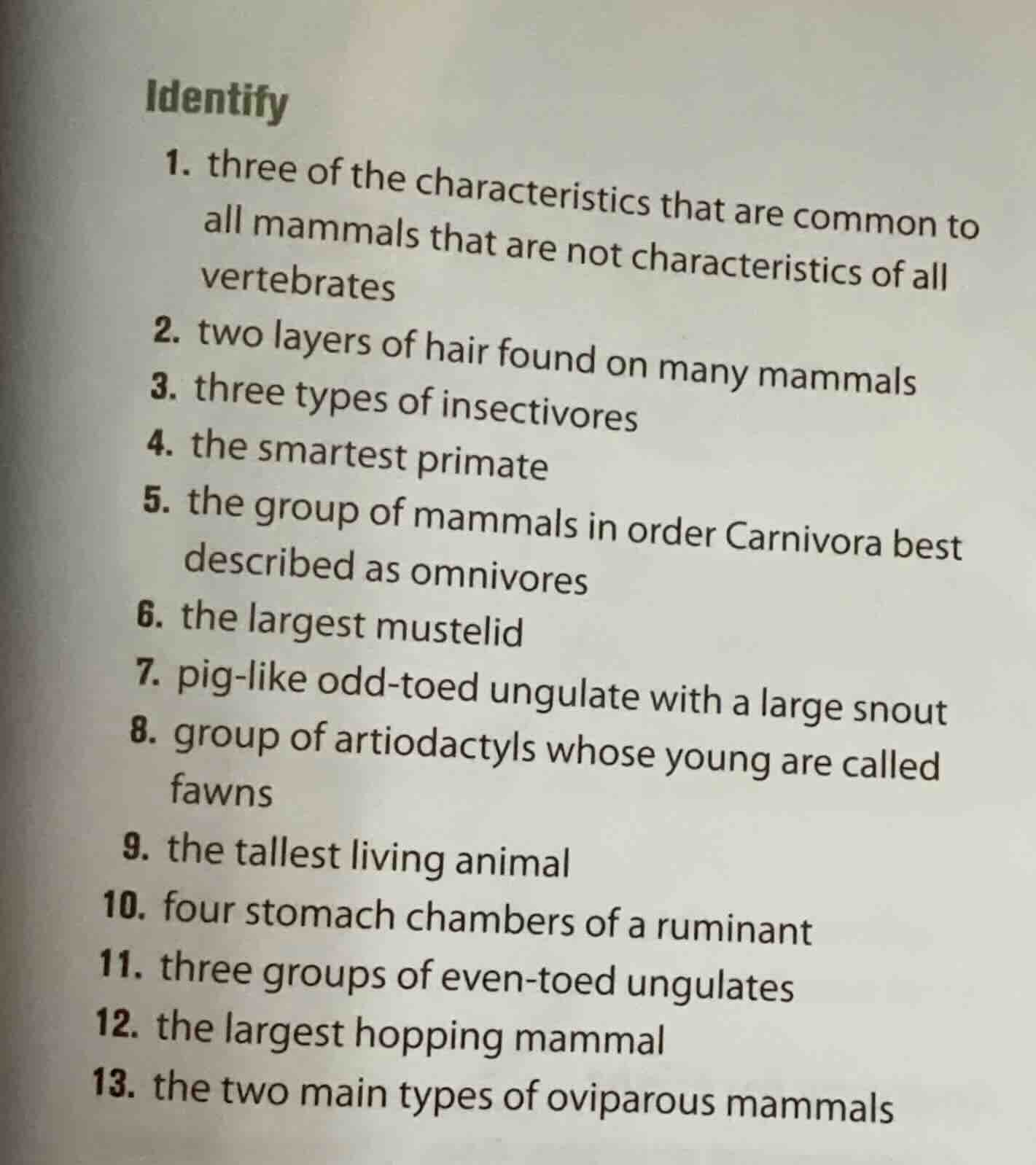
identify
- three of the characteristics that are common to all mammals that are not characteristics of all vertebrates
- two layers of hair found on many mammals
- three types of insectivores
- the smartest primate
- the group of mammals in order carnivora best described as omnivores
- the largest mustelid
- pig - like odd - toed ungulate with a large snout
- group of artiodactyls whose young are called fawns
- the tallest living animal
- four stomach chambers of a ruminant
- three groups of even - toed ungulates
- the largest hopping mammal
- the two main types of oviparous mammals
Sub - question 1
To answer this, we recall mammal - specific traits. Mammals have three middle ear bones (malleus, incus, stapes), which not all vertebrates have. They have hair or fur (unique to mammals among vertebrates in a defining way) and females have mammary glands to nurse young (not all vertebrates have this).
Many mammals have two layers of hair: the underfur (also called down hair) which is soft and insulating, and the guard hair (or overhair) which is coarser and provides protection and waterproofing.
Insectivores are mammals that mainly eat insects. Three types of insectivores include shrews (family Soricidae), moles (family Talpidae), and hedgehogs (family Erinaceidae).

Snap & solve any problem in the app
Get step-by-step solutions on Sovi AI
Photo-based solutions with guided steps
Explore more problems and detailed explanations
Three characteristics common to all mammals but not all vertebrates: 1. Presence of hair or fur. 2. Presence of mammary glands in females to produce milk for offspring. 3. Having three middle ear bones (malleus, incus, stapes).