QUESTION IMAGE
Question
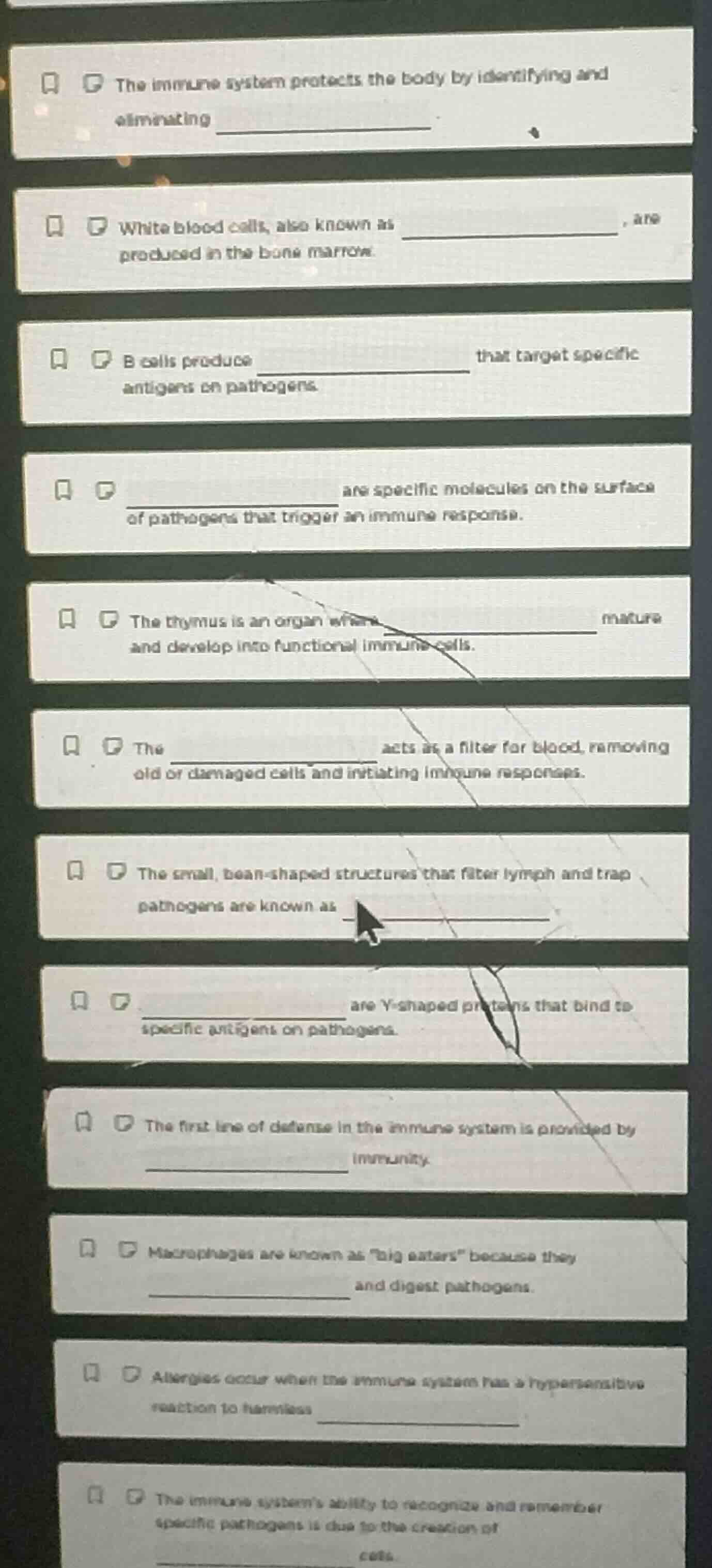
the immune system protects the body by identifying and eliminating ____________. white blood cells, also known as __________, are produced in the bone marrow. b cells produce __________ that target specific antigens on pathogens. __________ are specific molecules on the surface of pathogens that trigger an immune response. the thymus is an organ where __________ mature and develop into functional immune cells. the __________ acts as a filter for blood, removing old or damaged cells and initiating immune responses. the small, bean - shaped structures that filter lymph and trap pathogens are known as __________. __________ are y - shaped proteins that bind to specific antigens on pathogens. the first line of defense in the immune system is provided by __________ immunity. macrophages are known as \big eaters\ because they __________ and digest pathogens. allergies occur when the immune system has a hypersensitive reaction to harmless __________. the immune systems ability to recognize and remember specific pathogens is due to the creation of ____________ cells.
Each answer is based on core concepts of human immune system function and components:
- The immune system's primary role is to remove foreign threats.
- White blood cells have a standard scientific alternative name.
- B cells secrete proteins that bind to pathogen antigens.
- Pathogen surface molecules trigger immune responses.
- The thymus is the maturation site for a specific T cell type.
- This organ filters blood and removes damaged cells.
- Bean-shaped structures filter lymph and trap pathogens.
- Y-shaped proteins that bind to specific antigens are defined this way.
- The first immune defense is non-specific.
- Macrophages engulf and break down pathogens.
- Allergies are reactions to harmless foreign substances.
- Long-term pathogen recognition relies on memory cells.

Snap & solve any problem in the app
Get step-by-step solutions on Sovi AI
Photo-based solutions with guided steps
Explore more problems and detailed explanations
- pathogens (or foreign invaders)
- leukocytes
- antibodies
- Antigens
- T cells
- spleen
- lymph nodes
- Antibodies
- innate
- engulf (or phagocytose)
- antigens (or allergens)
- memory