QUESTION IMAGE
Question
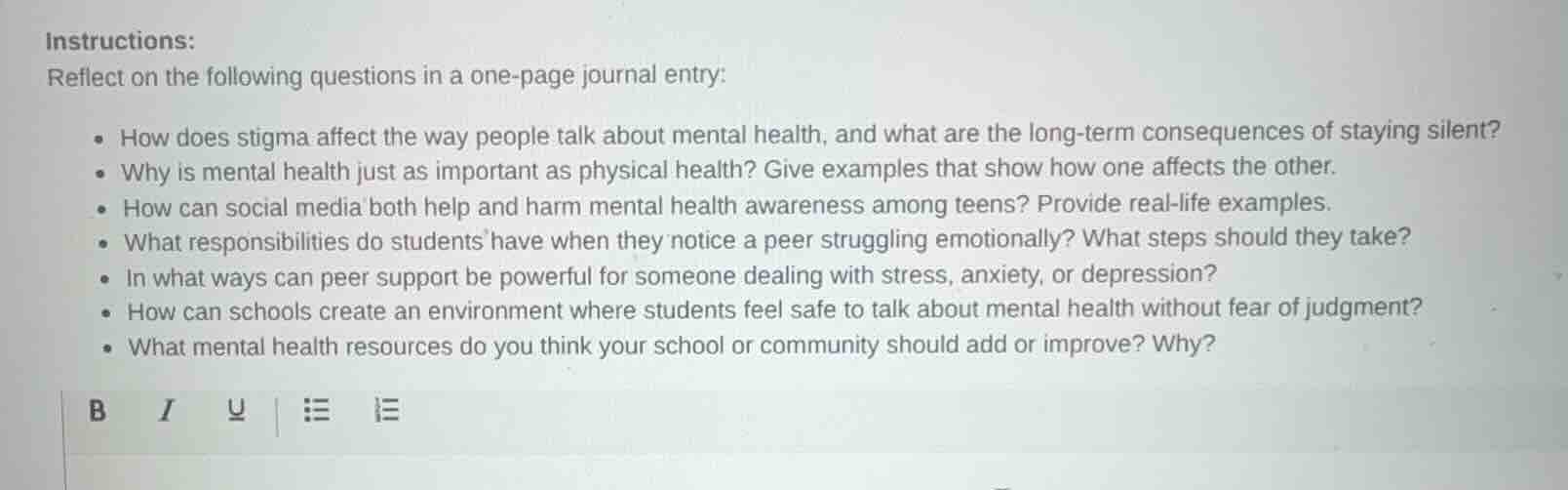
instructions:
reflect on the following questions in a one - page journal entry:
- how does stigma affect the way people talk about mental health, and what are the long - term consequences of staying silent?
- why is mental health just as important as physical health? give examples that show how one affects the other.
- how can social media both help and harm mental health awareness among teens? provide real - life examples.
- what responsibilities do students have when they notice a peer struggling emotionally? what steps should they take?
- in what ways can peer support be powerful for someone dealing with stress, anxiety, or depression?
- how can schools create an environment where students feel safe to talk about mental health without fear of judgment?
- what mental health resources do you think your school or community should add or improve? why?
Brief Explanations
- Stigma & silence: Stigma creates shame, making people avoid discussing mental health. Long-term silence can lead to worsening symptoms, social isolation, and delayed access to treatment, increasing risks of chronic mental illness or crisis.
- Mental-physical health link: Mental health regulates coping, motivation, and physical behaviors. For example, depression can reduce energy to exercise or eat well, worsening heart disease; chronic physical pain can trigger anxiety or depression.
- Social media's dual role: It helps by creating peer support groups (e.g., TikTok accounts sharing teen anxiety experiences to reduce isolation). It harms by spreading toxic comparison culture (e.g., Instagram's "perfect life" content worsening teen body dysmorphia and depression).
- Student responsibilities for peers: Students should listen without judgment, validate feelings, and encourage the peer to talk to a school counselor. Steps: 1) Check in privately; 2) Avoid dismissing their struggles; 3) Guide them to trusted adults if they're at risk.
- Power of peer support: Peers share lived experiences, so they can offer relatable empathy. For a stressed teen, a peer who's gone through exam anxiety can provide practical coping tips and reduce feelings of being alone.
- Safe school environments: Schools can implement mandatory mental health literacy classes, create anonymous reporting systems, train staff in trauma-informed care, and host peer-led support groups to reduce judgment.
- Needed resources: Schools should add free, on-site mental health counselors with evening/weekend hours to accommodate busy schedules, and community-wide peer mentorship programs for at-risk teens. These fill gaps in accessible, non-stigmatizing support.

Snap & solve any problem in the app
Get step-by-step solutions on Sovi AI
Photo-based solutions with guided steps
Explore more problems and detailed explanations
- Stigma discourages open discussion of mental health; long-term silence leads to worsening symptoms, isolation, and delayed care.
- Mental health shapes physical health behaviors and vice versa: depression reduces self-care worsening heart health; chronic pain triggers anxiety.
- Social media helps via peer support communities (e.g., teen mental health TikTok accounts) and harms via toxic comparison culture (e.g., Instagram worsening body dysmorphia).
- Students should listen without judgment and guide peers to help; steps: private check-in, validate feelings, connect to trusted adults.
- Peer support offers relatable empathy and practical, shared coping strategies for stress, anxiety, or depression.
- Schools can teach mental health literacy, train staff in trauma care, and run peer support groups to build safe spaces.
- Schools/communities should add after-hours on-site counselors and peer mentorship programs for accessible, non-stigmatizing support.