QUESTION IMAGE
Question
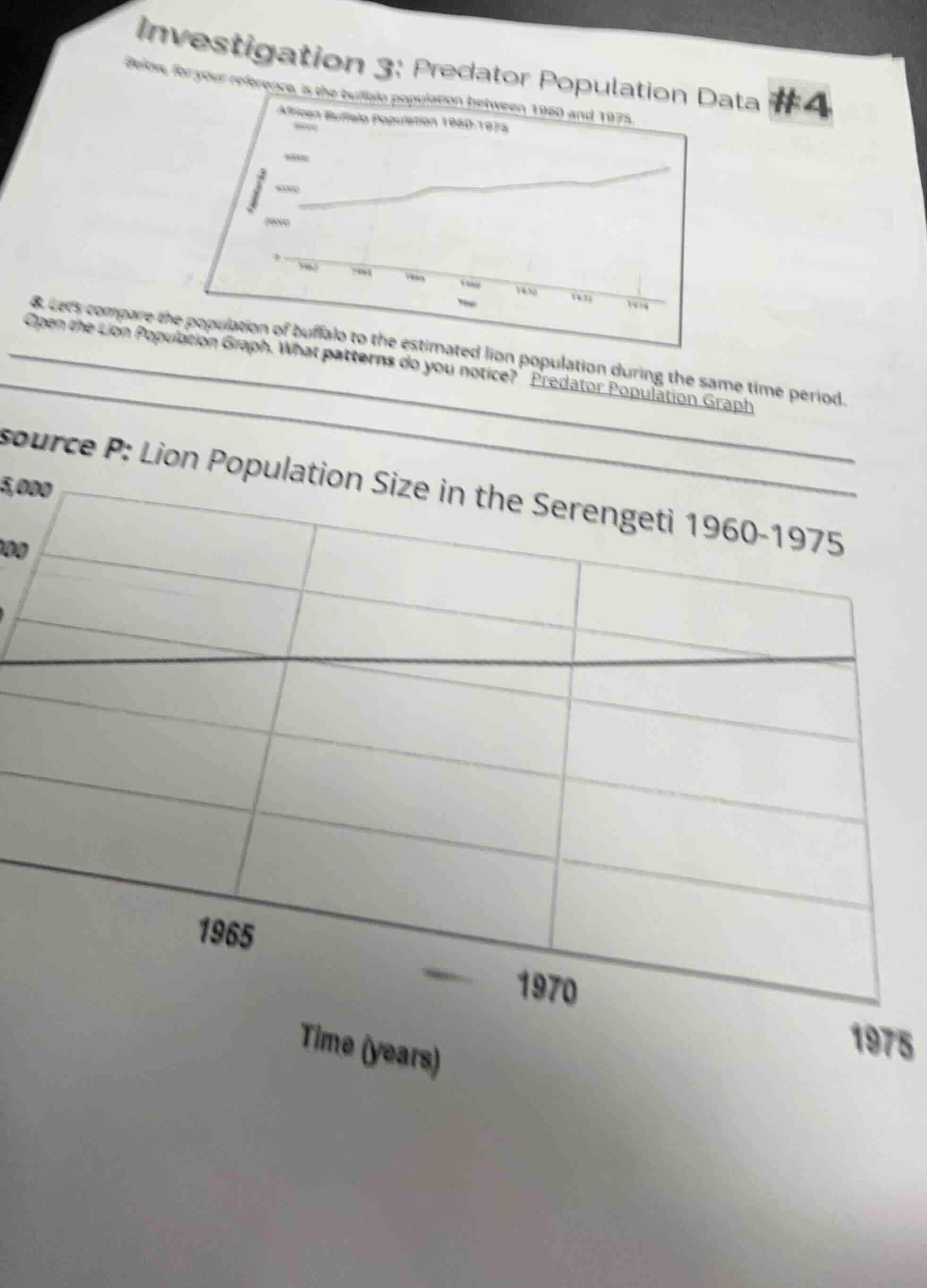
investigation 3: predator population data #4below, for your reference, is the buffalo population between 1960 and 1975.african buffalo population 1960-19758. lets compare the population of buffalo to the estimated lion population during the same time period. open the lion population graph. what patterns do you notice? predator population graphsource p: lion population size in the serengeti 1960-1975time (years)
- First, analyze the buffalo population graph: it shows a steady increasing trend from 1960 to 1975, with small plateaus and a final upward tick.
- Next, analyze the lion population graph: it shows a stable, slightly decreasing trend over the same 1960-1975 period, with very little overall change.
- Compare the two patterns: as the prey (buffalo) population increases, the predator (lion) population does not follow with an increase, instead remaining mostly flat or declining slightly. This suggests the lion population was not limited by buffalo prey availability during this time frame.

Snap & solve any problem in the app
Get step-by-step solutions on Sovi AI
Photo-based solutions with guided steps
Explore more problems and detailed explanations
The buffalo population shows a clear increasing trend from 1960 to 1975, while the lion population remains relatively stable with a slight downward trend over the same period. There is no corresponding increase in the lion population as the buffalo population grows.