QUESTION IMAGE
Question
★ match the key terms with the descriptions
key:
a. articular cartilage
b. diaphysis
c. epiphysis
d. epiphyseal line
e. epiphysis
f. medullary cavity
g. periosteum
h. red bone marrow
- end portions of a long bone
- helps reduce friction at joints
- site of blood cell formation
- the major submembranous site of osteoprogenitor cells
- scientific term for bone shaft
- contains yellow bone marrow in adult bones
- growth plate remnant
why this matters 8. which type of connective tissue is torn in cases of periostitis?
- in cases of periostitis, the cells of the periosteum attempt to repair the microtears to the periosteum and surrounding collagen fiber bundles. which cells are most likely to be involved in this repair process?
chemical composition of bone
- what is the function of the organic matrix in bone?
- name the important organic bone components.
- calcium salts form the bulk of the inorganic material in bone. what is the function of the calcium salts?
- baking removes ____________ from bone. soaking bone in acid removes ____________
microscopic structure of compact bone
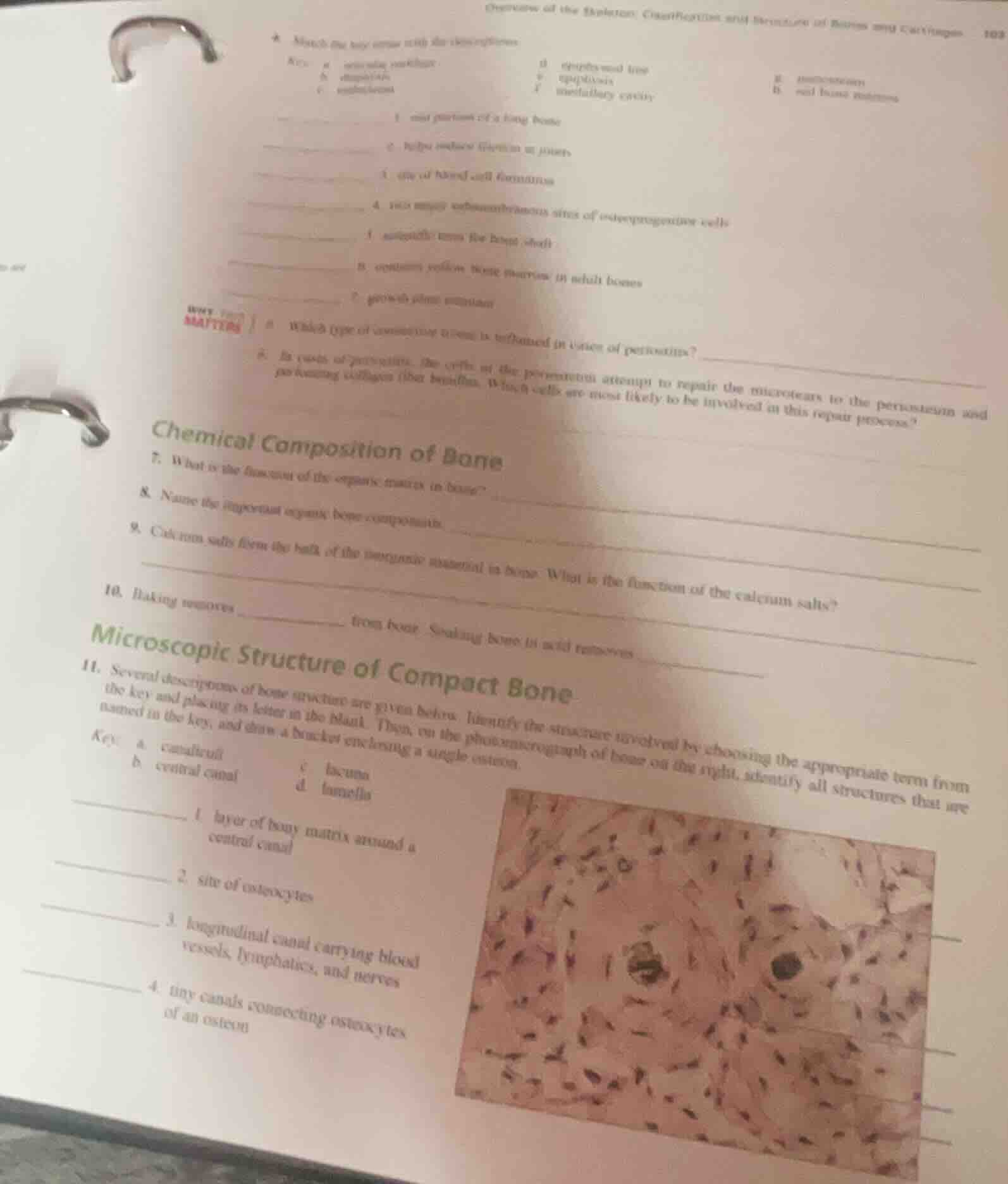
- several descriptions of bone structure are given below. identify the structure involved by choosing the appropriate term from the key and placing its letter in the blank. then, on the photomicrograph of bone on the right, identify all structures that are named in the key, and draw a bracket enclosing a single osteon.
key:
a. canaliculi
c. lacuna
b. central canal
d. lamella
- layer of bony matrix around a central canal
- site of osteocytes
- longitudinal canal carrying blood vessels, lymphatics, and nerves
- tiny canals connecting osteocytes of an osteon
Step1: Match bone terms (top section)
- epiphysis: end portions of a long bone
- articular cartilage: helps reduce friction at joints
- osteogenesis: one of blood cell formation (correction: this is bone formation; hematopoiesis is blood cell formation, but matching the given key: if hematopoiesis is option g, it matches this)
- periosteum: the major submembranous site of osteoprogenitor cells
- diaphysis: scientific term for bone shaft
- medullary cavity: contains yellow bone marrow in adult bones
- epiphyseal line: growth plate remnant
Step2: Answer periosteum repair question
The cells that repair microtears to the periosteum (a fibrous membrane) are fibroblasts (they produce collagen fibers to mend connective tissue tears).
Step3: Answer Chemical Composition of Bone
Q7: Organic matrix function
The organic matrix (mostly collagen) provides flexibility and toughness to bone, preventing shattering.
Q8: Organic bone components
Key organic components: collagen fibers, proteoglycans, glycoproteins, and bone cells (osteocytes, osteoblasts, osteoclasts).
Q9: Calcium salts function
Calcium salts (like hydroxyapatite) provide hardness and compressive strength to bone, enabling it to support body weight.
Q10: Baking/soaking bone effects
Baking removes organic components (leaving brittle inorganic matrix). Soaking bone in acid removes inorganic calcium salts (leaving flexible organic matrix).
Step4: Match compact bone structures (Q11)
- d. lamella: layer of bony matrix around a central canal
- c. lacuna: site of osteocytes
- b. central canal: longitudinal canal carrying blood vessels, lymphatics, and nerves
- a. canaliculi: tiny canals connecting osteocytes of an osteon

Snap & solve any problem in the app
Get step-by-step solutions on Sovi AI
Photo-based solutions with guided steps
Explore more problems and detailed explanations
- epiphysis
- articular cartilage
- hematopoiesis
- periosteum
- diaphysis
- medullary cavity
- epiphyseal line
---
Periosteum repair cells: Fibroblasts
---
- Provides flexibility and toughness to bone.
- Collagen fibers, proteoglycans, glycoproteins, and bone cells.
- Provides hardness and compressive strength to bone.
- Baking removes organic components; soaking in acid removes inorganic calcium salts.
---
11.
- d. lamella
- c. lacuna
- b. central canal
- a. canaliculi