QUESTION IMAGE
Question
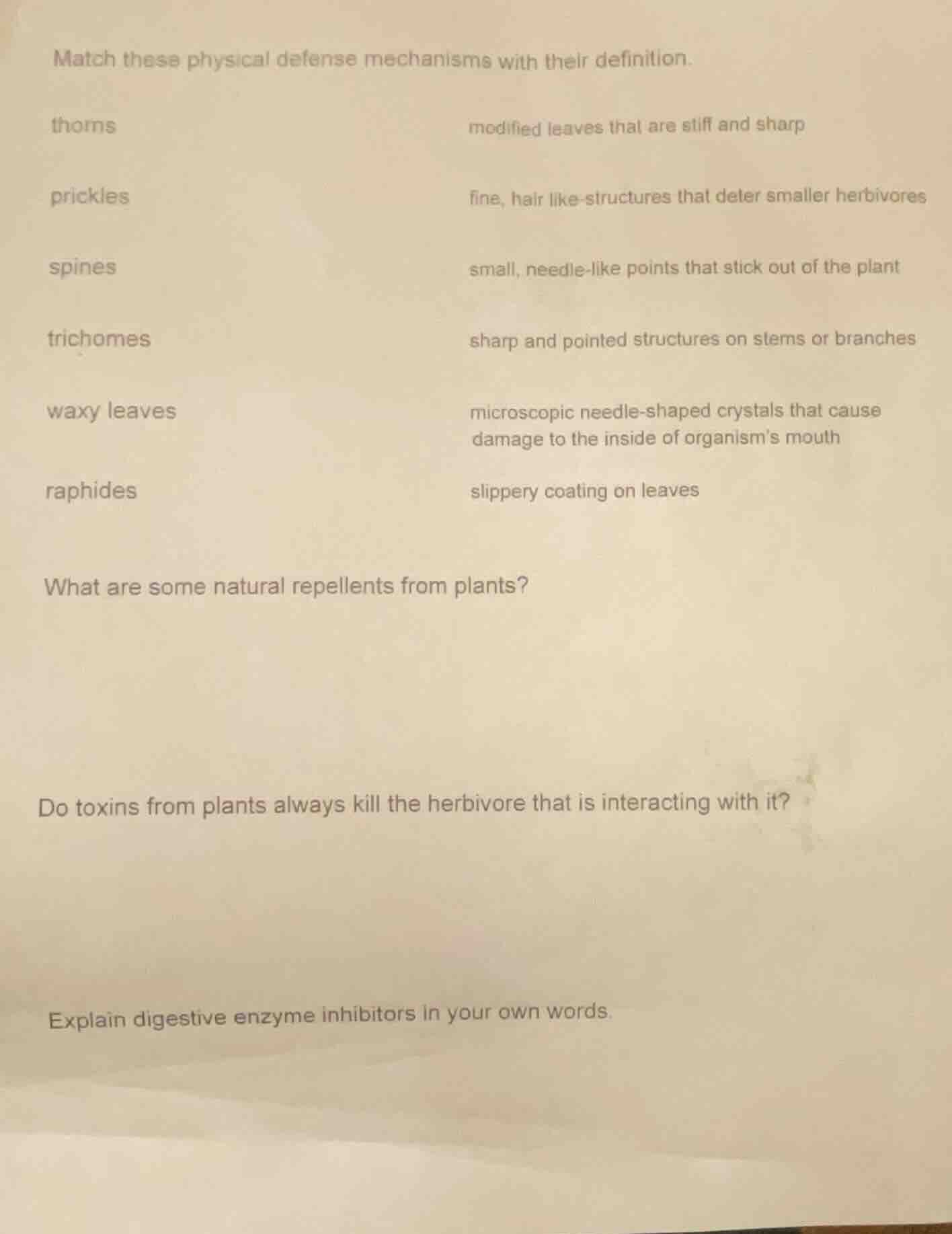
match these physical defense mechanisms with their definition.
thorns
modified leaves that are stiff and sharp
prickles
fine, hair like-structures that deter smaller herbivores
spines
small, needle-like points that stick out of the plant
trichomes
sharp and pointed structures on stems or branches
waxy leaves
microscopic needle-shaped crystals that cause damage to the inside of organisms mouth
raphides
slippery coating on leaves
what are some natural repellents from plants?
do toxins from plants always kill the herbivore that is interacting with it?
explain digestive enzyme inhibitors in your own words.
- For the matching task: Each plant defense structure is paired with its specific, biologically accurate definition based on botanical classifications.
- For natural repellents: These are plant-produced substances that deter herbivores without necessarily causing lethal harm, often by creating an unpleasant sensory experience.
- For plant toxins: Plant toxins have varying effects, and many only cause discomfort, illness, or reduced digestion rather than death, as some herbivores have evolved tolerance.
- For digestive enzyme inhibitors: These are plant compounds that interfere with the herbivore's digestive enzymes, reducing their ability to break down and absorb nutrients from the plant material.

Snap & solve any problem in the app
Get step-by-step solutions on Sovi AI
Photo-based solutions with guided steps
Explore more problems and detailed explanations
- Matching pairs:
- thorns: sharp and pointed structures on stems or branches
- prickles: small, needle-like points that stick out of the plant
- spines: modified leaves that are stiff and sharp
- trichomes: fine, hair like-structures that deter smaller herbivores
- waxy leaves: slippery coating on leaves
- raphides: microscopic needle-shaped crystals that cause damage to the inside of organism's mouth
- Some natural plant repellents include peppermint oil (from mint plants), citronella oil (from lemongrass), garlic oil, and capsaicin (from chili peppers).
- No, plant toxins do not always kill the herbivore. Some only cause irritation, nausea, or reduced nutrient absorption, and some herbivores have evolved adaptations to tolerate certain plant toxins.
- Digestive enzyme inhibitors are chemicals made by plants that stop or slow down the enzymes an herbivore uses to break down food. This makes it harder for the herbivore to get nutrients from eating the plant, so they are less likely to keep feeding on it.