QUESTION IMAGE
Question
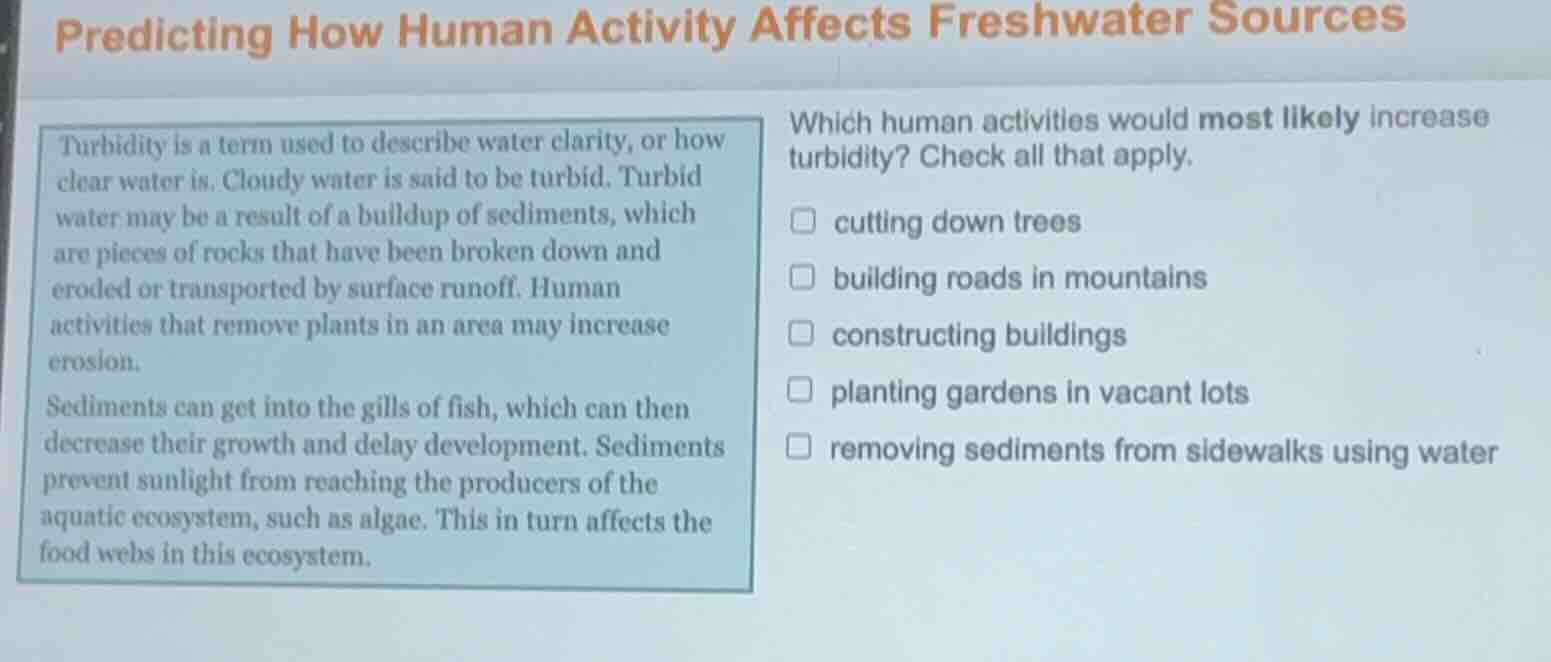
predicting how human activity affects freshwater sources
turbidity is a term used to describe water clarity, or how clear water is. cloudy water is said to be turbid. turbid water may be a result of a buildup of sediments, which are pieces of rocks that have been broken down and eroded or transported by surface runoff. human activities that remove plants in an area may increase erosion.
sediments can get into the gills of fish, which can then decrease their growth and delay development. sediments prevent sunlight from reaching the producers of the aquatic ecosystem, such as algae. this in turn affects the food webs in this ecosystem.
which human activities would most likely increase turbidity? check all that apply.
- cutting down trees
- building roads in mountains
- constructing buildings
- planting gardens in vacant lots
- removing sediments from sidewalks using water
- Cutting down trees removes vegetation that holds soil in place, increasing erosion and sediment runoff into water, raising turbidity.
- Building mountain roads disturbs soil and rock, leading to erosion; surface runoff carries these sediments into water sources, increasing turbidity.
- Constructing buildings involves land clearing and soil disturbance, which increases sediment runoff into nearby water, boosting turbidity.
- Washing sediments from sidewalks with water directly transports those sediments into storm drains and ultimately freshwater sources, increasing turbidity.
- Planting gardens adds vegetation that holds soil, reducing erosion and sediment runoff, so it does not increase turbidity.

Snap & solve any problem in the app
Get step-by-step solutions on Sovi AI
Photo-based solutions with guided steps
Explore more problems and detailed explanations
- cutting down trees
- building roads in mountains
- constructing buildings
- removing sediments from sidewalks using water