QUESTION IMAGE
Question
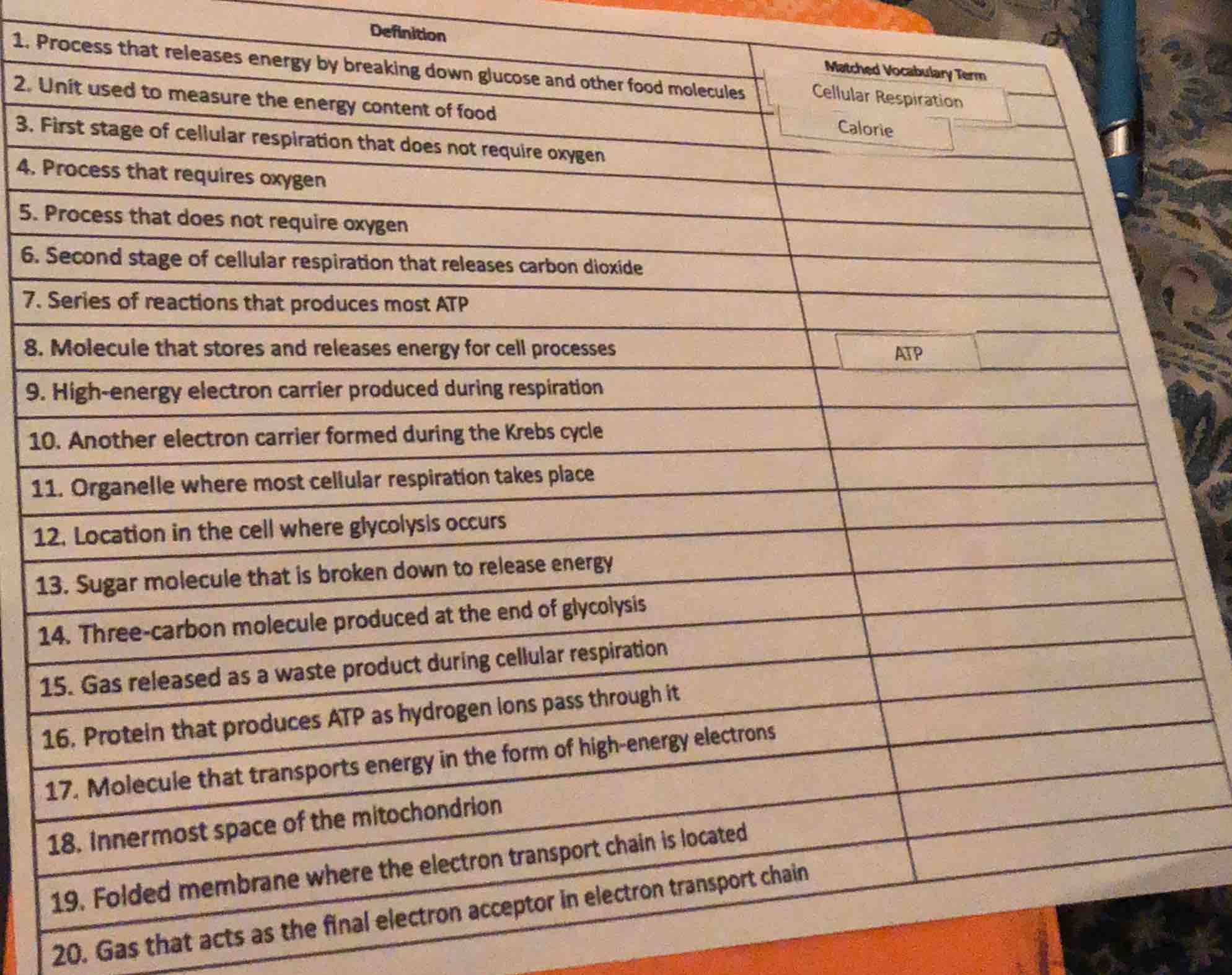
- process that releases energy by breaking down glucose and other food molecules
- unit used to measure the energy content of food
- first stage of cellular respiration that does not require oxygen
- process that requires oxygen
- process that does not require oxygen
- second stage of cellular respiration that releases carbon dioxide
- series of reactions that produces most atp
- molecule that stores and releases energy for cell processes
- high - energy electron carrier produced during respiration
- another electron carrier formed during the krebs cycle
- organelle where most cellular respiration takes place
- location in the cell where glycolysis occurs
- sugar molecule that is broken down to release energy
- three - carbon molecule produced at the end of glycolysis
- gas released as a waste product during cellular respiration
- protein that produces atp as hydrogen ions pass through it
- molecule that transports energy in the form of high - energy electrons
- innermost space of the mitochondrion
- folded membrane where the electron transport chain is located
- gas that acts as the final electron acceptor in electron transport chain
matched vocabulary term
cellular respiration
calorie
atp
Brief Explanations
- Cellular Respiration: The process of breaking down glucose (and other food molecules) to release energy for the cell. So matches "Process that releases energy by breaking down glucose and other food molecules".
- Calorie: A unit specifically used to measure the energy content in food. So matches "Unit used to measure the energy content of food".
- Glycolysis: The first stage of cellular respiration, and it occurs in the cytoplasm without the need for oxygen. So matches "First stage of cellular respiration that does not require oxygen".
- Aerobic: A process that requires oxygen (e.g., the later stages of cellular respiration like the Krebs cycle and electron transport chain in aerobic respiration). So matches "Process that requires oxygen".
- Anaerobic: A process that does not require oxygen (e.g., glycolysis can be part of anaerobic respiration, and also fermentation is anaerobic). So matches "Process that does not require oxygen".
- Krebs Cycle (Citric Acid Cycle): The second stage of cellular respiration (after glycolysis in aerobic respiration) where carbon dioxide is released as a by - product. So matches "Second stage of cellular respiration that releases carbon dioxide".
- Electron Transport Chain: A series of reactions in the inner mitochondrial membrane that produces the majority of ATP during cellular respiration. So matches "Series of reactions that produces most ATP".
- ATP (Adenosine Triphosphate): The molecule that stores and releases energy for cell processes (like active transport, muscle contraction, etc.). So matches "Molecule that stores and releases energy for cell processes".
- NADH (or FADH₂, but NADH is more common as a high - energy electron carrier in respiration): High - energy electron carriers produced during glycolysis and the Krebs cycle, which carry electrons to the electron transport chain. So matches "High - energy electron carrier produced during respiration".
- FADH₂: Another electron carrier that is formed specifically during the Krebs cycle (when succinate is oxidized to fumarate). So matches "Another electron carrier formed during the Krebs cycle".
- Mitochondrion (Mitochondria): The organelle where the majority of cellular respiration (Krebs cycle and electron transport chain) takes place. Glycolysis is in the cytoplasm, but most of the ATP production is in the mitochondria. So matches "Organelle where most cellular respiration takes place".
- Cytoplasm: Glycolysis, the first stage of cellular respiration, occurs in the cytoplasm of the cell. So matches "Location in the cell where glycolysis occurs".
- Glucose: A simple sugar molecule that is broken down (starting with glycolysis) to release energy for the cell. So matches "Sugar molecule that is broken down to release energy".
- Pyruvate (Pyruvic Acid): A three - carbon molecule that is the end product of glycolysis (when glucose, a six - carbon sugar, is split). So matches "Three - carbon molecule produced at the end of glycolysis".
- Carbon Dioxide (CO₂): A gas that is released as a waste product during the Krebs cycle (and also as a result of the breakdown of pyruvate before the Krebs cycle) in cellular respiration. So matches "Gas released as a waste product during cellular respiration".
- ATP Synthase: A protein complex in the inner mitochondrial membrane that produces ATP as hydrogen ions (protons) pass through it (chemiosmosis). So matches "Protein that produces ATP as hydrogen ions pass through it".
- NADH (or FADH₂): These molecules transport…

Snap & solve any problem in the app
Get step-by-step solutions on Sovi AI
Photo-based solutions with guided steps
Explore more problems and detailed explanations
- Process that releases energy by breaking down glucose and other food molecules - Cellular Respiration
- Unit used to measure the energy content of food - Calorie
- First stage of cellular respiration that does not require oxygen - Glycolysis
- Process that requires oxygen - Aerobic
- Process that does not require oxygen - Anaerobic
- Second stage of cellular respiration that releases carbon dioxide - Krebs Cycle (Citric Acid Cycle)
- Series of reactions that produces most ATP - Electron Transport Chain
- Molecule that stores and releases energy for cell processes - ATP
- High - energy electron carrier produced during respiration - NADH (or FADH₂)
- Another electron carrier formed during the Krebs cycle - FADH₂
- Organelle where most cellular respiration takes place - Mitochondrion
- Location in the cell where glycolysis occurs - Cytoplasm
- Sugar molecule that is broken down to release energy - Glucose
- Three - carbon molecule produced at the end of glycolysis - Pyruvate
- Gas released as a waste product during cellular respiration - Carbon Dioxide
- Protein that produces ATP as hydrogen ions pass through it - ATP Synthase
- Molecule that transports energy in the form of high - energy electrons - NADH (or FADH₂)
- Innermost space of the mitochondrion - Matrix
- Folded membrane where the electron transport chain is located - Cristae
- Gas that acts as the final electron acceptor in electron transport chain - Oxygen