QUESTION IMAGE
Question
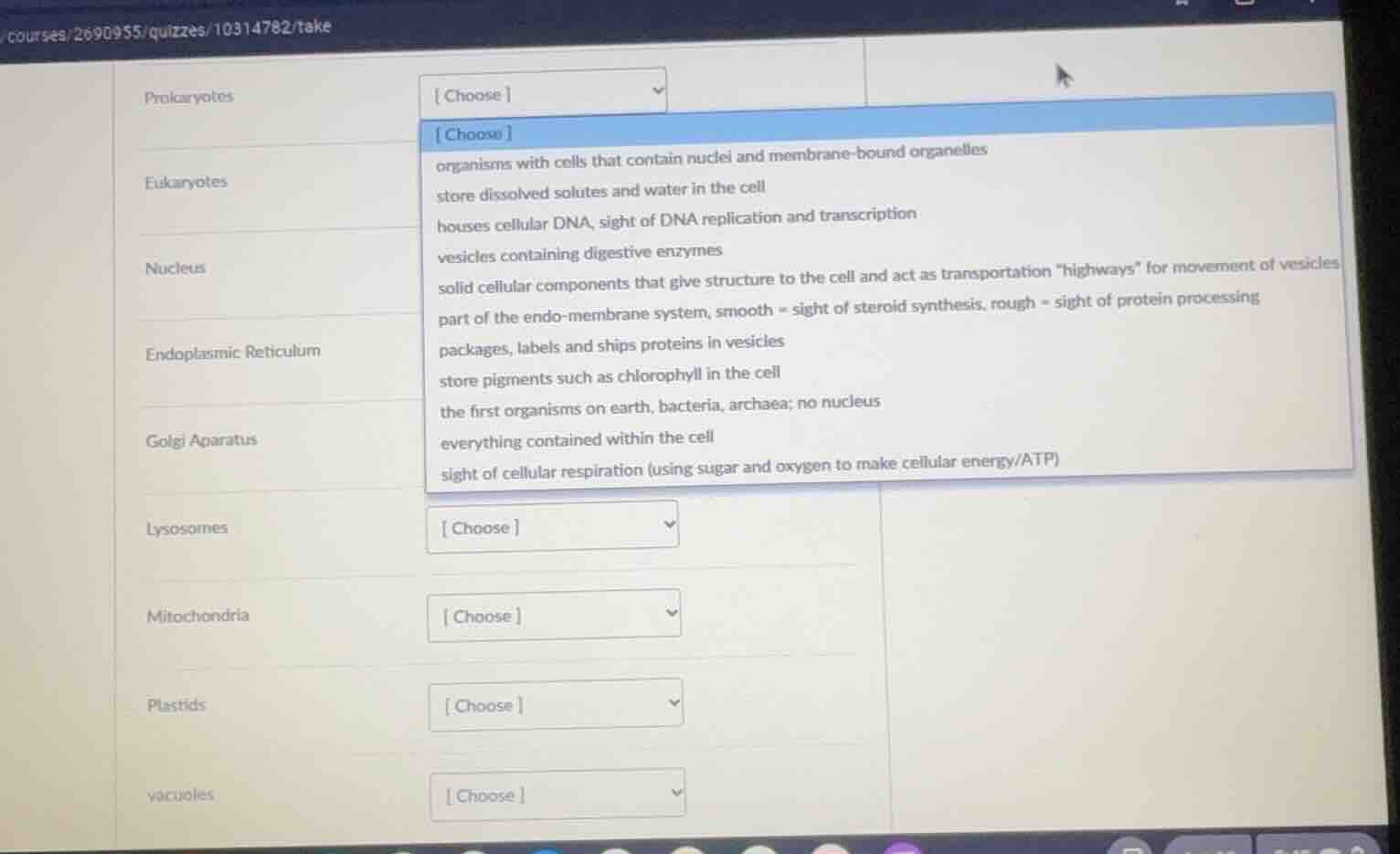
prokaryotes choose
eukaryotes choose
organisms with cells that contain nuclei and membrane - bound organelles
store dissolved solutes and water in the cell
houses cellular dna, sight of dna replication and transcription
vesicles containing digestive enzymes
solid cellular components that give structure to the cell and act as transportation \highways\ for movement of vesicles
part of the endo - membrane system, smooth = sight of steroid synthesis, rough = sight of protein processing
packages, labels and ships proteins in vesicles
store pigments such as chlorophyll in the cell
the first organisms on earth, bacteria, archaea; no nucleus
everything contained within the cell
sight of cellular respiration (using sugar and oxygen to make cellular energy/atp)
lysosomes choose
mitochondria choose
plastids choose
vacuoles choose
Each term is matched to its correct biological definition based on core cell biology concepts:
- Prokaryotes are the earliest, nucleus-free organisms (bacteria/archaea).
- Eukaryotes have cells with nuclei and membrane-bound organelles.
- The Nucleus holds cellular DNA and is where replication/transcription occur.
- Endoplasmic Reticulum is part of the endomembrane system, with rough ER for protein processing and smooth ER for steroid synthesis.
- Golgi Apparatus packages, labels, and ships proteins in vesicles.
- Lysosomes are vesicles with digestive enzymes.
- Mitochondria are the site of cellular respiration (making ATP from sugar/oxygen).
- Plastids store pigments like chlorophyll.
- Vacuoles store dissolved solutes and water in the cell.

Snap & solve any problem in the app
Get step-by-step solutions on Sovi AI
Photo-based solutions with guided steps
Explore more problems and detailed explanations
- Prokaryotes: the first organisms on earth, bacteria, archaea; no nucleus
- Eukaryotes: organisms with cells that contain nuclei and membrane-bound organelles
- Nucleus: houses cellular DNA, sight of DNA replication and transcription
- Endoplasmic Reticulum: part of the endo-membrane system, smooth = sight of steroid synthesis, rough = sight of protein processing
- Golgi Aparatus: packages, labels and ships proteins in vesicles
- Lysosomes: vesicles containing digestive enzymes
- Mitochondria: sight of cellular respiration (using sugar and oxygen to make cellular energy/ATP)
- Plastids: store pigments such as chlorophyll in the cell
- vacuoles: store dissolved solutes and water in the cell