QUESTION IMAGE
Question
read the passage.
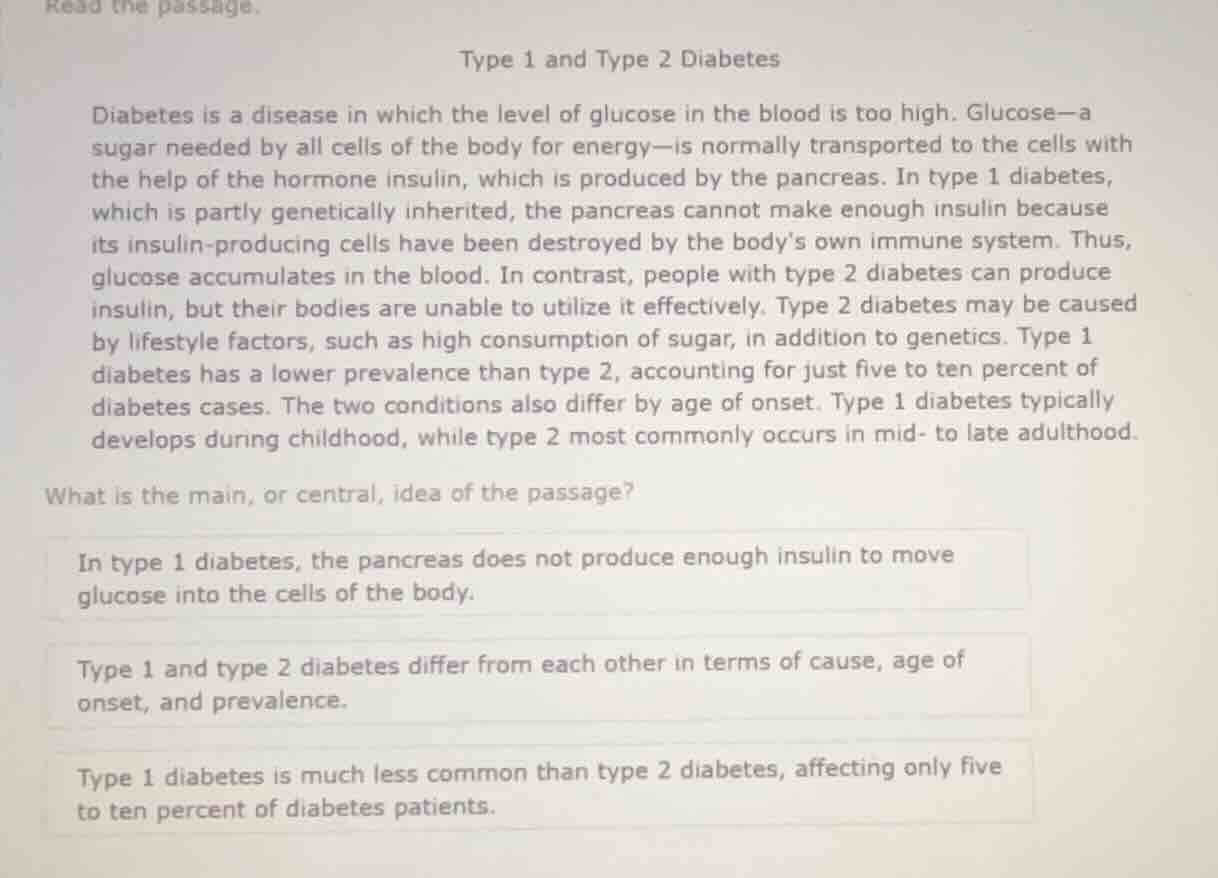
type 1 and type 2 diabetes
diabetes is a disease in which the level of glucose in the blood is too high. glucose—a sugar needed by all cells of the body for energy—is normally transported to the cells with the help of the hormone insulin, which is produced by the pancreas. in type 1 diabetes, which is partly genetically inherited, the pancreas cannot make enough insulin because its insulin-producing cells have been destroyed by the bodys own immune system. thus, glucose accumulates in the blood. in contrast, people with type 2 diabetes can produce insulin, but their bodies are unable to utilize it effectively. type 2 diabetes may be caused by lifestyle factors, such as high consumption of sugar, in addition to genetics. type 1 diabetes has a lower prevalence than type 2, accounting for just five to ten percent of diabetes cases. the two conditions also differ by age of onset. type 1 diabetes typically develops during childhood, while type 2 most commonly occurs in mid- to late adulthood.
what is the main, or central, idea of the passage?
in type 1 diabetes, the pancreas does not produce enough insulin to move glucose into the cells of the body.
type 1 and type 2 diabetes differ from each other in terms of cause, age of onset, and prevalence.
type 1 diabetes is much less common than type 2 diabetes, affecting only five to ten percent of diabetes patients.
The passage first defines diabetes generally, then details the key differences between Type 1 and Type 2 diabetes, including their causes, prevalence, and age of onset. The other options only address specific details, not the overarching central idea.

Snap & solve any problem in the app
Get step-by-step solutions on Sovi AI
Photo-based solutions with guided steps
Explore more problems and detailed explanations
Type 1 and type 2 diabetes differ from each other in terms of cause, age of onset, and prevalence.