QUESTION IMAGE
Question
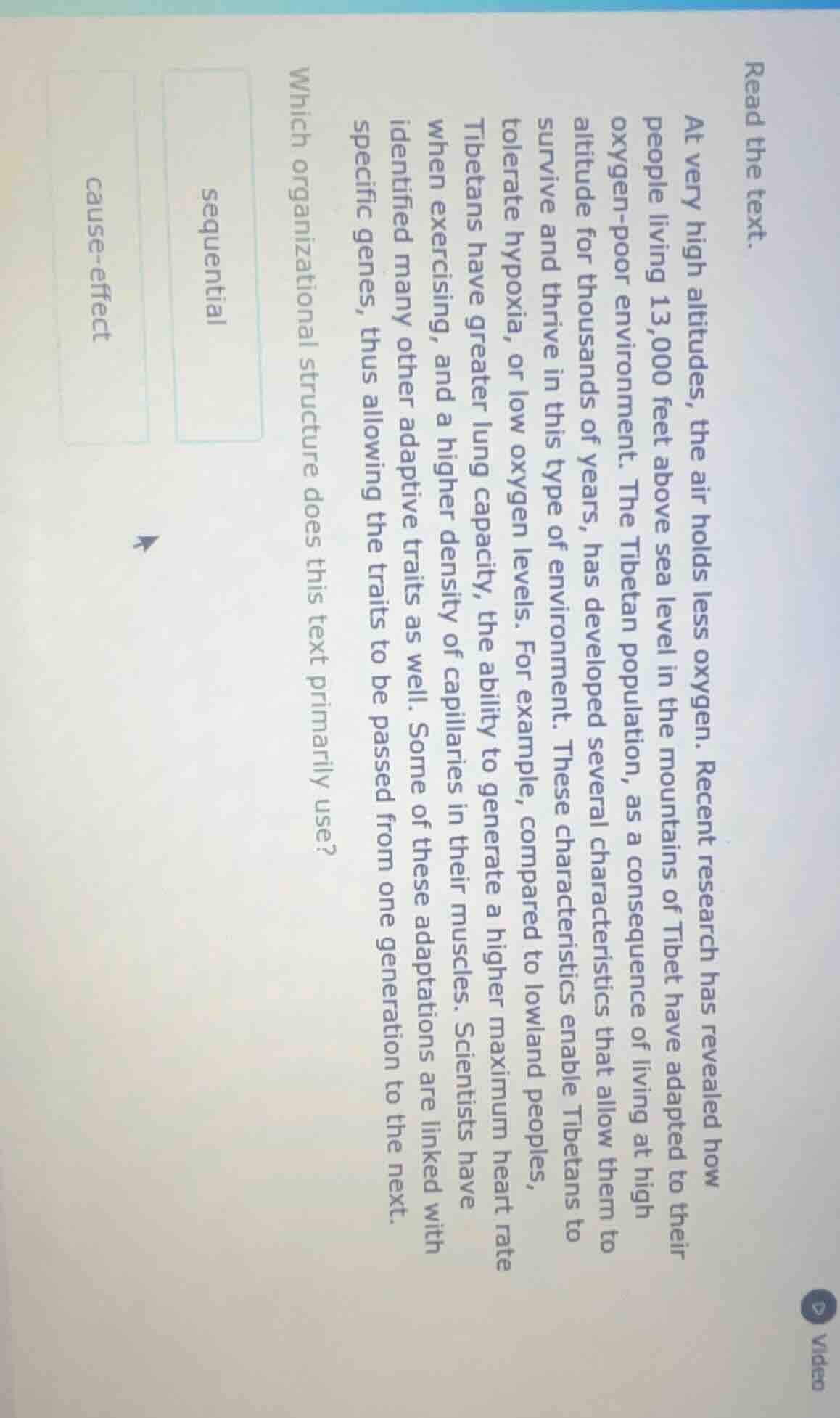
read the text.
at very high altitudes, the air holds less oxygen. recent research has revealed how people living 13,000 feet above sea level in the mountains of tibet have adapted to their oxygen - poor environment. the tibetan population, as a consequence of living at high altitude for thousands of years, has developed several characteristics that allow them to survive and thrive in this type of environment. these characteristics enable tibetans to tolerate hypoxia, or low oxygen levels. for example, compared to lowland peoples, tibetans have greater lung capacity, the ability to generate a higher maximum heart rate when exercising, and a higher density of capillaries in their muscles. scientists have identified many other adaptive traits as well. some of these adaptations are linked with specific genes, thus allowing the traits to be passed from one generation to the next.
which organizational structure does this text primarily use?
sequential
cause - effect
The text first establishes the cause: high altitudes have low oxygen. It then explains the effect: Tibetans developed physical and genetic adaptations to survive this environment. This structure links a condition to its resulting outcomes.

Snap & solve any problem in the app
Get step-by-step solutions on Sovi AI
Photo-based solutions with guided steps
Explore more problems and detailed explanations
cause-effect