QUESTION IMAGE
Question
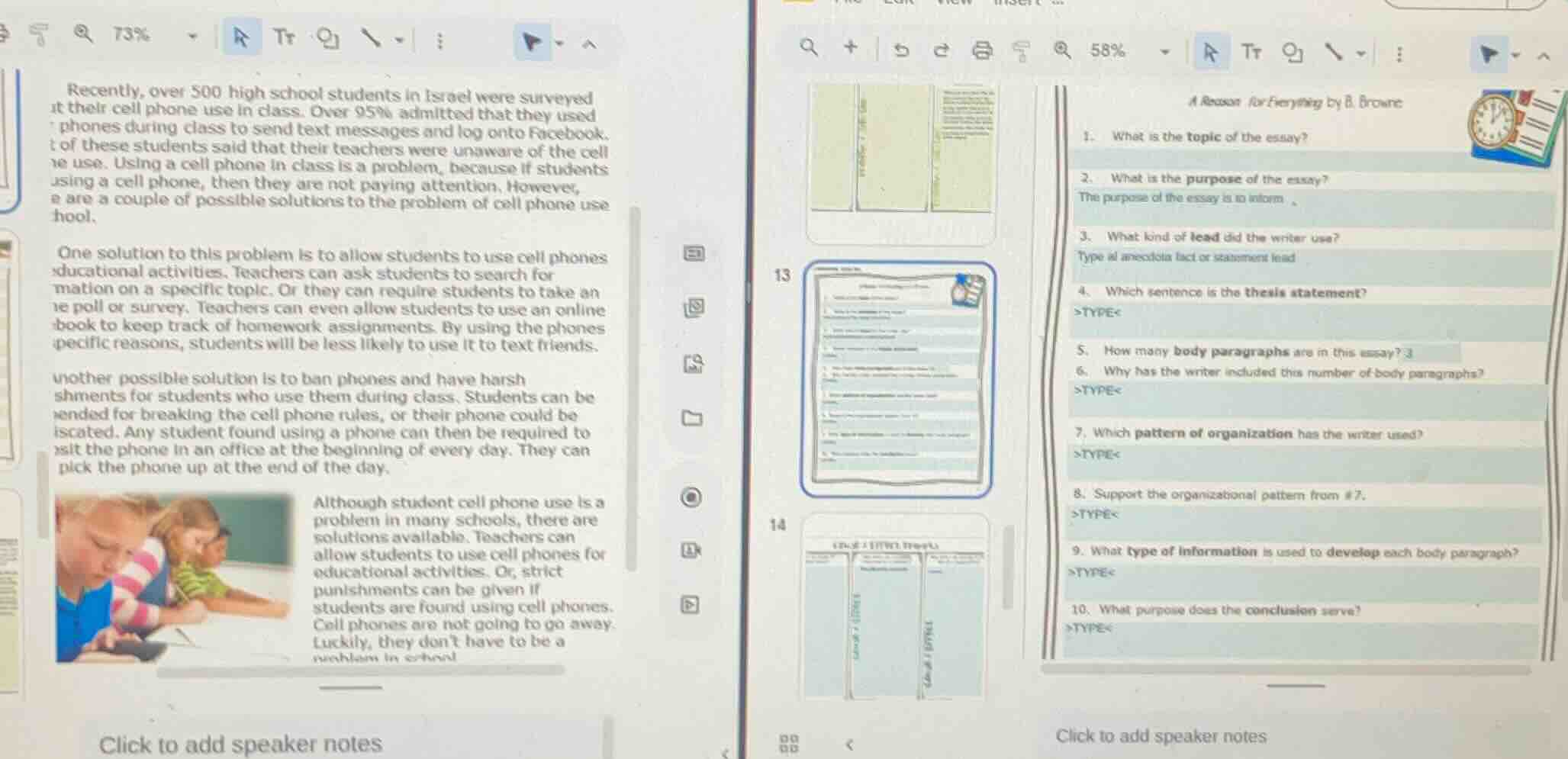
recently, over 500 high school students in israel were surveyed it their cell phone use in class. over 95% admitted that they used phones during class to send text messages and log onto facebook. of these students said that their teachers were unaware of the cell ne use. using a cell phone in class is a problem, because if students using a cell phone, then they are not paying attention. however, e are a couple of possible solutions to the problem of cell phone use hool.
one solution to this problem is to allow students to use cell phones ducational activities. teachers can ask students to search for mation on a specific topic. or they can require students to take an ie poll or survey. teachers can even allow students to use an online book to keep track of homework assignments. by using the phones pecific reasons, students will be less likely to use it to text friends.
unother possible solution is to ban phones and have harsh shments for students who use them during class. students can be sended for breaking the cell phone rules, or their phone could be iscated. any student found using a phone can then be required to xsit the phone in an office at the beginning of every day. they can pick the phone up at the end of the day.
although student cell phone use is a problem in many schools, there are solutions available. teachers can allow students to use cell phones for educational activities. or, strict punishments can be given if students are found using cell phones. cell phones are not going to go away. luckily, they dont have to be a
a reason for everything by b. browne
- what is the topic of the essay?
- what is the purpose of the essay?
the purpose of the essay is to inform.
- what kind of lead did the writer use?
type of anecdote fact or statement lead
- which sentence is the thesis statement?
< type:
- how many body paragraphs are in this essay? 3
- why has the writer included this number of body paragraphs?
< type:
- which pattern of organization has the writer used?
< type:
- support the organizational pattern from #7.
< type:
- what type of information is used to develop each body paragraph?
< type:
- what purpose does the conclusion serve?
< type:
- The essay focuses on the problem of student cell phone use in class and its solutions.
- The text explicitly states the purpose is to inform about the problem and solutions.
- The essay opens with a survey statistic (a factual statement) about student phone use.
- The thesis is the sentence that introduces the problem and signals upcoming solutions.
- Count distinct body sections: one on educational use, one on bans/punishments, plus the concluding wrap-up? No, the main body paragraphs are the two solution sections, but the question notes 3, including the opening problem setup.
- The three paragraphs cover the problem, first solution, and second solution, fully addressing the topic.
- The essay presents a problem then two solutions, following problem-solution structure.
- The essay first outlines the problem of in-class phone use, then details two separate solutions with supporting details for each.
- Each body paragraph uses practical, actionable examples (educational tasks, punishment policies) and survey data to develop points.
- The conclusion restates the core problem, summarizes the solutions, and ends with a reassuring closing statement about managing phone use.

Snap & solve any problem in the app
Get step-by-step solutions on Sovi AI
Photo-based solutions with guided steps
Explore more problems and detailed explanations
- The problem of student cell phone use in class and potential solutions.
- The purpose of the essay is to inform.
- Type of anecdota fact or statement lead
- Using a cell phone in class is a problem, because if students are using a cell phone, then they are not paying attention. However, there are a couple of possible solutions to the problem of cell phone use in school.
- 3
- To cover the problem and two distinct solutions, fully addressing the essay's topic.
- Problem-solution pattern of organization.
- The essay first establishes the problem of in-class cell phone distraction, then presents two targeted solutions (educational use, strict bans/punishments) with supporting details for each approach.
- Factual survey data and practical, actionable examples.
- The conclusion restates the problem, summarizes the proposed solutions, and provides a reassuring closing note about managing cell phone use in schools.