QUESTION IMAGE
Question
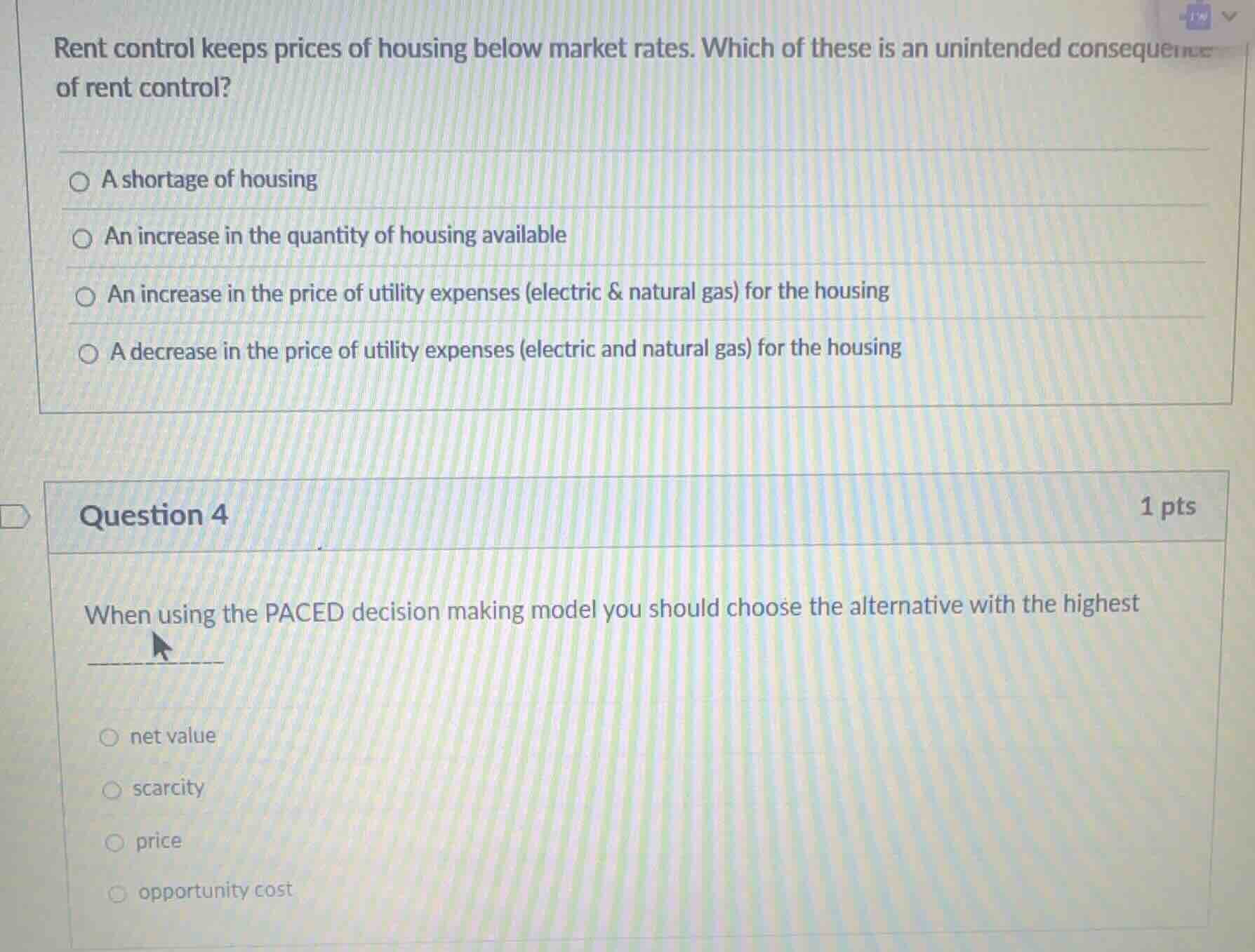
rent control keeps prices of housing below market rates. which of these is an unintended consequence of rent control?
a shortage of housing
an increase in the quantity of housing available
an increase in the price of utility expenses (electric & natural gas) for the housing
a decrease in the price of utility expenses (electric and natural gas) for the housing
question 4
1 pts
when using the paced decision making model you should choose the alternative with the highest
net value
scarcity
price
opportunity cost
First Question (Rent Control Consequence)
Rent control sets housing prices below market equilibrium. At below - equilibrium prices, the quantity of housing demanded exceeds the quantity supplied (law of supply and demand). This leads to a shortage of housing. An increase in housing quantity is unlikely as suppliers have less incentive to supply at lower prices. Utility prices aren't directly related to rent control in this way (rent control focuses on housing rent, not utilities' pricing mechanisms that would cause a direct increase or decrease as options suggest). So the unintended consequence is a housing shortage.
The PACED (Problem, Alternatives, Criteria, Evaluate, Decide) decision - making model involves calculating the net value of each alternative (benefits minus costs) and then choosing the alternative with the highest net value. Scarcity is an economic concept about limited resources, not related to choosing alternatives in PACED. Price is just one factor, and opportunity cost is what's given up, not the basis for choosing in PACED.

Snap & solve any problem in the app
Get step-by-step solutions on Sovi AI
Photo-based solutions with guided steps
Explore more problems and detailed explanations
A. A shortage of housing