QUESTION IMAGE
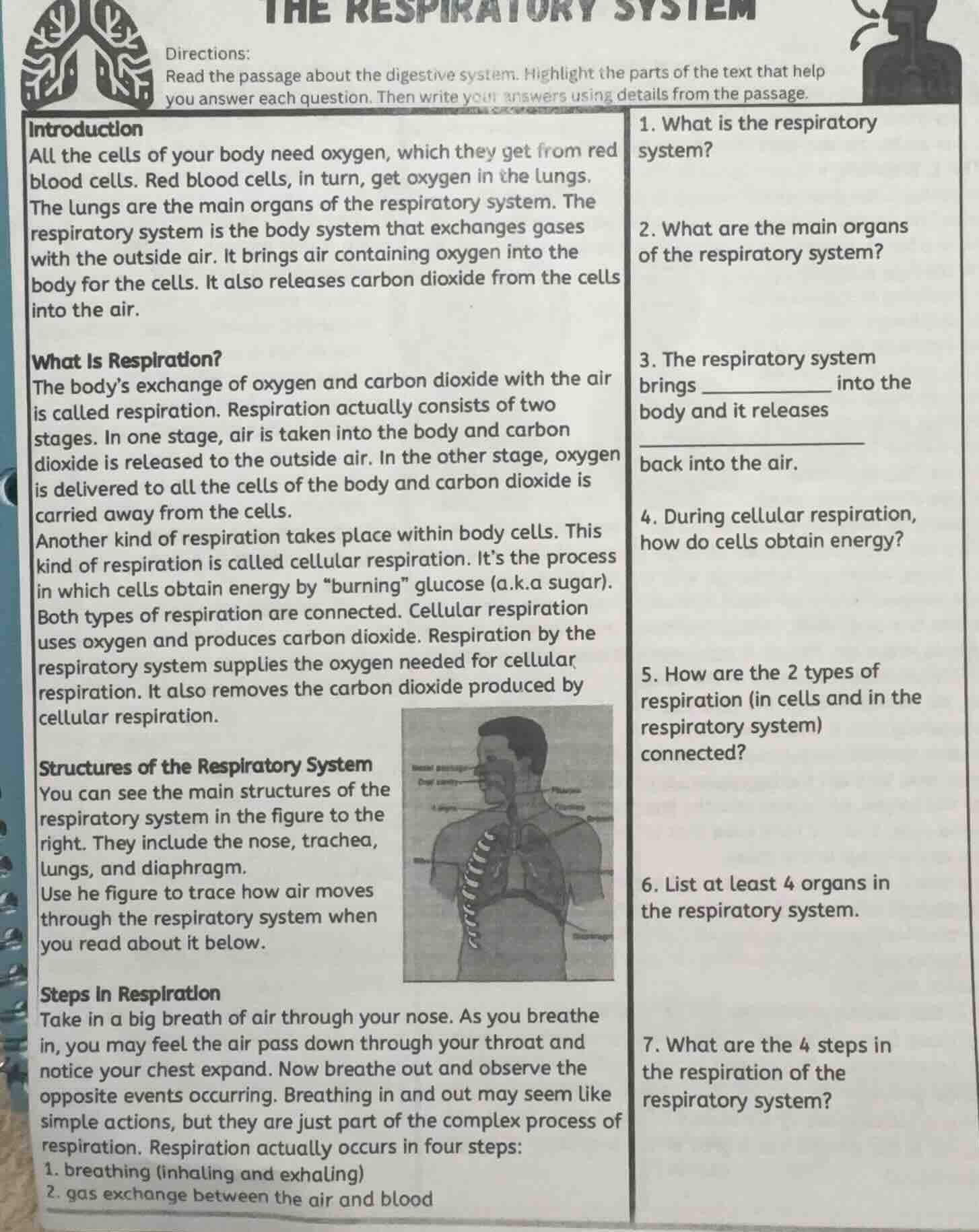
Question
the respiratory system
directions:
read the passage about the digestive system. highlight the parts of the text that help you answer each question. then write your answers using details from the passage.
introduction
all the cells of your body need oxygen, which they get from red blood cells. red blood cells, in turn, get oxygen in the lungs. the lungs are the main organs of the respiratory system. the respiratory system is the body system that exchanges gases with the outside air. it brings air containing oxygen into the body for the cells. it also releases carbon dioxide from the cells into the air.
what is respiration?
the body’s exchange of oxygen and carbon dioxide with the air is called respiration. respiration actually consists of two stages. in one stage, air is taken into the body and carbon dioxide is released to the outside air. in the other stage, oxygen is delivered to all the cells of the body and carbon dioxide is carried away from the cells.
another kind of respiration takes place within body cells. this kind of respiration is called cellular respiration. it’s the process in which cells obtain energy by “burning” glucose (a.k.a sugar). both types of respiration are connected. cellular respiration uses oxygen and produces carbon dioxide. respiration by the respiratory system supplies the oxygen needed for cellular respiration. it also removes the carbon dioxide produced by cellular respiration.
structures of the respiratory system
you can see the main structures of the respiratory system in the figure to the right. they include the nose, trachea, lungs, and diaphragm.
use he figure to trace how air moves through the respiratory system when you read about it below.
steps in respiration
take in a big breath of air through your nose. as you breathe in, you may feel the air pass down through your throat and notice your chest expand. now breathe out and observe the opposite events occurring. breathing in and out may seem like simple actions, but they are just part of the complex process of respiration. respiration actually occurs in four steps:
- breathing (inhaling and exhaling)
- gas exchange between the air and blood
- what is the respiratory system?
- what are the main organs of the respiratory system?
- the respiratory system brings ________ into the body and it releases ________ back into the air.
- during cellular respiration, how do cells obtain energy?
- how are the 2 types of respiration (in cells and in the respiratory system) connected?
- list at least 4 organs in the respiratory system.
- what are the 4 steps in the respiration of the respiratory system?
All answers are derived directly from the provided passage about the respiratory system.

Snap & solve any problem in the app
Get step-by-step solutions on Sovi AI
Photo-based solutions with guided steps
Explore more problems and detailed explanations
- The respiratory system is the body system that exchanges gases with the outside air; it brings oxygen-containing air into the body for cells and releases carbon dioxide from cells into the air.
- The main organs of the respiratory system are the lungs.
- The respiratory system brings air containing oxygen into the body and it releases carbon dioxide back into the air.
- During cellular respiration, cells obtain energy by "burning" glucose (sugar).
- The respiratory system supplies the oxygen needed for cellular respiration and removes the carbon dioxide produced by cellular respiration; cellular respiration uses oxygen and produces carbon dioxide, creating a dependent connection between the two.
- At least 4 organs/structures in the respiratory system: nose, trachea, lungs, diaphragm.
- The passage only lists the first 2 steps in respiratory system respiration:
- breathing (inhaling and exhaling)
- gas exchange between the air and blood
(Note: The full 4 steps are not provided in the visible text.)