QUESTION IMAGE
Question
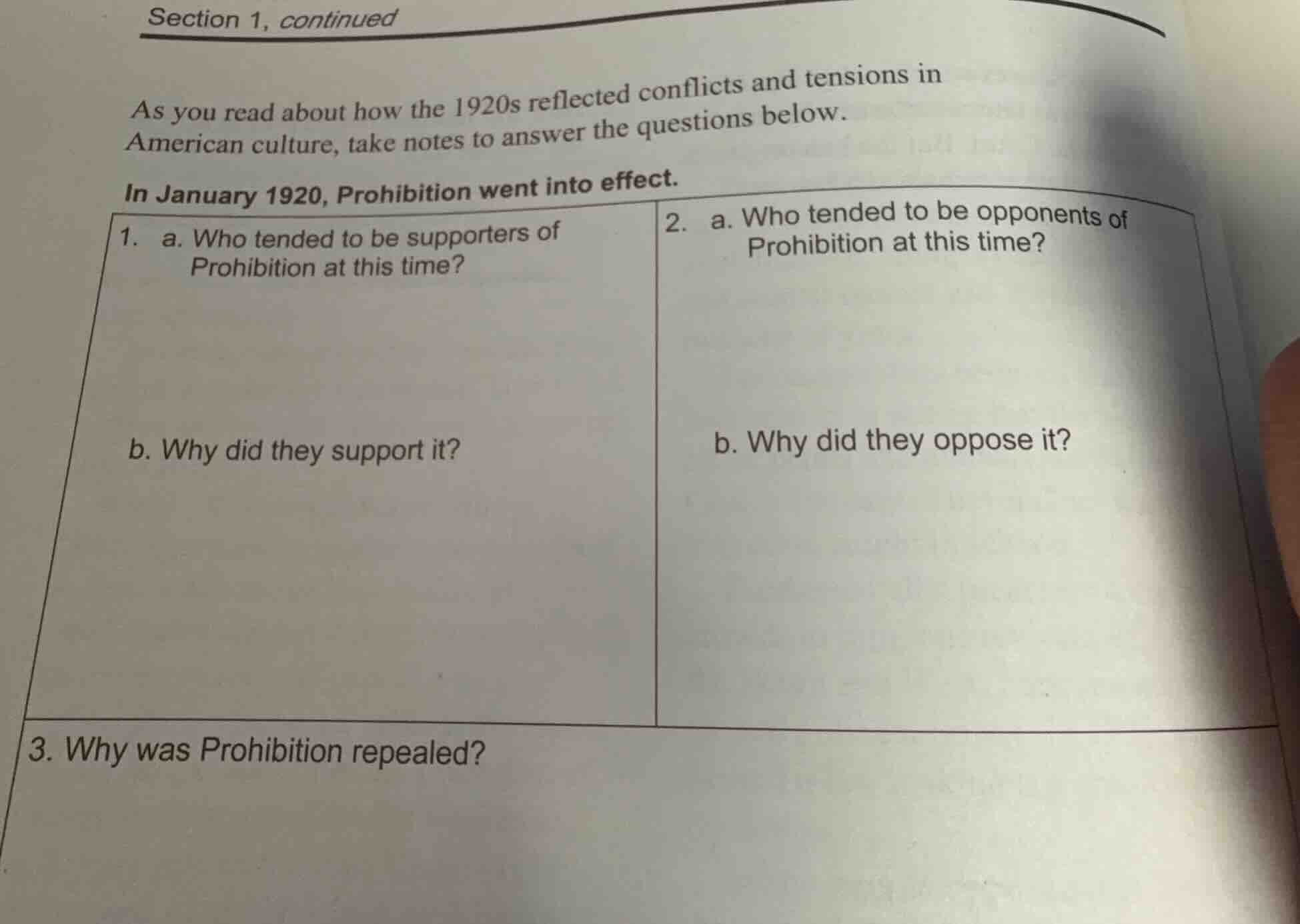
section 1, continued
as you read about how the 1920s reflected conflicts and tensions in
american culture, take notes to answer the questions below.
in january 1920, prohibition went into effect.
- a. who tended to be supporters of
prohibition at this time?
b. why did they support it?
- a. who tended to be opponents of
prohibition at this time?
b. why did they oppose it?
- why was prohibition repealed?
1. a. Supporters of Prohibition
Supporters of Prohibition in the 1920s included the Temperance Movement (like the Women's Christian Temperance Union, WCTU), rural Protestants, and those concerned about the social ills associated with alcohol (e.g., domestic abuse, poverty linked to alcoholism). These groups often held conservative, moralistic views and believed alcohol was a corrupting force in society.
They supported Prohibition because they believed alcohol caused social problems such as domestic violence, poverty (due to wages being spent on alcohol), and moral decay. The Temperance Movement also saw alcohol as a threat to family and community values, and rural Protestants often viewed it as incompatible with their religious and traditional lifestyles.
Opponents of Prohibition included urban immigrants (especially from Catholic - dominated countries like Ireland, Italy), bootleggers, and those who valued personal liberty. Urban immigrants often had cultural traditions that included alcohol consumption, and bootleggers profited from the illegal alcohol trade. Many also saw Prohibition as an overreach of government into personal life.

Snap & solve any problem in the app
Get step-by-step solutions on Sovi AI
Photo-based solutions with guided steps
Explore more problems and detailed explanations
Supporters included the Temperance Movement (e.g., WCTU), rural Protestants, and those concerned about alcohol - related social ills.