QUESTION IMAGE
Question
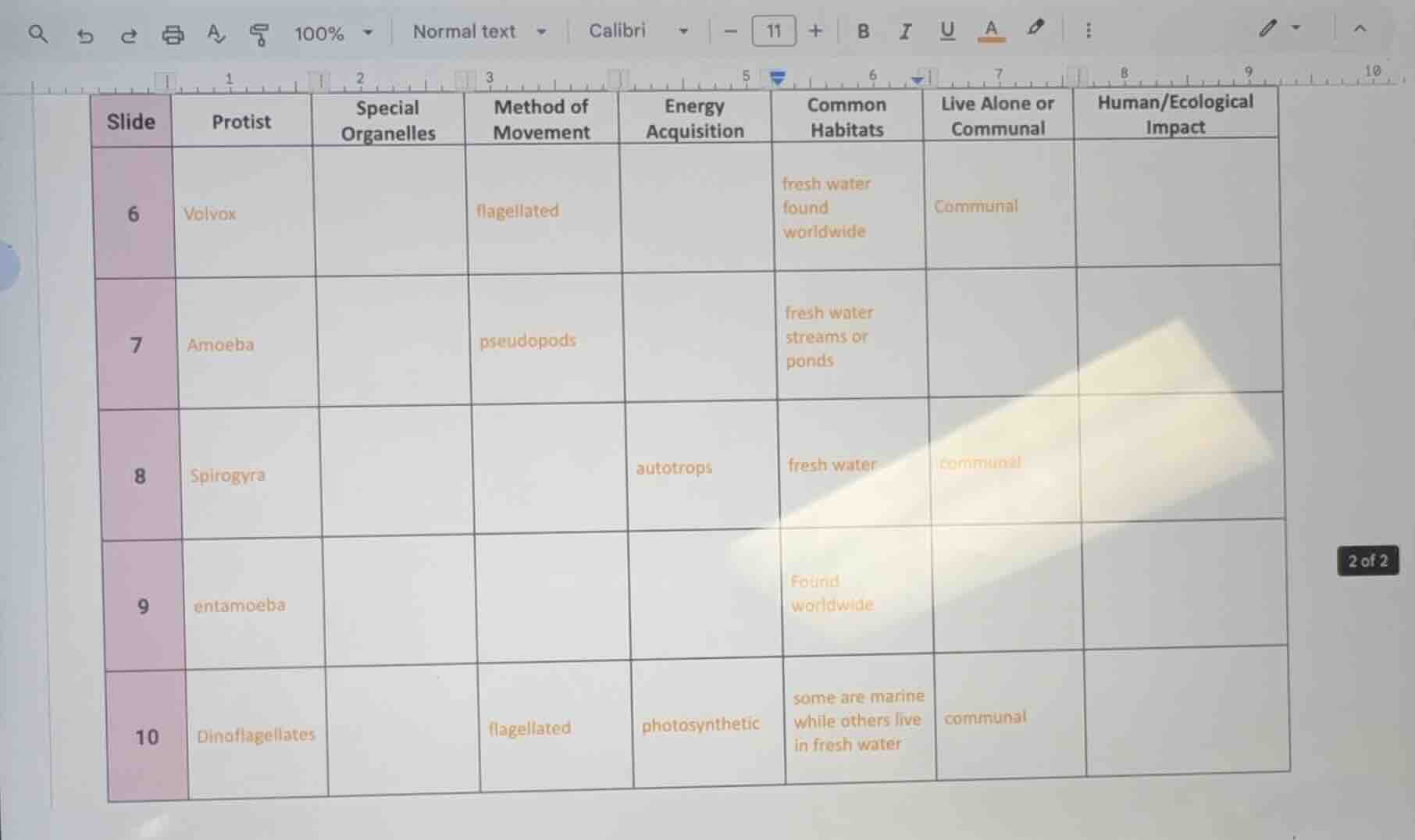
slide\tprotist\tspecial organelles\tmethod of movement\tenergy acquisition\tcommon habitats\tlive alone or communal\thuman/ecological impact
6\tvolvox\t\tflagellated\t\tfresh water found worldwide\tcommunal\t
7\tamoeba\t\tpseudopods\t\tfresh water streams or ponds\t\t
8\tspirogyra\t\t\tautotrops\tfresh water\tcommunal\t
9\tentamoeba\t\t\t\tfound worldwide\t\t
10\tdinoflagellates\t\tflagellated\tphotosynthetic\tsome are marine while others live in fresh water\tcommunal\t
Step1: Fill Volvox missing columns
Special Organelles: Chloroplasts, eyespots
Energy Acquisition: Photosynthetic (autotrophic)
Human/Ecological Impact: Forms green blooms, provides food for aquatic organisms
Step2: Fill Amoeba missing columns
Special Organelles: Contractile vacuole, pseudopods
Energy Acquisition: Heterotrophic (phagocytosis)
Live Alone or Communal: Live Alone
Human/Ecological Impact: Some species cause amebic dysentery; recycles nutrients in ecosystems
Step3: Fill Spirogyra missing columns
Special Organelles: Spiral chloroplasts, conjugation tubes
Method of Movement: Non-motile
Human/Ecological Impact: Forms pond scums, food for aquatic life; indicator of clean water
Step4: Fill Entamoeba missing columns
Special Organelles: Pseudopods
Method of Movement: pseudopods
Energy Acquisition: Heterotrophic (parasitic)
Live Alone or Communal: Live Alone
Human/Ecological Impact: Causes amebic dysentery in humans; parasitic in animal intestines
Step5: Fill Dinoflagellates missing columns
Special Organelles: Chloroplasts (in photosynthetic types), theca (cell covering)
Human/Ecological Impact: Some cause red tides (produce neurotoxins); provide food in marine food webs

Snap & solve any problem in the app
Get step-by-step solutions on Sovi AI
Photo-based solutions with guided steps
Explore more problems and detailed explanations
| Slide | Protist | Special Organelles | Method of Movement | Energy Acquisition | Common Habitats | Live Alone or Communal | Human/Ecological Impact |
|---|---|---|---|---|---|---|---|
| 7 | Amoeba | Contractile vacuole, pseudopods | pseudopods | Heterotrophic (phagocytosis) | fresh water streams or ponds | Live Alone | Some species cause amebic dysentery; recycles organic nutrients in aquatic ecosystems |
| 8 | Spirogyra | Spiral chloroplasts, conjugation tubes | Non-motile | autotrops | fresh water | communal | Forms visible pond scums; serves as food for aquatic grazers; indicates clean freshwater |
| 9 | entamoeba | Pseudopods | pseudopods | Heterotrophic (parasitic) | Found worldwide (host intestines) | Live Alone | Parasitic; causes amebic dysentery in humans and other animals |
| 10 | Dinoflagellates | Chloroplasts (photosynthetic types), theca | flagellated | photosynthetic (some heterotrophic) | some are marine while others live in fresh water | communal | Some species produce red tides (neurotoxins harmful to marine life/humans); base of marine food chains |