QUESTION IMAGE
Question
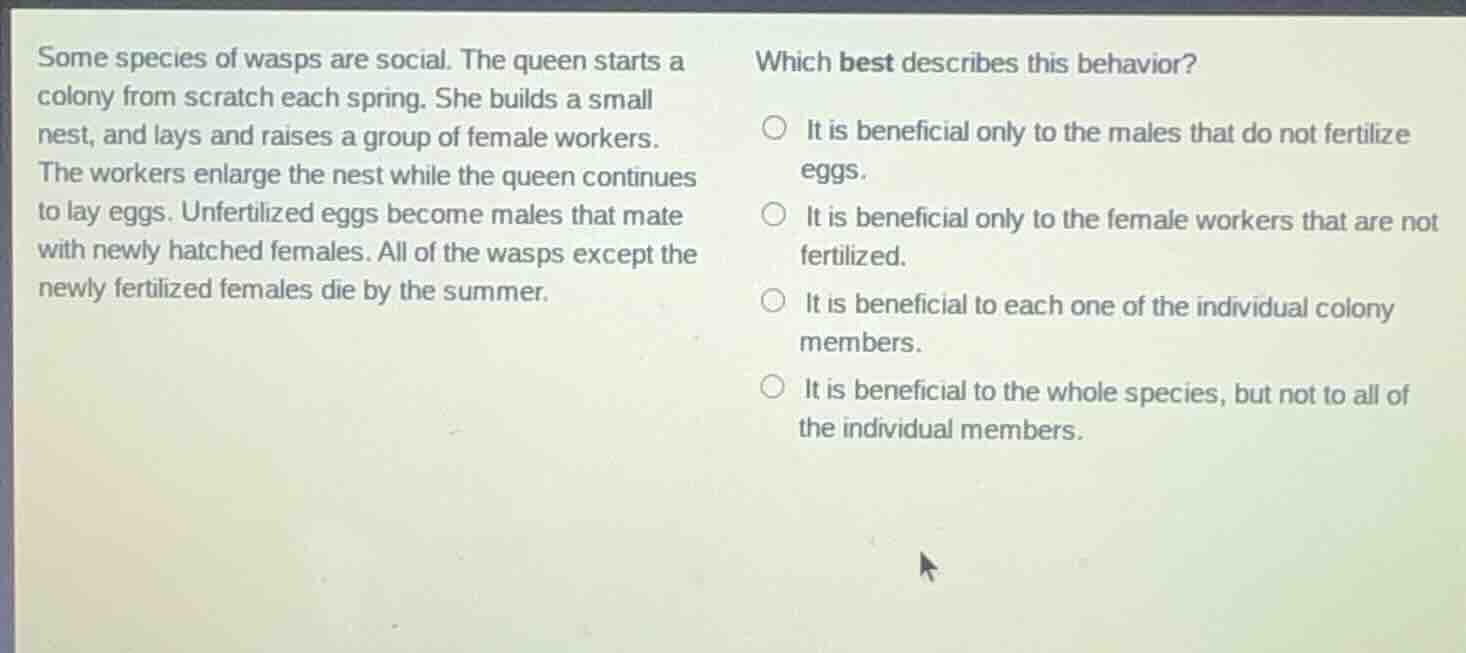
some species of wasps are social. the queen starts a colony from scratch each spring. she builds a small nest, and lays and raises a group of female workers. the workers enlarge the nest while the queen continues to lay eggs. unfertilized eggs become males that mate with newly hatched females. all of the wasps except the newly fertilized females die by the summer. which best describes this behavior? it is beneficial only to the males that do not fertilize eggs. it is beneficial only to the female workers that are not fertilized. it is beneficial to each one of the individual colony members. it is beneficial to the whole species, but not to all of the individual members.
This social wasp colony behavior ensures the survival of the species: the queen and workers support the production of fertilized new females (future queens) that will continue the species, while all other colony members (queen, workers, males) die by summer, meaning not every individual benefits, but the species persists. The other options are incorrect: males that don't fertilize eggs don't gain benefit, female workers (unfertilized) die without direct individual benefit, and not all individual members gain benefit.

Snap & solve any problem in the app
Get step-by-step solutions on Sovi AI
Photo-based solutions with guided steps
Explore more problems and detailed explanations
D. It is beneficial to the whole species, but not to all of the individual members.