QUESTION IMAGE
Question
stem cells are generic cells that are able to develop into many different cell types. this can range from muscle cells to brain cells. in some cases, they can also fix damaged tissues. stem cell - based therapies may one day be used to treat serious illnesses such as alzheimer’s.
how is it that cells can be so different but come from one type of stem cell?
all cells in an organism have the same dna, but some segments of dna called genes can be turned on or off for certain traits. for example - what do you think would need more mitochondria - a muscle cell or a red blood cell?
the process of turning genes on or off is called gene regulation.
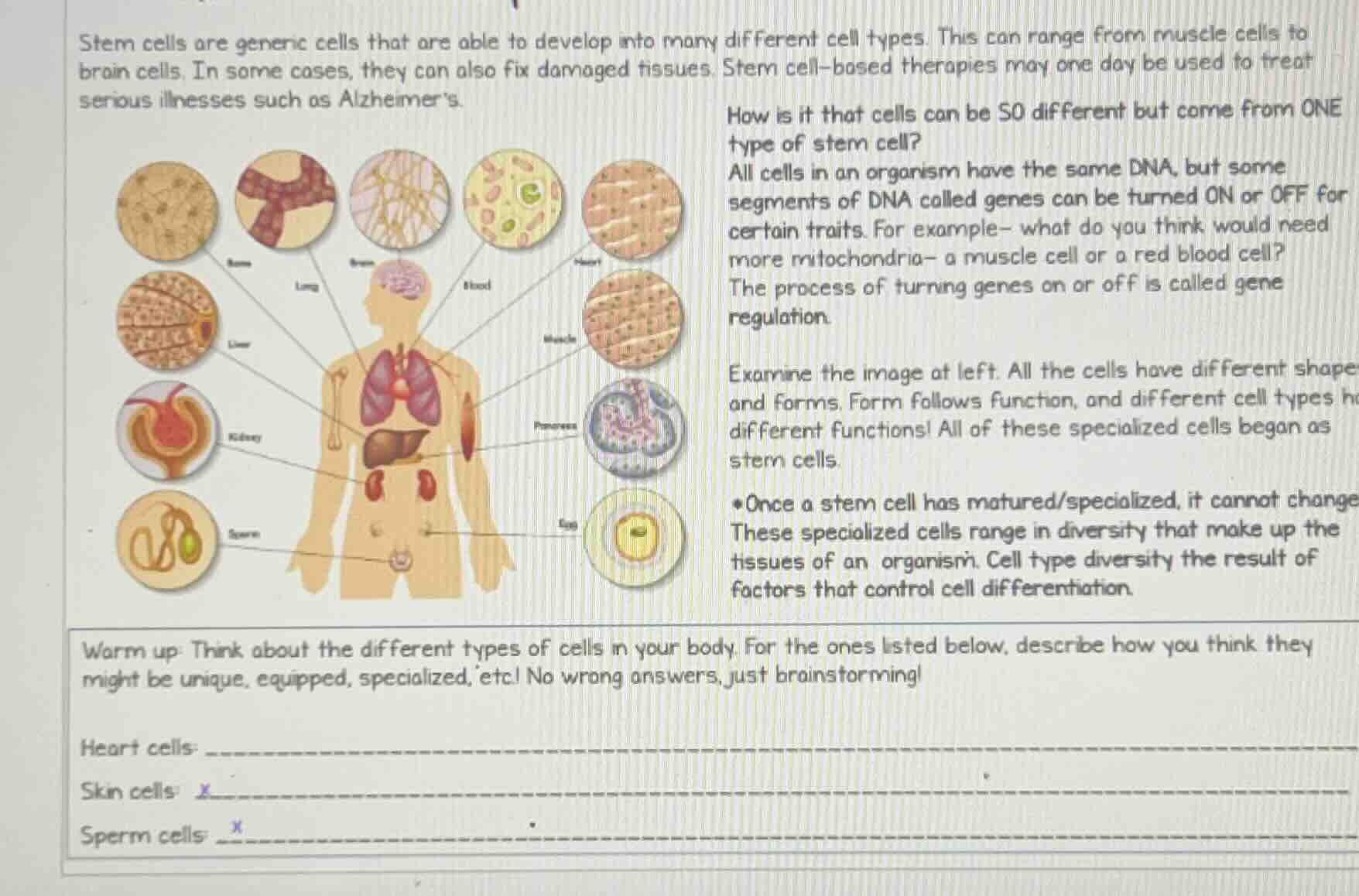
examine the image at left. all the cells have different shape and forms. form follows function, and different cell types ha different functions! all of these specialized cells began as stem cells.
*once a stem cell has matured/specialized, it cannot change
these specialized cells range in diversity that make up the tissues of an organism. cell type diversity the result of factors that control cell differentiation.
warm up: think about the different types of cells in your body. for the ones listed below, describe how you think they might be unique, equipped, specialized, etc! no wrong answers, just brainstorming!
heart cells:
skin cells:
sperm cells:
- Heart cells: Heart muscle cells (cardiomyocytes) need constant energy to keep the heart pumping nonstop, so they are packed with a very high number of mitochondria. They also have intercalated discs that connect adjacent cells, allowing rapid electrical signals to pass through and coordinate synchronized contractions of the heart.
- Skin cells: The outer skin cells (keratinocytes) are tough, flat, and filled with the protein keratin, which creates a waterproof, protective barrier against pathogens and physical damage. They are constantly being shed and replaced by new cells from deeper layers of the skin to maintain this barrier.
- Sperm cells: Sperm cells are streamlined with a long tail (flagellum) that allows them to swim long distances to reach and fertilize an egg. They have a compact head containing genetic material (DNA) and a midsection packed with mitochondria to provide energy for the tail's movement.

Snap & solve any problem in the app
Get step-by-step solutions on Sovi AI
Photo-based solutions with guided steps
Explore more problems and detailed explanations
- Heart cells: Packed with mitochondria for constant energy, have intercalated discs for synchronized contractions to keep the heart pumping continuously.
- Skin cells: Flat, tough, filled with keratin to form a waterproof, protective barrier; constantly shed and replaced to maintain skin integrity.
- Sperm cells: Have a long flagellum for swimming, a compact head with genetic material, and midsection mitochondria to power movement toward an egg for fertilization.