QUESTION IMAGE
Question
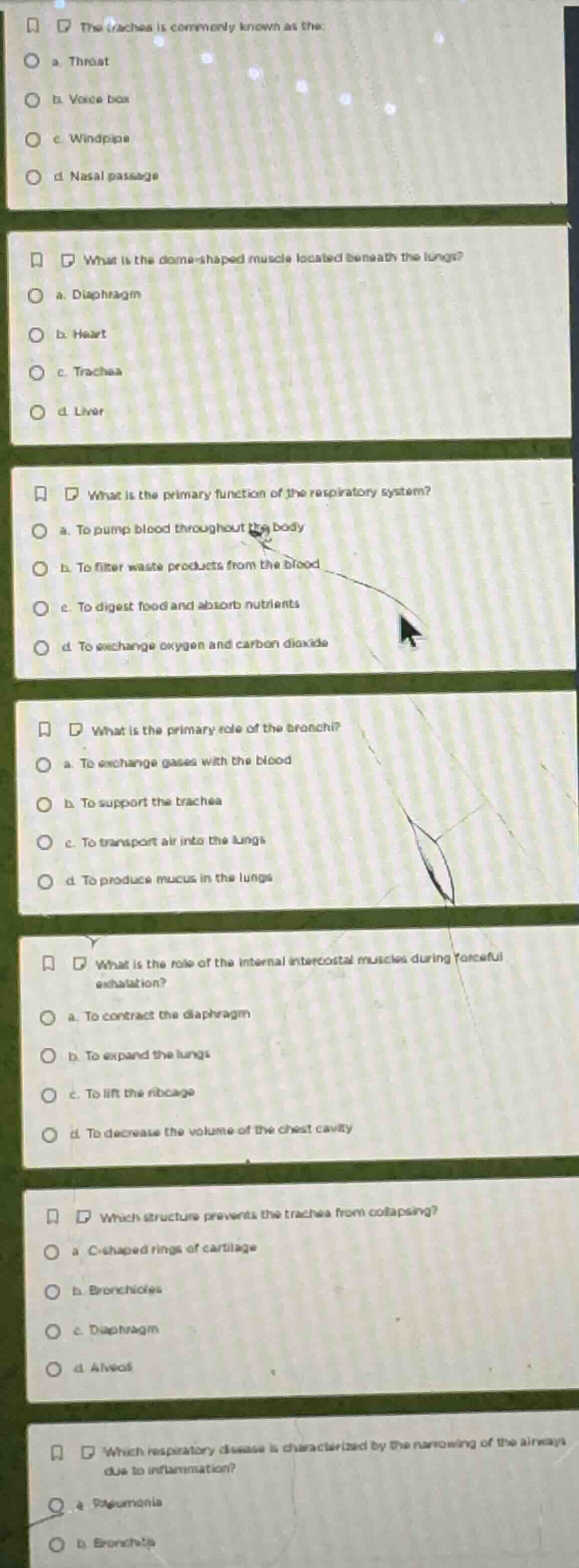
- the trachea is commonly known as the
a. throat
b. voice box
c. windpipe
d. nasal passage
- what is the dome - shaped muscle located beneath the lungs?
a. diaphragm
b. heart
c. trachea
d. liver
- what is the primary function of the respiratory system?
a. to pump blood throughout the body
b. to filter waste products from the blood
c. to digest food and absorb nutrients
d. to exchange oxygen and carbon dioxide
- what is the primary role of the bronchi?
a. to exchange gases with the blood
b. to support the trachea
c. to transport air into the lungs
d. to produce mucus in the lungs
- what is the role of the internal intercostal muscles during forceful exhalation?
a. to contract the diaphragm
b. to expand the lungs
c. to lift the ribcage
d. to decrease the volume of the chest cavity
- which structure prevents the trachea from collapsing?
a. c - shaped rings of cartilage
b. bronchioles
c. diaphragm
d. alveoli
- which respiratory disease is characterized by the narrowing of the airways due to inflammation?
a. pneumonia
b. bronchitis
Brief Explanations
- The trachea is the anatomical structure commonly called the windpipe.
- The diaphragm is the dome-shaped muscle under the lungs that aids breathing.
- The core job of the respiratory system is gas exchange (oxygen in, carbon dioxide out).
- Bronchi are the airways that carry air from the trachea into the lungs.
- During forceful exhalation, internal intercostal muscles contract to reduce chest cavity volume, pushing air out.
- C-shaped cartilage rings keep the trachea open and prevent it from collapsing.
- (Note: The last question's options are cut off, but based on the description, bronchitis involves airway narrowing from inflammation; pneumonia is infection of lung tissue. Assuming full options, bronchitis is the correct match here.)

Snap & solve any problem in the app
Get step-by-step solutions on Sovi AI
Photo-based solutions with guided steps
Explore more problems and detailed explanations
- c. Windpipe
- a. Diaphragm
- d. To exchange oxygen and carbon dioxide
- c. To transport air into the lungs
- d. To decrease the volume of the chest cavity
- a. C-shaped rings of cartilage
- b. Bronchitis