QUESTION IMAGE
Question
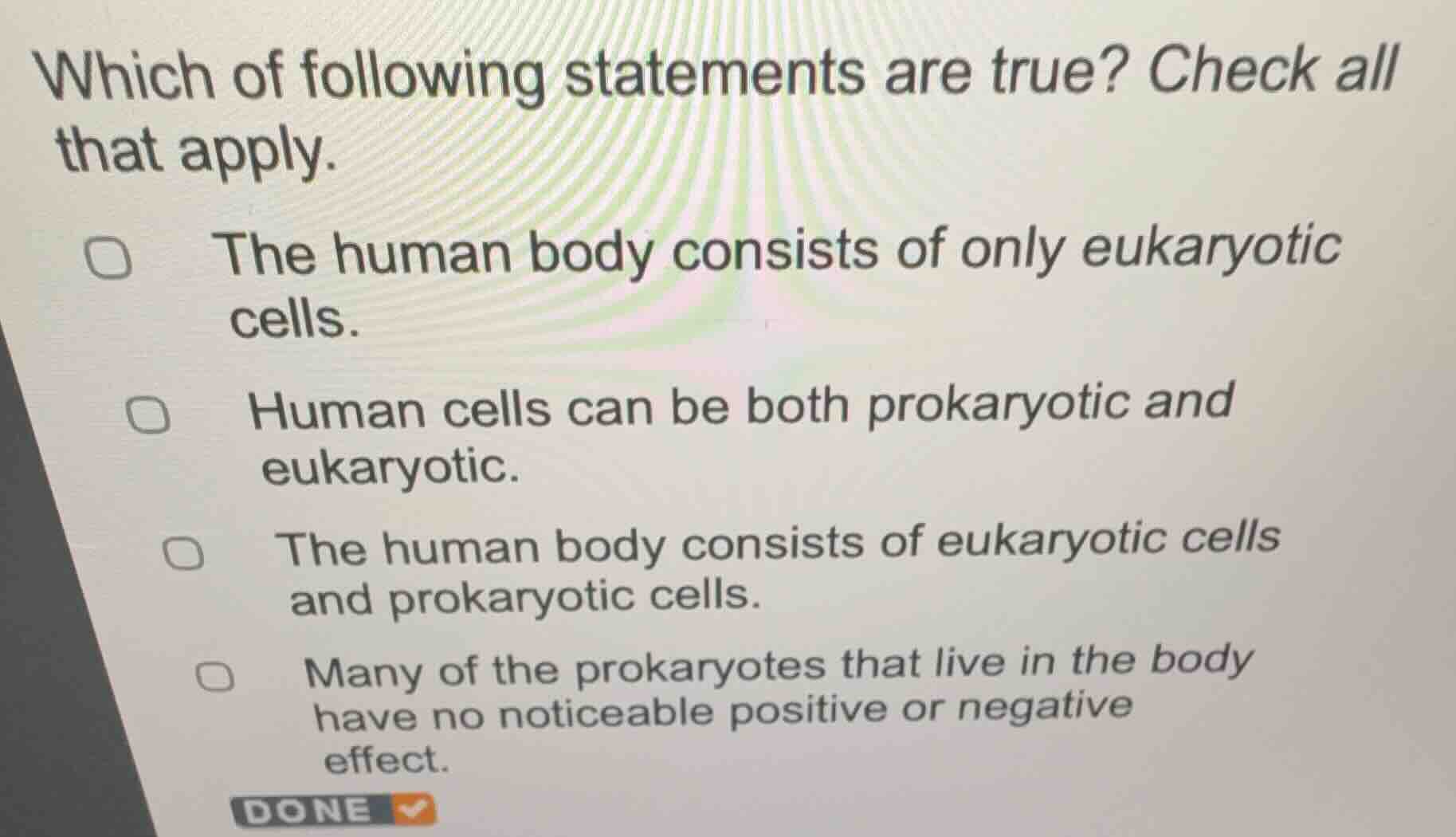
which of following statements are true? check all that apply. the human body consists of only eukaryotic cells. human cells can be both prokaryotic and eukaryotic. the human body consists of eukaryotic cells and prokaryotic cells. many of the prokaryotes that live in the body have no noticeable positive or negative effect.
Brief Explanations
- Analyze "The human body consists of only eukaryotic cells": Human body has prokaryotic cells (like gut bacteria), so this is false.
- Analyze "Human cells can be both prokaryotic and eukaryotic": Human cells (somatic, germ) are eukaryotic; prokaryotes in body are not human cells, so this is false.
- Analyze "The human body consists of eukaryotic cells and prokaryotic cells": Human cells (eukaryotic) and prokaryotes (e.g., bacteria) in body, so this is true.
- Analyze "Many of the prokaryotes that live in the body have no noticeable positive or negative effect": Many commensal bacteria have neutral effects, so this is true.

Snap & solve any problem in the app
Get step-by-step solutions on Sovi AI
Photo-based solutions with guided steps
Explore more problems and detailed explanations
C. The human body consists of eukaryotic cells and prokaryotic cells
D. Many of the prokaryotes that live in the body have no noticeable positive or negative effect