QUESTION IMAGE
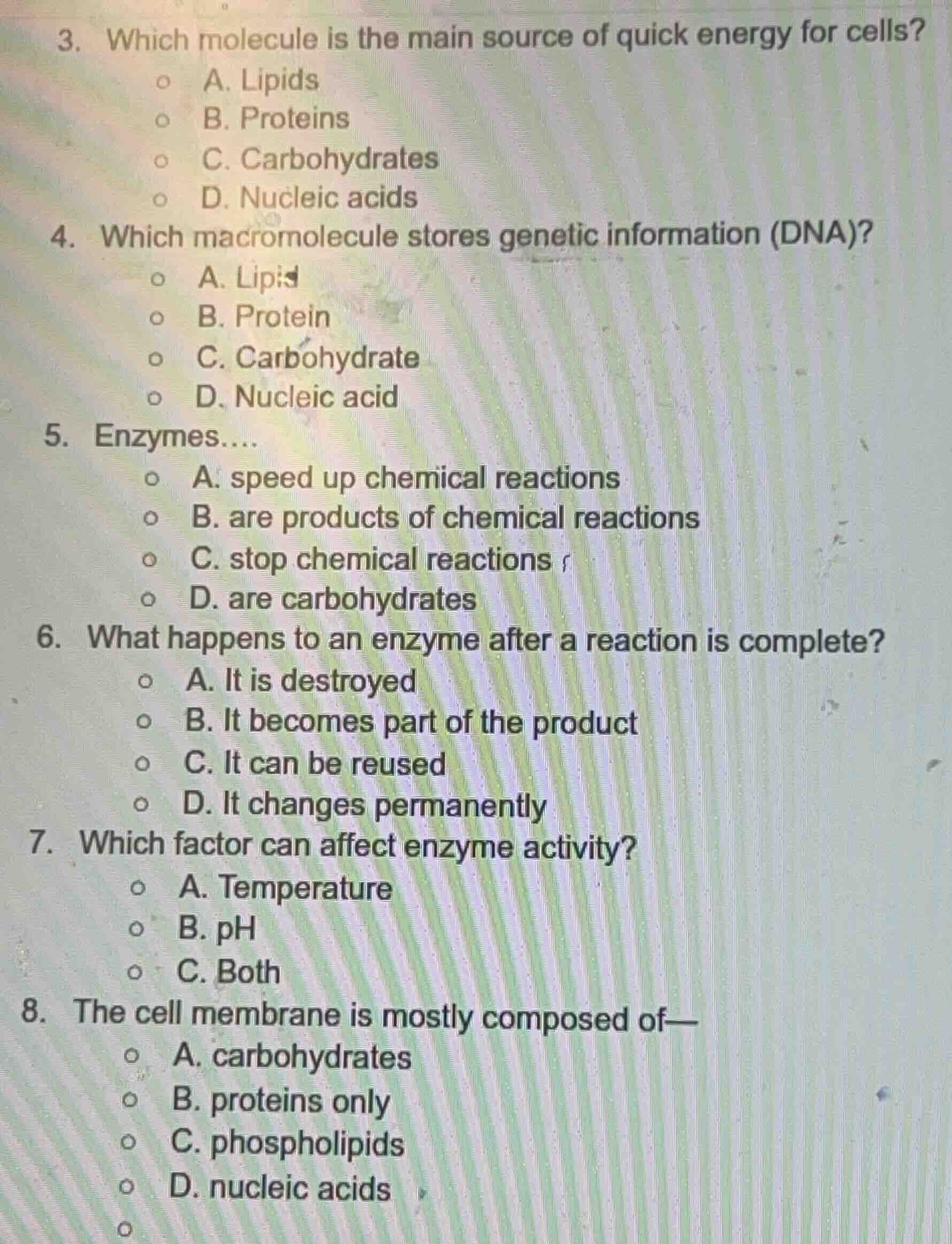
Question
- which molecule is the main source of quick energy for cells?
a. lipids
b. proteins
c. carbohydrates
d. nucleic acids
- which macromolecule stores genetic information (dna)?
a. lipid
b. protein
c. carbohydrate
d. nucleic acid
- enzymes....
a. speed up chemical reactions
b. are products of chemical reactions
c. stop chemical reactions
d. are carbohydrates
- what happens to an enzyme after a reaction is complete?
a. it is destroyed
b. it becomes part of the product
c. it can be reused
d. it changes permanently
- which factor can affect enzyme activity?
a. temperature
b. ph
c. both
- the cell membrane is mostly composed of—
a. carbohydrates
b. proteins only
c. phospholipids
d. nucleic acids
Question 3
Lipids are for long - term energy storage, proteins have structural and functional roles (not quick energy), nucleic acids are for genetic info. Carbohydrates are broken down quickly to give cells energy.
Lipids are for energy storage and cell structure, proteins have various functions like enzymes and structure, carbohydrates are for energy. Nucleic acids (like DNA) store genetic information.
Enzymes are biological catalysts. Catalysts speed up chemical reactions without being consumed. They are not products of reactions, don't stop reactions, and most enzymes are proteins (not carbohydrates).

Snap & solve any problem in the app
Get step-by-step solutions on Sovi AI
Photo-based solutions with guided steps
Explore more problems and detailed explanations
C. Carbohydrates