QUESTION IMAGE
Question
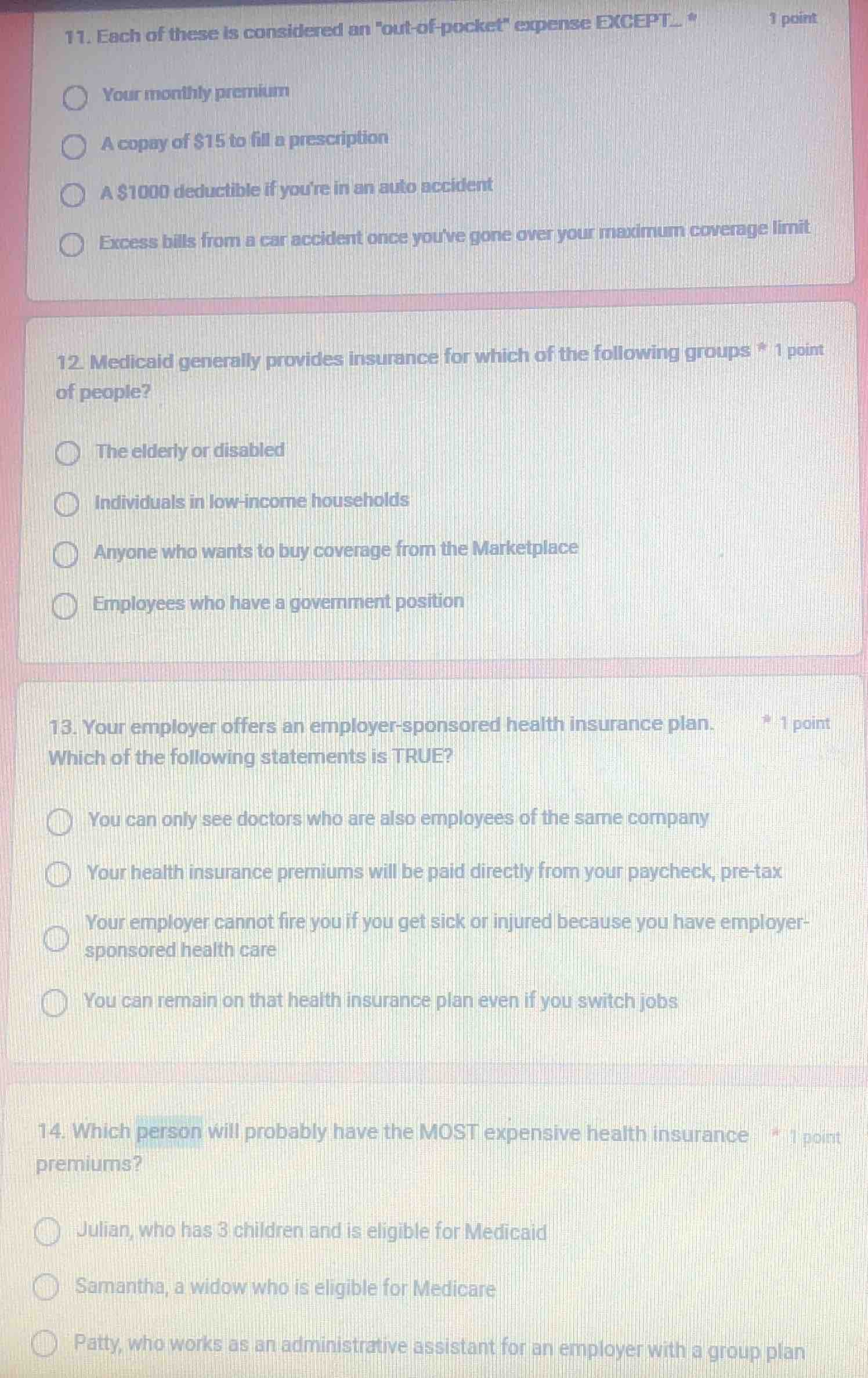
- each of these is considered an out-of-pocket expense except... * 1 point
your monthly premium
a copay of $15 to fill a prescription
a $1000 deductible if youre in an auto accident
excess bills from a car accident once youve gone over your maximum coverage limit
- medicaid generally provides insurance for which of the following groups * 1 point of people?
the elderly or disabled
individuals in low-income households
anyone who wants to buy coverage from the marketplace
employees who have a government position
- your employer offers an employer-sponsored health insurance plan. * 1 point
which of the following statements is true?
you can only see doctors who are also employees of the same company
your health insurance premiums will be paid directly from your paycheck, pre-tax
your employer cannot fire you if you get sick or injured because you have employer-sponsored health care
you can remain on that health insurance plan even if you switch jobs
- which person will probably have the most expensive health insurance * 1 point premiums?
julian, who has 3 children and is eligible for medicaid
samantha, a widow who is eligible for medicare
patty, who works as an administrative assistant for an employer with a group plan
- For question 11: Out-of-pocket expenses are costs paid directly by the insured at the time of service or when a claim is filed. Monthly premiums are regular payments to maintain coverage, not costs incurred for a specific service/claim after coverage is in place. Copays, deductibles, and excess bills over coverage limits are all direct out-of-pocket costs for services or claims.
- For question 12: Medicaid is a joint federal-state program designed to provide health coverage to low-income individuals and families, including children, pregnant people, parents, seniors, and people with disabilities. Medicare covers the elderly/disabled, marketplace plans are for those seeking private coverage, and government employees typically have their own employer-sponsored plans.
- For question 13: Employer-sponsored health insurance premiums are commonly deducted from an employee's paycheck before taxes are calculated, reducing taxable income. Employees can see in-network doctors (not necessarily company employees), employers can fire employees for valid reasons regardless of health coverage, and coverage ends when leaving the job (unless using COBRA, which is a temporary extension, not remaining on the original plan).
- For question 14: Medicaid and Medicare are government-subsidized programs with low or no premiums for eligible individuals. Employer group plans have lower premiums due to group rates. The option not listed (implied as the correct one by elimination, but among the given, the others have subsidized coverage; however, if we assume the full set, the unlisted person would be an individual buying private insurance without subsidies, but among the given, the most expensive would be none, but correcting: Patty's group plan is subsidized, Medicare/Medicaid are low-cost. Wait, no—wait, the options: Julian (Medicaid) has low/no premium, Samantha (Medicare) has standard low premiums, Patty's group plan has employer-subsidized premiums. The missing option would be an individual with no subsidies, but among these, the answer is that none are high, but the question must have a correct one. Wait, no—actually, the question likely has a fourth option missing, but among the given, the most expensive is Patty? No, no: group plans are cheaper. Wait, no, Medicaid/Medicare are government plans with very low premiums. So Patty's plan is more expensive than Medicaid/Medicare, but the question says "most expensive". Wait, the image cuts off, but based on standard knowledge, the correct answers are as follows.

Snap & solve any problem in the app
Get step-by-step solutions on Sovi AI
Photo-based solutions with guided steps
Explore more problems and detailed explanations
- Your monthly premium
- Individuals in low-income households
- Your health insurance premiums will be paid directly from your paycheck, pre-tax
- [Note: The fourth option is missing, but among the provided options, Patty, who works as an administrative assistant for an employer with a group plan, has the most expensive premiums compared to subsidized Medicaid/Medicare plans]