QUESTION IMAGE
Question
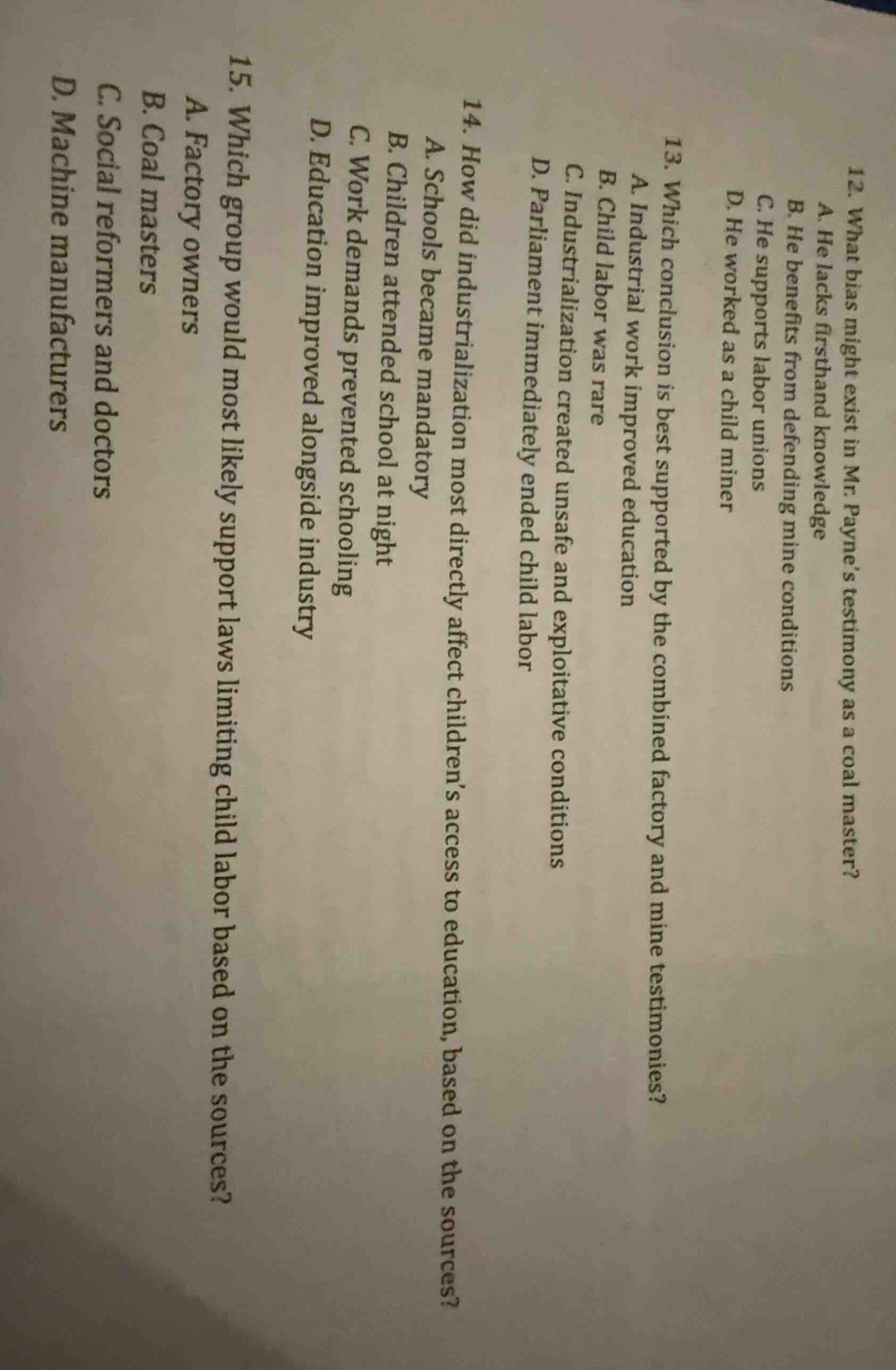
- what bias might exist in mr. payne’s testimony as a coal master?
a. he lacks firsthand knowledge
b. he benefits from defending mine conditions
c. he supports labor unions
d. he worked as a child miner
- which conclusion is best supported by the combined factory and mine testimonies?
a. industrial work improved education
b. child labor was rare
c. industrialization created unsafe and exploitative conditions
d. parliament immediately ended child labor
- how did industrialization most directly affect children’s access to education, based on the sources?
a. schools became mandatory
b. children attended school at night
c. work demands prevented schooling
d. education improved alongside industry
- which group would most likely support laws limiting child labor based on the sources?
a. factory owners
b. coal masters
c. social reformers and doctors
d. machine manufacturers
Question 12
Mr. Payne is a coal master, so he has a vested interest in defending mine conditions (as his role is related to the mines). This creates a bias where he might present a more favorable view of mine conditions to protect his interests, so he benefits from defending mine conditions. Option A is incorrect as he likely has knowledge from his role. Option C: Supporting labor unions would not align with a coal master's interests. Option D: The question is about bias in his testimony, not his work history.
Factory and mine testimonies during industrialization often highlighted unsafe and exploitative conditions (long hours, dangerous work, low pay, especially for children). Option A: Industrial work did not improve education (child labor often prevented schooling). Option B: Child labor was common, not rare. Option D: Parliament did not immediately end child labor; reforms were gradual. So the best conclusion is industrialization created unsafe and exploitative conditions.
During industrialization, children worked in factories/mines, which took time away from schooling. Work demands (long hours, need for labor) prevented children from attending school regularly, directly affecting their access to education. Option A: Schools becoming mandatory was a later reform, not a direct effect of industrialization. Option B: Children attending at night is not accurate; work took daytime hours. Option D: Education improving alongside industry is incorrect as industrialization initially harmed education access for children.

Snap & solve any problem in the app
Get step-by-step solutions on Sovi AI
Photo-based solutions with guided steps
Explore more problems and detailed explanations
B. He benefits from defending mine conditions