QUESTION IMAGE
Question
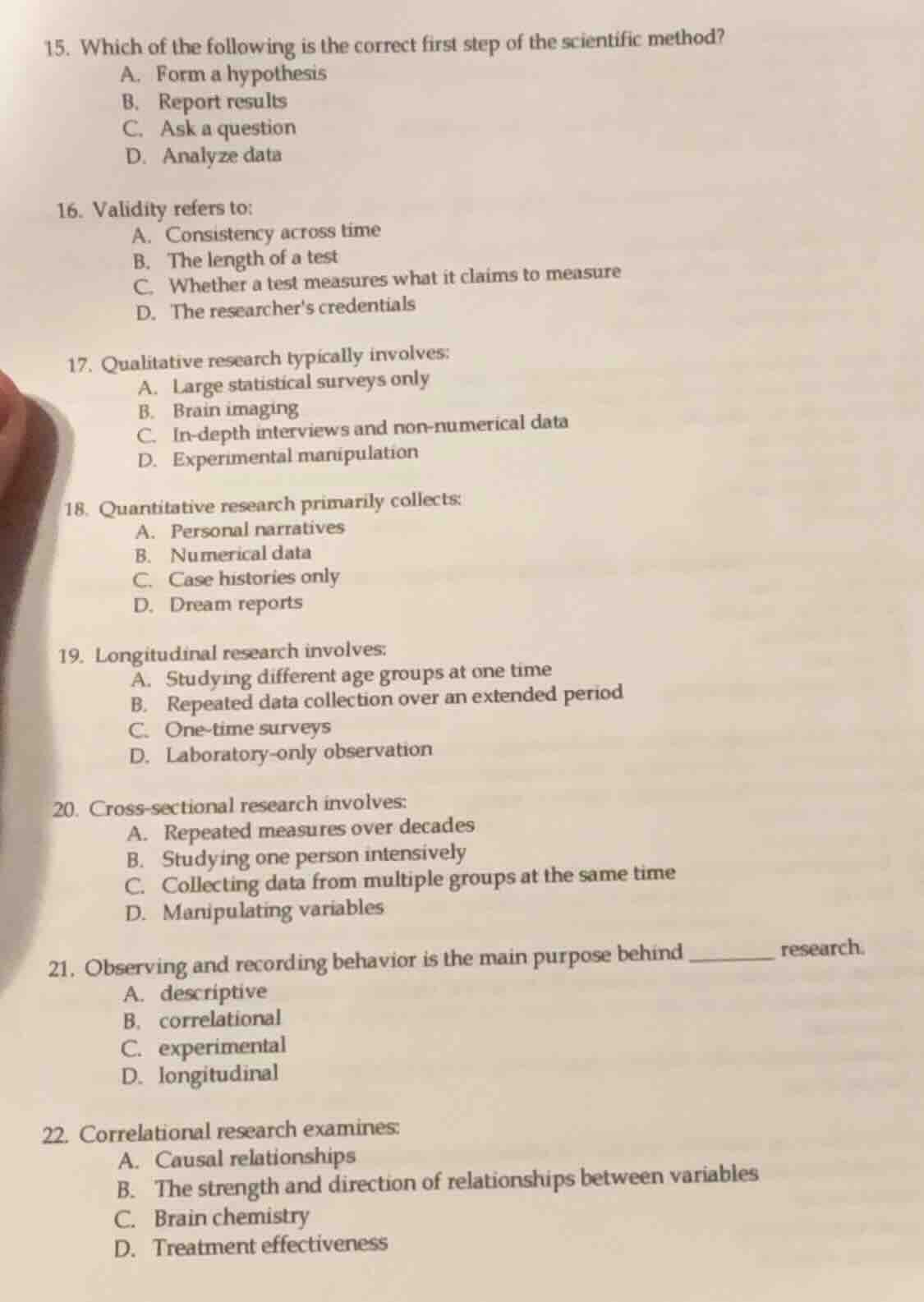
- which of the following is the correct first step of the scientific method?
a. form a hypothesis
b. report results
c. ask a question
d. analyze data
- validity refers to:
a. consistency across time
b. the length of a test
c. whether a test measures what it claims to measure
d. the researchers credentials
- qualitative research typically involves:
a. large statistical surveys only
b. brain imaging
c. in - depth interviews and non - numerical data
d. experimental manipulation
- quantitative research primarily collects:
a. personal narratives
b. numerical data
c. case histories only
d. dream reports
- longitudinal research involves:
a. studying different age groups at one time
b. repeated data collection over an extended period
c. one - time surveys
d. laboratory - only observation
- cross - sectional research involves:
a. repeated measures over decades
b. studying one person intensively
c. collecting data from multiple groups at the same time
d. manipulating variables
- observing and recording behavior is the main purpose behind ______ research.
a. descriptive
b. correlational
c. experimental
d. longitudinal
- correlational research examines:
a. causal relationships
b. the strength and direction of relationships between variables
c. brain chemistry
d. treatment effectiveness
- The scientific method starts with identifying a question to investigate.
- Validity assesses if a test meets its intended measurement goal.
- Qualitative research focuses on non-narrative, non-numerical data like interviews.
- Quantitative research centers on measurable, numerical data points.
- Longitudinal research tracks subjects/data over a long period repeatedly.
- Cross-sectional research gathers data from multiple groups at a single time point.
- Descriptive research's core goal is observing and documenting behavior.
- Correlational research looks at how strongly variables relate, not causation.

Snap & solve any problem in the app
Get step-by-step solutions on Sovi AI
Photo-based solutions with guided steps
Explore more problems and detailed explanations
- C. Ask a question
- C. Whether a test measures what it claims to measure
- C. In-depth interviews and non-numerical data
- B. Numerical data
- B. Repeated data collection over an extended period
- C. Collecting data from multiple groups at the same time
- A. descriptive
- B. The strength and direction of relationships between variables