QUESTION IMAGE
Question
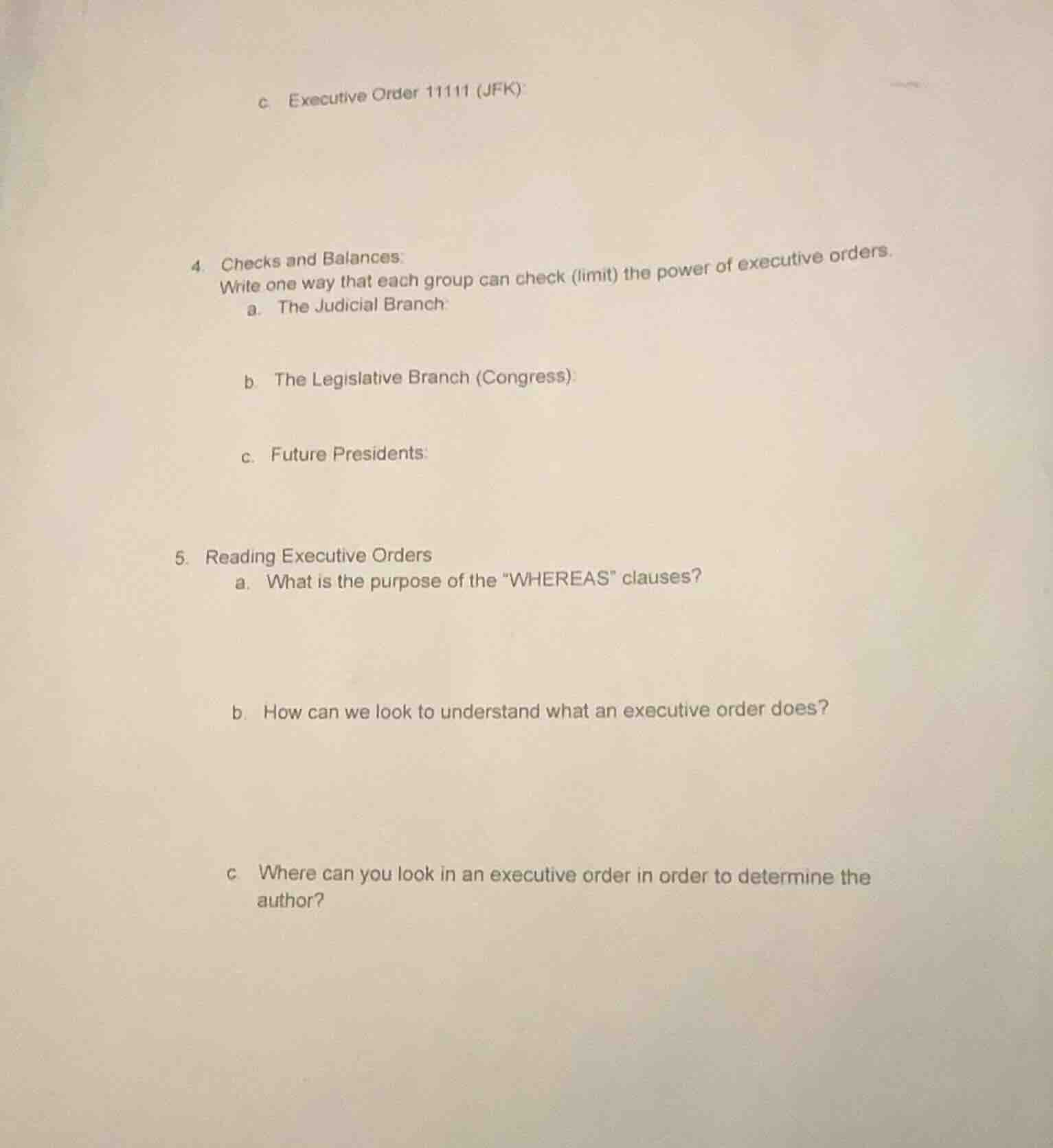
c. executive order 11111 (jfk)
- checks and balances:
write one way that each group can check (limit) the power of executive orders.
a. the judicial branch:
b. the legislative branch (congress):
c. future presidents:
- reading executive orders
a. what is the purpose of the \whereas\ clauses?
b. how can we look to understand what an executive order does?
c. where can you look in an executive order in order to determine the
author?
For Question 4:
a. The Judicial Branch can rule executive orders unconstitutional through judicial review, which invalidates the order.
b. Congress can pass legislation to override or limit the scope of an executive order, or defund its implementation.
c. Future Presidents can issue new executive orders to revoke or replace existing ones from prior administrations.
For Question 5:
a. "WHEREAS" clauses state the justifications, facts, or legal basis that support the need for the executive order, establishing context for the actions that follow.
b. To understand what an executive order does, review the "THEREFORE" or "NOW, THEREFORE" sections that outline the specific directives, requirements, or actions ordered for government agencies/officials.
c. The author (sitting President) is typically identified at the top of the executive order (near the title/order number) and at the end with their signature block.

Snap & solve any problem in the app
Get step-by-step solutions on Sovi AI
Photo-based solutions with guided steps
Explore more problems and detailed explanations
Question 4:
a. Rule orders unconstitutional via judicial review.
b. Pass legislation to limit or defund the order.
c. Revoke/replace orders with new ones.
Question 5:
a. State justifications/legal basis for the order.
b. Review directive sections (e.g., "THEREFORE" clauses) for required actions.
c. Check the header (near order number) and signature block at the end.