QUESTION IMAGE
Question
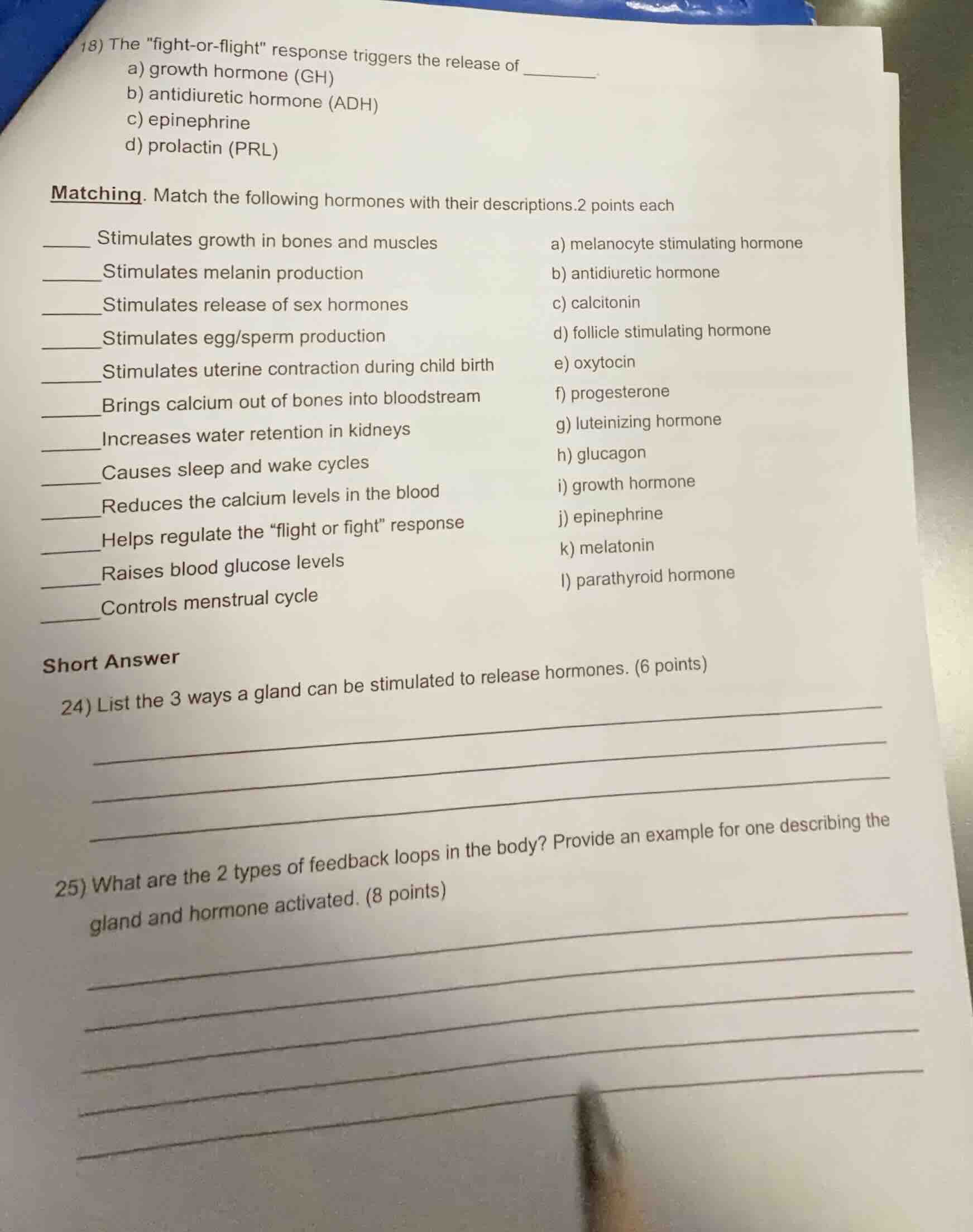
- the \fight - or - flight\ response triggers the release of ______.
a) growth hormone (gh)
b) antidiuretic hormone (adh)
c) epinephrine
d) prolactin (prl)
matching. match the following hormones with their descriptions. 2 points each
_____ stimulates growth in bones and muscles
a) melanocyte stimulating hormone
_____stimulates melanin production
b) antidiuretic hormone
_____stimulates release of sex hormones
c) calcitonin
_____stimulates egg/sperm production
d) follicle stimulating hormone
_____stimulates uterine contraction during child birth
e) oxytocin
_____brings calcium out of bones into bloodstream
f) progesterone
_____increases water retention in kidneys
g) luteinizing hormone
_____causes sleep and wake cycles
h) glucagon
_____reduces the calcium levels in the blood
i) growth hormone
_____helps regulate the \flight or fight\ response
j) epinephrine
_____raises blood glucose levels
k) melatonin
_____controls menstrual cycle
l) parathyroid hormone
short answer
- list the 3 ways a gland can be stimulated to release hormones. (6 points)
- what are the 2 types of feedback loops in the body? provide an example for one describing the gland and hormone activated. (8 points)
Question 18:
Epinephrine (adrenaline) is the key hormone released during the fight-or-flight response, triggering physiological changes for stress.
Matching:
Each hormone is paired with its core function based on endocrine system physiology:
- Growth hormone targets bone/muscle growth.
- Melanocyte stimulating hormone triggers melanin production.
- Luteinizing hormone signals sex hormone release.
- Follicle stimulating hormone drives gamete production.
- Oxytocin induces uterine contractions during labor.
- Parathyroid hormone moves calcium from bones to blood.
- Antidiuretic hormone increases kidney water retention.
- Melatonin regulates sleep-wake cycles.
- Calcitonin lowers blood calcium levels.
- Epinephrine regulates fight-or-flight response.
- Glucagon raises blood glucose levels.
- Progesterone controls the menstrual cycle.
Question 24:
Glands use three main stimulation pathways to release hormones, based on endocrine system regulation.
Question 25:
The body uses two feedback loop types to maintain homeostasis; an example illustrates how one loop functions with specific glands and hormones.

Snap & solve any problem in the app
Get step-by-step solutions on Sovi AI
Photo-based solutions with guided steps
Explore more problems and detailed explanations
Question 18:
c) epinephrine
Matching:
- i) growth hormone
- a) melanocyte stimulating hormone
- g) luteinizing hormone
- d) follicle stimulating hormone
- e) oxytocin
- l) parathyroid hormone
- b) antidiuretic hormone
- k) melatonin
- c) calcitonin
- j) epinephrine
- h) glucagon
- f) progesterone
Question 24:
- Humoral stimulation: Glands respond to changes in blood nutrient/ion levels.
- Neural stimulation: Nerve signals directly trigger hormone release.
- Hormonal stimulation: Hormones from other glands trigger hormone release.
Question 25:
The two types of feedback loops are negative feedback and positive feedback.
Example (negative feedback): When blood glucose levels rise, the pancreas (gland) releases insulin (hormone). Insulin signals cells to take up glucose, lowering blood glucose levels. Once levels return to normal, the pancreas stops releasing insulin, reversing the initial stimulus.