QUESTION IMAGE
Question
approaches to therapy
biomedical therapy is another approach to treatment. often it is taken by individuals who
are also undergoing psychotherapy, though can be taken on its own. biomedical therapy
(medications) used to treat psychological disorders are called psychotropic medications
and are prescribed by medical doctors, including psychiatrists.
directions: follow this link/qr code to openstax, to learn more about various
psychotropic medications that are commonly prescribed. complete the chart
below with your findings.
https://openstax.org/books/psychology-2e/pages/16-2-types-of-treatment
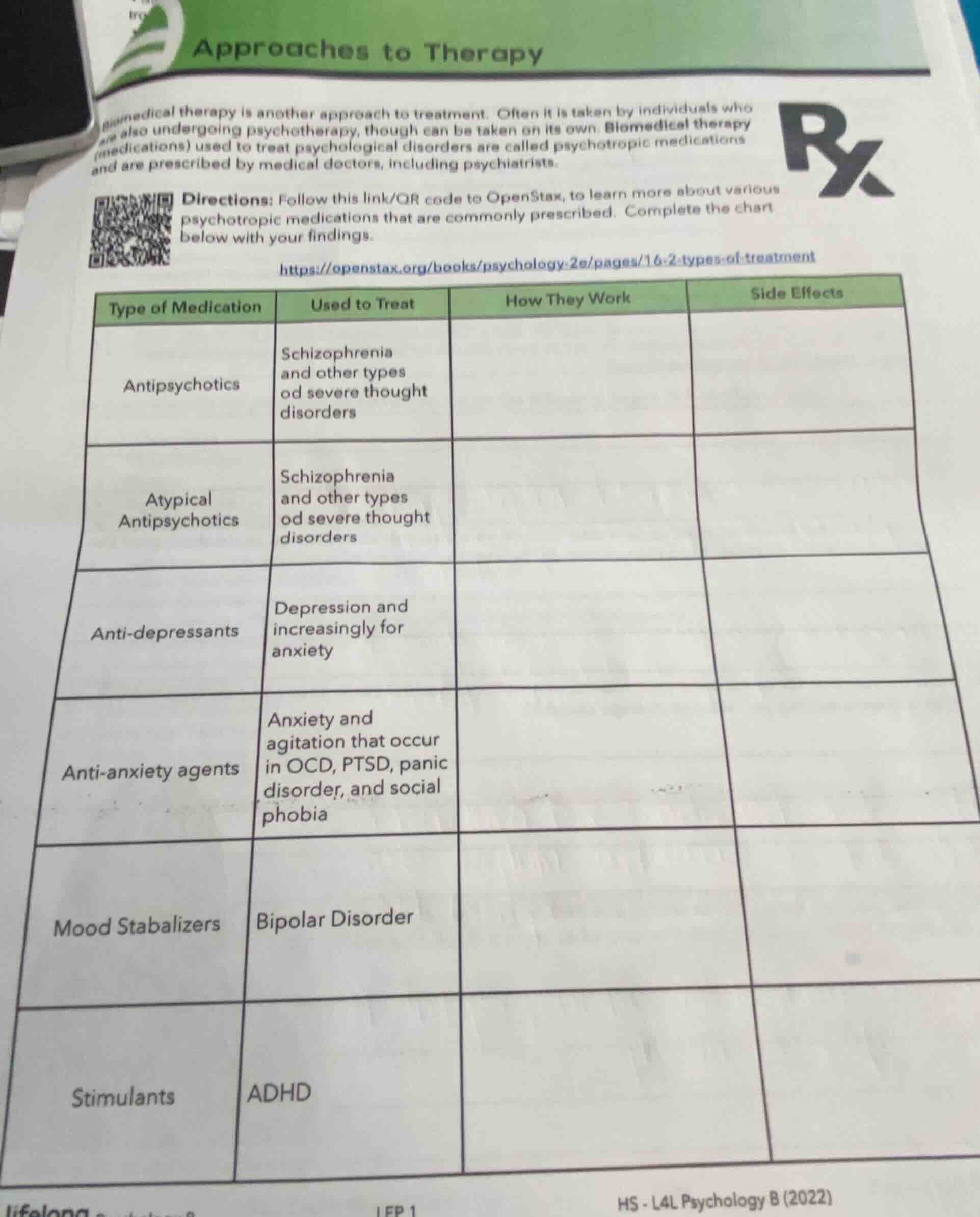
type of medication | used to treat | how they work | side effects
antipsychotics | schizophrenia
and other types
od severe thought
disorders | |
atypical
antipsychotics | schizophrenia
and other types
od severe thought
disorders | |
anti - depressants | depression and
increasingly for
anxiety | |
anti - anxiety agents | anxiety and
agitation that occur
in ocd, ptsd, panic
disorder, and social
phobia | |
mood stabalizers | bipolar disorder | |
stimulants | adhd | |
To complete the chart, we use the provided link (https://openstax.org/books/psychology-2e/pages/16-2-types-of-treatment) to find the relevant information for each type of medication:
1. Antipsychotics
- How They Work: Block dopamine receptors in the brain, reducing dopamine activity which helps alleviate symptoms of psychosis (e.g., hallucinations, delusions).
- Side Effects: Muscle stiffness, tremors, weight gain, tardive dyskinesia (involuntary movements), dry mouth, blurred vision.
2. Atypical Antipsychotics
- How They Work: Target both dopamine and serotonin receptors, often with fewer movement-related side effects than typical antipsychotics.
- Side Effects: Weight gain, metabolic issues (e.g., diabetes risk), drowsiness, dizziness, constipation.
3. Anti - depressants
- How They Work (e.g., SSRIs like Prozac): Increase serotonin (or other neurotransmitters like norepinephrine) availability in the brain by blocking reuptake, improving mood.
- Side Effects: Nausea, insomnia, sexual dysfunction, weight gain, anxiety (initial use).
4. Anti - anxiety agents (e.g., Benzodiazepines)
- How They Work: Enhance the activity of GABA (a calming neurotransmitter), reducing anxiety and agitation.
- Side Effects: Drowsiness, dizziness, dependence/tolerance, memory issues, impaired coordination.
5. Mood Stabilizers (e.g., Lithium)
- How They Work: Regulate neurotransmitter levels (e.g., serotonin, dopamine) and ion channels, stabilizing mood in bipolar disorder.
- Side Effects: Tremors, weight gain, thirst, kidney/thyroid issues, nausea.
6. Stimulants (e.g., Adderall for ADHD)
- How They Work: Increase dopamine and norepinephrine activity, improving focus, attention, and impulse control.
- Side Effects: Insomnia, decreased appetite, weight loss, irritability, increased heart rate/blood pressure.
To fill the chart, transfer this information into the respective “How They Work” and “Side Effects” columns for each medication type.
(Note: For accuracy, always cross - reference with the OpenStax Psychology textbook chapter linked.)

Snap & solve any problem in the app
Get step-by-step solutions on Sovi AI
Photo-based solutions with guided steps
Explore more problems and detailed explanations
To complete the chart, we use the provided link (https://openstax.org/books/psychology-2e/pages/16-2-types-of-treatment) to find the relevant information for each type of medication:
1. Antipsychotics
- How They Work: Block dopamine receptors in the brain, reducing dopamine activity which helps alleviate symptoms of psychosis (e.g., hallucinations, delusions).
- Side Effects: Muscle stiffness, tremors, weight gain, tardive dyskinesia (involuntary movements), dry mouth, blurred vision.
2. Atypical Antipsychotics
- How They Work: Target both dopamine and serotonin receptors, often with fewer movement-related side effects than typical antipsychotics.
- Side Effects: Weight gain, metabolic issues (e.g., diabetes risk), drowsiness, dizziness, constipation.
3. Anti - depressants
- How They Work (e.g., SSRIs like Prozac): Increase serotonin (or other neurotransmitters like norepinephrine) availability in the brain by blocking reuptake, improving mood.
- Side Effects: Nausea, insomnia, sexual dysfunction, weight gain, anxiety (initial use).
4. Anti - anxiety agents (e.g., Benzodiazepines)
- How They Work: Enhance the activity of GABA (a calming neurotransmitter), reducing anxiety and agitation.
- Side Effects: Drowsiness, dizziness, dependence/tolerance, memory issues, impaired coordination.
5. Mood Stabilizers (e.g., Lithium)
- How They Work: Regulate neurotransmitter levels (e.g., serotonin, dopamine) and ion channels, stabilizing mood in bipolar disorder.
- Side Effects: Tremors, weight gain, thirst, kidney/thyroid issues, nausea.
6. Stimulants (e.g., Adderall for ADHD)
- How They Work: Increase dopamine and norepinephrine activity, improving focus, attention, and impulse control.
- Side Effects: Insomnia, decreased appetite, weight loss, irritability, increased heart rate/blood pressure.
To fill the chart, transfer this information into the respective “How They Work” and “Side Effects” columns for each medication type.
(Note: For accuracy, always cross - reference with the OpenStax Psychology textbook chapter linked.)