QUESTION IMAGE
Question
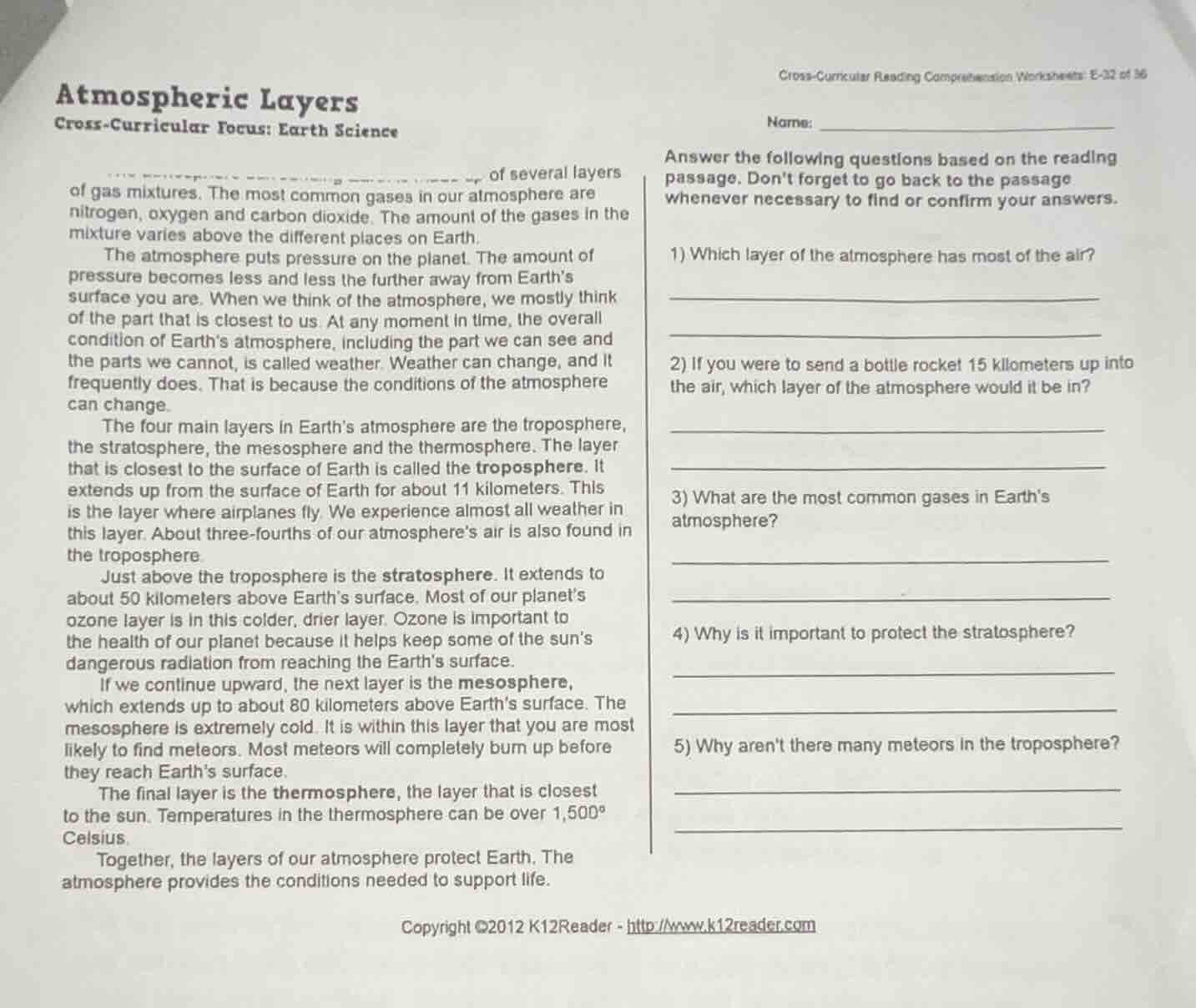
atmospheric layers
cross - curricular focus: earth science
of several layers
of gas mixtures. the most common gases in our atmosphere are
nitrogen, oxygen and carbon dioxide. the amount of the gases in the
mixture varies above the different places on earth.
the atmosphere puts pressure on the planet. the amount of
pressure becomes less and less the further away from earths
surface you are. when we think of the atmosphere, we mostly think
of the part that is closest to us. at any moment in time, the overall
condition of earths atmosphere, including the part we can see and
the parts we cannot, is called weather. weather can change, and it
frequently does. that is because the conditions of the atmosphere
can change.
the four main layers in earths atmosphere are the troposphere,
the stratosphere, the mesosphere and the thermosphere. the layer
that is closest to the surface of earth is called the troposphere. it
extends from the surface of earth for about 11 kilometers. this
is the layer where airplanes fly. we experience almost all weather in
this layer. about three - fourths of our atmospheres air is also found in
the troposphere.
just above the troposphere is the stratosphere. it extends to
about 50 kilometers above earths surface. most of our planets
ozone layer is in this colder, drier layer. ozone is important to
the health of our planet because it helps keep some of the suns
dangerous radiation from reaching the earths surface.
if we continue upward, the next layer is the mesosphere,
which extends up to about 80 kilometers above earths surface. the
mesosphere is extremely cold. it is within this layer that you are most
likely to find meteors. most meteors will completely burn up before
they reach earths surface.
the final layer is the thermosphere, the layer that is closest
to the sun. temperatures in the thermosphere can be over 1,500°celsius.
together, the layers of our atmosphere protect earth. the
atmosphere provides the conditions needed to support life.
cross - curricular reading comprehension worksheets: e - 32 of 36
name:
answer the following questions based on the reading
passage. dont forget to go back to the passage
whenever necessary to find or confirm your answers.
- which layer of the atmosphere has most of the air?
- if you were to send a bottle rocket 15 kilometers up into
the air, which layer of the atmosphere would it be in?
- what are the most common gases in earths
atmosphere?
- why is it important to protect the stratosphere?
- why arent there many meteors in the troposphere?
copyright ©2012 k12reader - http://www.k12reader.com
1)
From the passage: "The layer that is closest to the surface of Earth is called the troposphere... About three - fourths of our atmosphere’s air is also found in the troposphere." So the troposphere has most of the air.
The troposphere extends up to about 11 kilometers. The stratosphere extends to about 50 kilometers above Earth's surface. A bottle rocket sent 15 kilometers up is above the troposphere (11 km) and within the stratosphere (up to 50 km).
The passage states: "The most common gases in our atmosphere are nitrogen, oxygen and carbon dioxide."

Snap & solve any problem in the app
Get step-by-step solutions on Sovi AI
Photo-based solutions with guided steps
Explore more problems and detailed explanations
The troposphere has most of the air.