QUESTION IMAGE
Question
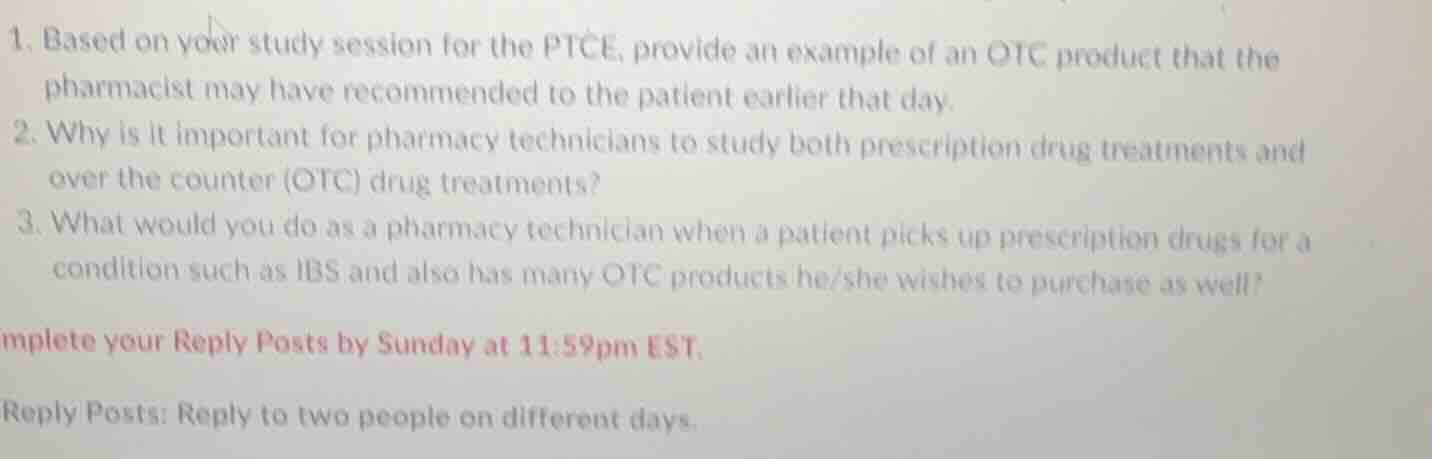
- based on your study session for the ptce, provide an example of an otc product that the pharmacist may have recommended to the patient earlier that day.
- why is it important for pharmacy technicians to study both prescription drug treatments and over the counter (otc) drug treatments?
- what would you do as a pharmacy technician when a patient picks up prescription drugs for a condition such as ibs and also has many otc products he/she wishes to purchase as well?
mplete your reply posts by sunday at 11:59pm est.
reply posts: reply to two people on different days.
Response
Question 1
Brief Explanations
OTC (Over - the - Counter) products are non - prescription drugs. For example, Tylenol (acetaminophen) is an OTC product. It can be recommended for mild to moderate pain relief or to reduce fever. A pharmacist might recommend it to a patient with a headache or a mild fever.
Brief Explanations
- Patient Care: Pharmacy technicians interact with patients. Patients may use both prescription and OTC drugs. Knowing about both helps in providing accurate information, like drug interactions. For example, a patient on a prescription blood thinner (prescription) and taking an OTC aspirin (for pain) needs to know about the increased bleeding risk.
- Inventory and Dispensing: They are involved in managing inventory and dispensing. They need to know which OTCs are available, their uses, and how they relate to prescriptions. For instance, if a prescription drug has a similar effect to an OTC, they can inform the pharmacist or patient.
- Compliance and Safety: Studying both ensures patient safety. Some OTCs can interfere with prescriptions. Also, patients may self - medicate with OTCs inappropriately, and technicians can guide them. For example, a patient with high blood pressure (on prescription meds) taking an OTC decongestant (which can raise blood pressure) needs to be advised against it.
Brief Explanations
- Check for Interactions: First, check if any of the OTC products interact with the IBS prescription drugs. For example, if the IBS prescription is a type of antidiarrheal, and the patient wants to buy an OTC laxative, there could be a conflict. Consult the pharmacist if unsure.
- Counsel the Patient: Provide basic counseling about the OTC products. Explain how to use them, especially in relation to their IBS condition. For instance, if the IBS patient has diarrhea, an OTC antidiarrheal OTC might be appropriate, but a laxative would not.
- Process Transactions and Inventory: Process the purchase of OTC products, update inventory if needed, and ensure proper labeling and packaging. Also, make sure the patient has all the necessary information about both prescription and OTC products.

Snap & solve any problem in the app
Get step-by-step solutions on Sovi AI
Photo-based solutions with guided steps
Explore more problems and detailed explanations
An example of an OTC product a pharmacist may have recommended is Tylenol (acetaminophen), which can be used for pain relief (e.g., headache) or fever reduction.