QUESTION IMAGE
Question
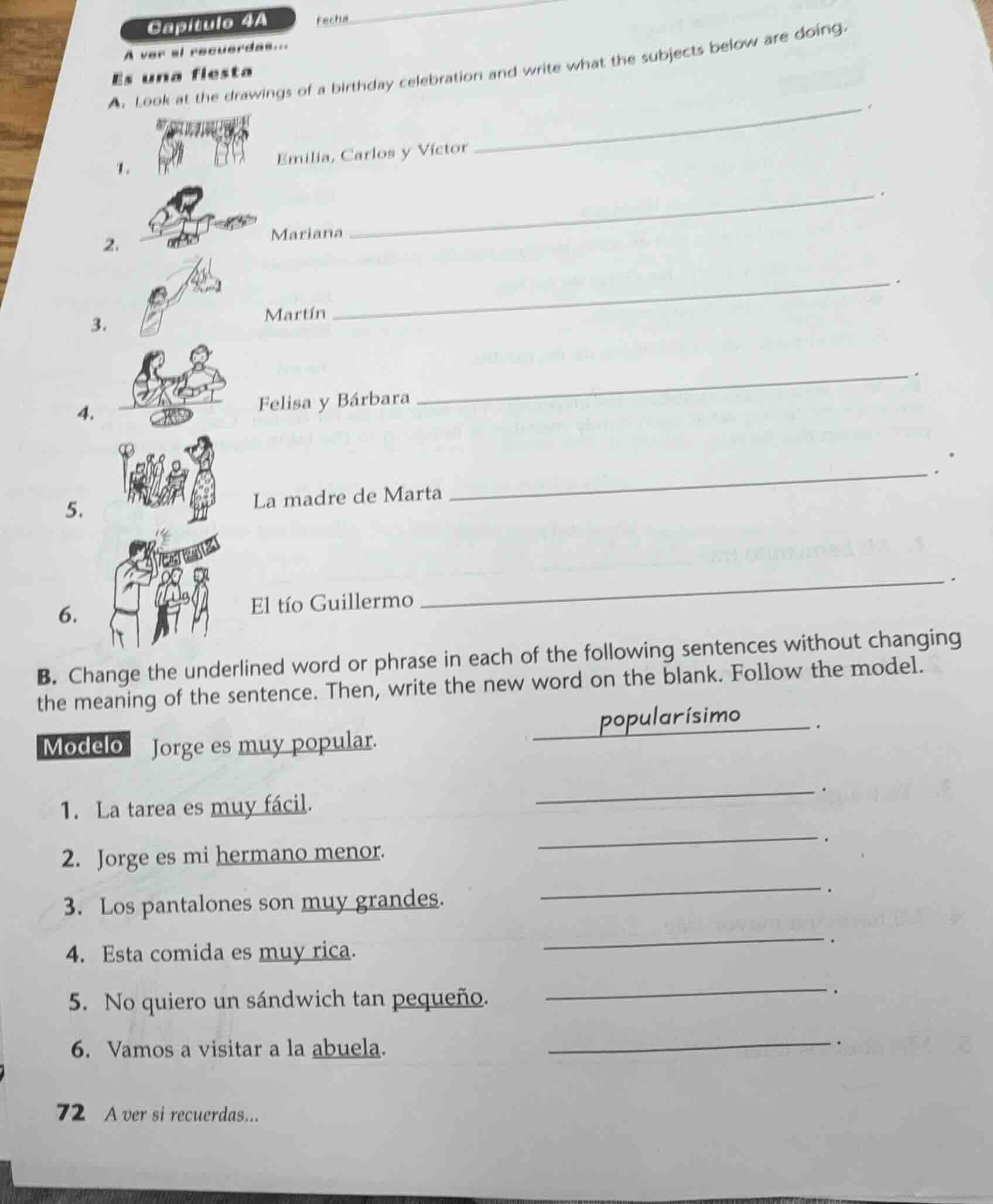
capitulo 4a fecha a ver si recuerdas... es una fiesta a. look at the drawings of a birthday celebration and write what the subjects below are doing. 1. emilia, carlos y victor ____. 2. mariana __. 3. martín __. 4. felisa y bárbara __. 5. la madre de marta __. 6. el tío guillermo __. b. change the underlined word or phrase in each of the following sentences without changing the meaning of the sentence. then, write the new word on the blank. follow the model. modelo jorge es muy popular. popularísimo. 1. la tarea es muy fácil. __. 2. jorge es mi hermano menor. __. 3. los pantalones son muy grandes. __. 4. esta comida es muy rica. __. 5. no quiero un sándwich tan pequeño. __. 6. vamos a visitar a la abuela. ____. 72 a ver si recuerdas...
Part A (Describing Actions at a Birthday Party)
To solve this, we analyze each drawing and use the present progressive in Spanish (estar + gerundio) to describe the action.
- Emilia, Carlos y Víctor: The drawing shows them dancing.
- Step 1: Identify the subject (plural: ellos) and the action (dancing = bailar).
- Step 2: Conjugate estar for “ellos” (están) and form the gerund of bailar (bailando).
- Sentence: Emilia, Carlos y Víctor están bailando.
- Mariana: The drawing shows her preparing food (e.g., setting the table or serving). Let’s assume she is serving food (servir).
- Step 1: Subject (ella) → estar = está. Gerund of servir = sirviendo.
- Sentence: Mariana está sirviendo la comida. (or a similar action like preparando if the drawing shows cooking)
- Martín: The drawing shows him lighting a candle (encender).
- Step 1: Subject (él) → estar = está. Gerund of encender = encendiendo.
- Sentence: Martín está encendiendo la vela.
- Felisa y Bárbara: The drawing shows them eating or sharing food. Let’s say they are eating (comer).
- Step 1: Subject (ellas) → estar = están. Gerund of comer = comiendo.
- Sentence: Felisa y Bárbara están comiendo.
- La madre de Marta: The drawing shows her singing (e.g., at the party).
- Step 1: Subject (ella) → estar = está. Gerund of cantar = cantando.
- Sentence: La madre de Marta está cantando.
- El tío Guillermo: The drawing shows him taking a photo (tomar una foto).
- Step 1: Subject (él) → estar = está. Gerund of tomar = tomando.
- Sentence: El tío Guillermo está tomando una foto.
Part B (Replacing Phrases with Synonyms/Intensifiers)
The model uses the superlative form (e.g., muy popular → popularísimo). We apply similar logic (intensifiers or synonyms) for each sentence.
- La tarea es muy fácil.
- Step 1: Replace muy fácil with the superlative fácilisimo.
- New word: fácilisimo
- Jorge es mi hermano menor.
- Step 1: hermano menor = hermanito (diminutive, common in Spanish for “little brother”).
- New word: hermanito
- Los pantalones son muy grandes.
- Step 1: Replace muy grandes with the superlative grandísimos.
- New word: grandísimos
- Esta comida es muy rica.
- Step 1: Replace muy rica with the superlative riquísima.
- New word: riquísima
- No quiero un sándwich tan pequeño.
- Step 1: Replace tan pequeño with muy pequeño or the superlative pequeñísimo. Using the superlative: pequeñísimo.
- New word: pequeñísimo
- Vamos a visitar a la abuela.
- Step 1: abuela can be replaced with abuelita (diminutive, affectionate).
- New word: abuelita
Final Answers (Key Examples)
Part A (Sample Answers):
- están bailando
- está sirviendo la comida (or similar)
- está encendiendo la vela
- están comiendo
- está cantando
- está tomando una foto
Part B (Answers):
- fácilisimo
- hermanito
- grandísimos
- riquísima
- pequeñísimo
- abuelita
(Note: For Part A, actions may vary slightly based on the exact drawing details, but the structure of estar + gerundio is consistent.)

Snap & solve any problem in the app
Get step-by-step solutions on Sovi AI
Photo-based solutions with guided steps
Explore more problems and detailed explanations
Part A (Describing Actions at a Birthday Party)
To solve this, we analyze each drawing and use the present progressive in Spanish (estar + gerundio) to describe the action.
- Emilia, Carlos y Víctor: The drawing shows them dancing.
- Step 1: Identify the subject (plural: ellos) and the action (dancing = bailar).
- Step 2: Conjugate estar for “ellos” (están) and form the gerund of bailar (bailando).
- Sentence: Emilia, Carlos y Víctor están bailando.
- Mariana: The drawing shows her preparing food (e.g., setting the table or serving). Let’s assume she is serving food (servir).
- Step 1: Subject (ella) → estar = está. Gerund of servir = sirviendo.
- Sentence: Mariana está sirviendo la comida. (or a similar action like preparando if the drawing shows cooking)
- Martín: The drawing shows him lighting a candle (encender).
- Step 1: Subject (él) → estar = está. Gerund of encender = encendiendo.
- Sentence: Martín está encendiendo la vela.
- Felisa y Bárbara: The drawing shows them eating or sharing food. Let’s say they are eating (comer).
- Step 1: Subject (ellas) → estar = están. Gerund of comer = comiendo.
- Sentence: Felisa y Bárbara están comiendo.
- La madre de Marta: The drawing shows her singing (e.g., at the party).
- Step 1: Subject (ella) → estar = está. Gerund of cantar = cantando.
- Sentence: La madre de Marta está cantando.
- El tío Guillermo: The drawing shows him taking a photo (tomar una foto).
- Step 1: Subject (él) → estar = está. Gerund of tomar = tomando.
- Sentence: El tío Guillermo está tomando una foto.
Part B (Replacing Phrases with Synonyms/Intensifiers)
The model uses the superlative form (e.g., muy popular → popularísimo). We apply similar logic (intensifiers or synonyms) for each sentence.
- La tarea es muy fácil.
- Step 1: Replace muy fácil with the superlative fácilisimo.
- New word: fácilisimo
- Jorge es mi hermano menor.
- Step 1: hermano menor = hermanito (diminutive, common in Spanish for “little brother”).
- New word: hermanito
- Los pantalones son muy grandes.
- Step 1: Replace muy grandes with the superlative grandísimos.
- New word: grandísimos
- Esta comida es muy rica.
- Step 1: Replace muy rica with the superlative riquísima.
- New word: riquísima
- No quiero un sándwich tan pequeño.
- Step 1: Replace tan pequeño with muy pequeño or the superlative pequeñísimo. Using the superlative: pequeñísimo.
- New word: pequeñísimo
- Vamos a visitar a la abuela.
- Step 1: abuela can be replaced with abuelita (diminutive, affectionate).
- New word: abuelita
Final Answers (Key Examples)
Part A (Sample Answers):
- están bailando
- está sirviendo la comida (or similar)
- está encendiendo la vela
- están comiendo
- está cantando
- está tomando una foto
Part B (Answers):
- fácilisimo
- hermanito
- grandísimos
- riquísima
- pequeñísimo
- abuelita
(Note: For Part A, actions may vary slightly based on the exact drawing details, but the structure of estar + gerundio is consistent.)