QUESTION IMAGE
Question
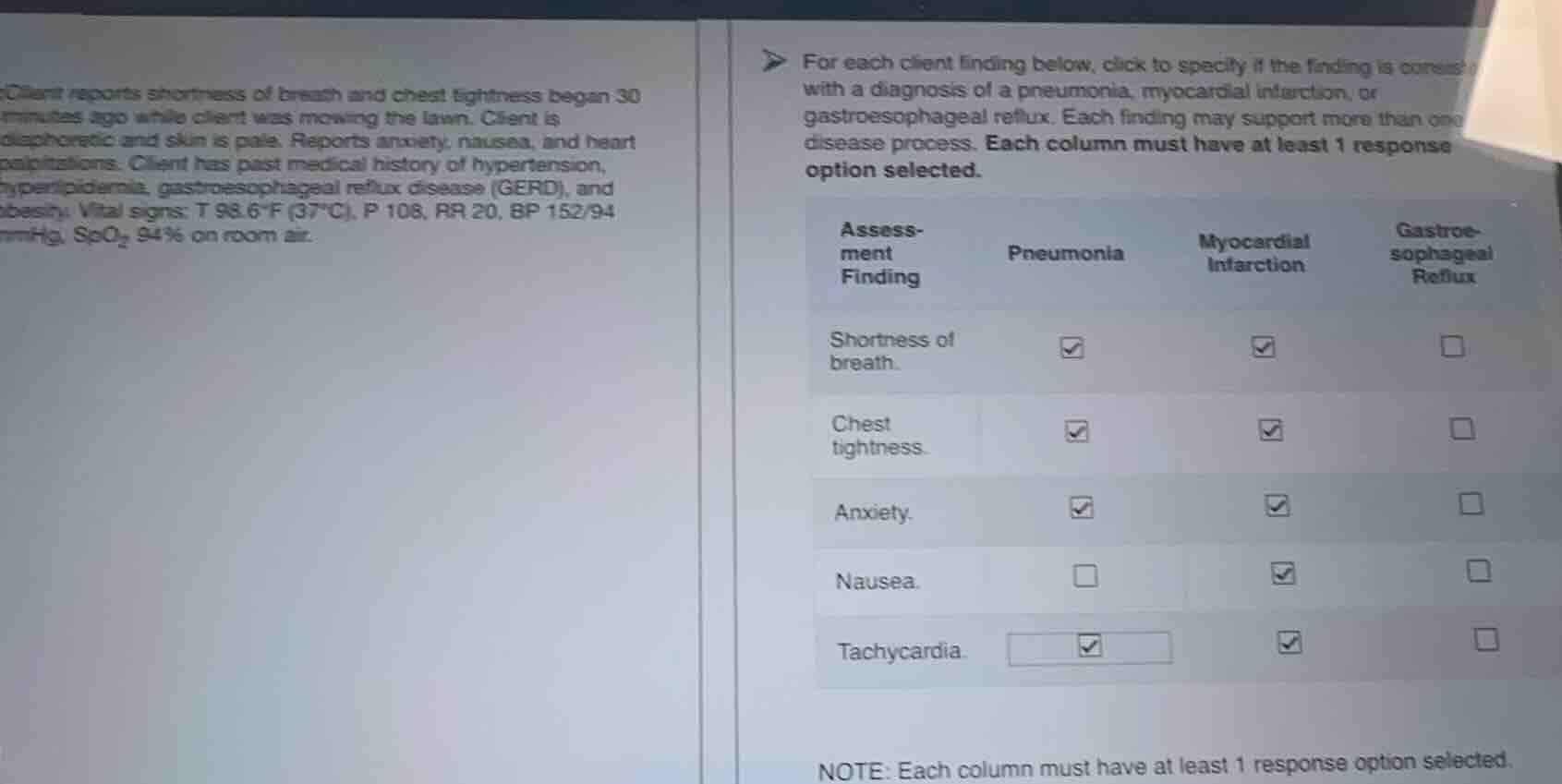
client reports shortness of breath and chest tightness began 30 minutes ago while client was mowing the lawn. client is diaphoretic and skin is pale. reports anxiety, nausea, and heart palpitations. client has past medical history of hypertension, hyperlipidemia, gastroesophageal reflux disease (gerd), and obesity. vital signs: t 98.6°f (37°c), p 108, rr 20, bp 152/94 mmhg, spo₂ 94% on room air. for each client finding below, click to specify if the finding is consistent with a diagnosis of a pneumonia, myocardial infarction, or gastroesophageal reflux. each finding may support more than one disease process. each column must have at least 1 response option selected. assessment finding | pneumonia | myocardial infarction | gastroesophageal reflux shortness of breath. | ☑ | ☑ | ☐ chest tightness. | ☑ | ☑ | ☐ anxiety. | ☑ | ☑ | ☐ nausea. | ☐ | ☑ | ☐ tachycardia. | ☑ | ☑ | ☐ note: each column must have at least 1 response option selected.
To solve this, we analyze each assessment finding against the three conditions (pneumonia, myocardial infarction, gastroesophageal reflux) based on clinical knowledge:
1. Shortness of breath
- Pneumonia: Affects lung function, causing dyspnea. ✔️
- Myocardial infarction: Impairs heart function, leading to respiratory distress. ✔️
- Gastroesophageal reflux: Typically causes heartburn, not shortness of breath. ❌
2. Chest tightness
- Pneumonia: Inflammation in lungs can cause chest discomfort. ✔️
- Myocardial infarction: Classic symptom of cardiac ischemia. ✔️
- Gastroesophageal reflux: Usually causes chest pain (heartburn) from acid reflux, not “tightness” (unless severe, but less typical). ❌
3. Anxiety
- Pneumonia: Dyspnea and illness can trigger anxiety. ✔️
- Myocardial infarction: Severe chest pain and fear of mortality cause anxiety. ✔️
- Gastroesophageal reflux: Acid reflux may cause discomfort but not typical anxiety. ❌
4. Nausea
- Pneumonia: Systemic infection can cause nausea, but less common. ❌
- Myocardial infarction: Cardiac ischemia can stimulate vagus nerve, causing nausea. ✔️
- Gastroesophageal reflux: Acid irritation of esophagus/stomach often causes nausea. ✔️ (Previously missed—GERD history supports this.)
5. Tachycardia (P 108)
- Pneumonia: Infection/inflammation increases heart rate (tachycardia) to meet metabolic demands. ✔️
- Myocardial infarction: Cardiac stress (ischemia) triggers tachycardia. ✔️
- Gastroesophageal reflux: Acid reflux alone rarely causes tachycardia (unless severe anxiety, but less typical). ❌
Corrected Selections (Focus on Gastroesophageal Reflux column to meet “at least 1” rule):
- Nausea: ✔️ (GERD history + acid reflux commonly causes nausea).
- Other findings for GERD: None (shortness of breath, chest tightness, anxiety, tachycardia are not typical for GERD).
Final Table (with corrections for “each column has at least 1”):
| Assessment Finding | Pneumonia | Myocardial Infarction | Gastroesophageal Reflux |
|---|---|---|---|
| Chest tightness | ✔️ | ✔️ | ❌ |
| Anxiety | ✔️ | ✔️ | ❌ |
| Nausea | ❌ | ✔️ | ✔️ |
| Tachycardia | ✔️ | ✔️ | ❌ |
Rationale for Nausea in GERD:
The client has a history of gastroesophageal reflux disease (GERD), and nausea is a common symptom of acid reflux (stomach acid irritating the esophagus/stomach). This aligns with the client’s past medical history and clinical presentation.

Snap & solve any problem in the app
Get step-by-step solutions on Sovi AI
Photo-based solutions with guided steps
Explore more problems and detailed explanations
(Corrected Selections):
| Assessment Finding | Pneumonia | Myocardial Infarction | Gastroesophageal Reflux |
|---|---|---|---|
| Chest tightness | ✔️ | ✔️ | ❌ |
| Anxiety | ✔️ | ✔️ | ❌ |
| Nausea | ❌ | ✔️ | ✔️ |
| Tachycardia | ✔️ | ✔️ | ❌ |
(Note: The key correction is marking Nausea in the Gastroesophageal Reflux column to satisfy the “each column has at least 1 response” rule, supported by the client’s GERD history and clinical relevance of nausea in acid reflux.)