QUESTION IMAGE
Question
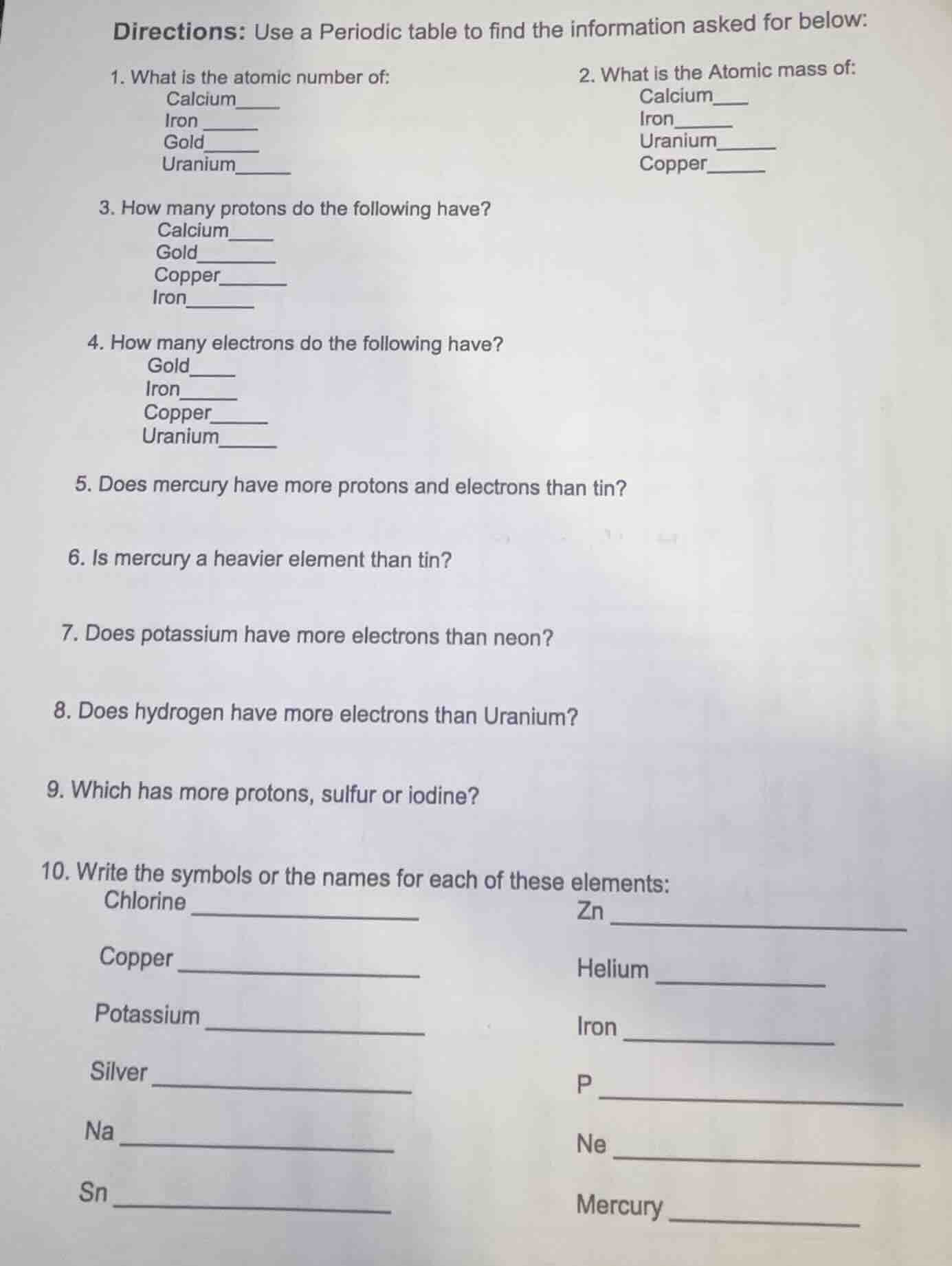
directions: use a periodic table to find the information asked for below:
- what is the atomic number of:
calcium____
iron _____
gold_____
uranium_____
- what is the atomic mass of:
calcium____
iron______
uranium______
copper______
- how many protons do the following have?
calcium____
gold_______
copper_______
iron_______
- how many electrons do the following have?
gold____
iron______
copper______
uranium______
- does mercury have more protons and electrons than tin?
- is mercury a heavier element than tin?
- does potassium have more electrons than neon?
- does hydrogen have more electrons than uranium?
- which has more protons, sulfur or iodine?
- write the symbols or the names for each of these elements:
chlorine ________________
copper ________________
potassium ________________
silver ________________
na ________________
sn ________________
zn ________________
helium _______________
iron ________________
p ________________
ne ________________
mercury _______________
Question 1: Atomic Number
Step 1: Recall the atomic number (number of protons) from the periodic table.
- Calcium (Ca): Atomic number is 20.
- Iron (Fe): Atomic number is 26.
- Gold (Au): Atomic number is 79.
- Uranium (U): Atomic number is 92.
Question 2: Atomic Mass
Step 1: Recall the atomic mass (average mass of atoms) from the periodic table.
- Calcium (Ca): Atomic mass is approximately 40.08.
- Iron (Fe): Atomic mass is approximately 55.85.
- Uranium (U): Atomic mass is approximately 238.03.
- Copper (Cu): Atomic mass is approximately 63.55.
Question 3: Number of Protons
Step 1: Remember that the number of protons equals the atomic number.
- Calcium (Ca): Atomic number 20, so 20 protons.
- Gold (Au): Atomic number 79, so 79 protons.
- Copper (Cu): Atomic number 29, so 29 protons.
- Iron (Fe): Atomic number 26, so 26 protons.
Question 4: Number of Electrons
Step 1: In a neutral atom, the number of electrons equals the number of protons (atomic number).
- Gold (Au): Atomic number 79, so 79 electrons.
- Iron (Fe): Atomic number 26, so 26 electrons.
- Copper (Cu): Atomic number 29, so 29 electrons.
- Uranium (U): Atomic number 92, so 92 electrons.
Question 5: Mercury vs. Tin (Protons and Electrons)
Step 1: Find atomic numbers (protons = electrons in neutral atoms).
- Mercury (Hg): Atomic number 80.
- Tin (Sn): Atomic number 50.
Step 2: Compare. 80 > 50, so mercury has more protons and electrons.
Question 6: Mercury vs. Tin (Heavier Element)
Step 1: Check atomic masses.
- Mercury (Hg): Atomic mass ~200.59.
- Tin (Sn): Atomic mass ~118.71.
Step 2: Compare. 200.59 > 118.71, so mercury is heavier.
Question 7: Potassium vs. Neon (Electrons)
Step 1: Find atomic numbers (electrons in neutral atoms).
- Potassium (K): Atomic number 19.
- Neon (Ne): Atomic number 10.
Step 2: Compare. 19 > 10, so potassium has more electrons.
Question 8: Hydrogen vs. Uranium (Electrons)
Step 1: Find atomic numbers (electrons in neutral atoms).
- Hydrogen (H): Atomic number 1.
- Uranium (U): Atomic number 92.
Step 2: Compare. 1 < 92, so hydrogen does not have more electrons.
Question 9: Sulfur vs. Iodine (Protons)
Step 1: Find atomic numbers (protons = atomic number).
- Sulfur (S): Atomic number 16.
- Iodine (I): Atomic number 53.
Step 2: Compare. 53 > 16, so iodine has more protons.
Question 10: Element Symbols/Names
Step 1: Recall element symbols and names.
- Chlorine: Symbol is Cl.
- Zn: Name is Zinc.
- Copper: Symbol is Cu.
- Helium: Symbol is He.
- Potassium: Symbol is K.
- Iron: Symbol is Fe.
- Silver: Symbol is Ag.
- P: Name is Phosphorus.
- Na: Name is Sodium.
- Ne: Name is Neon.
- Sn: Name is Tin.
- Mercury: Symbol is Hg.
Final Answers:
- Atomic Number:
Calcium: 20
Iron: 26
Gold: 79
Uranium: 92
- Atomic Mass:
Calcium: ~40.08
Iron: ~55.85
Uranium: ~238.03
Copper: ~63.55
- Number of Protons:
Calcium: 20
Gold: 79
Copper: 29
Iron: 26
- Number of Electrons:
Gold: 79
Iron: 26
Copper: 29
Uranium: 92
- Does mercury have more protons and electrons than tin? Yes.
- Is mercury a heavier element than tin? Yes.
- Does potassium have more electrons than neon? Yes.
- Does hydrogen have more electrons than Uranium? No.
- Which has more protons, sulfur or iodine? Iodine.
- Element Symbols/Names:
Chlorine: Cl
Zn: Zinc
Copper: Cu
Helium: He
Potassium: K
Iron: Fe
Silver: Ag
P: Phosphorus
Na: Sodium
Ne: Neon
Sn: Tin
Mercury: Hg

Snap & solve any problem in the app
Get step-by-step solutions on Sovi AI
Photo-based solutions with guided steps
Explore more problems and detailed explanations
Question 1: Atomic Number
Step 1: Recall the atomic number (number of protons) from the periodic table.
- Calcium (Ca): Atomic number is 20.
- Iron (Fe): Atomic number is 26.
- Gold (Au): Atomic number is 79.
- Uranium (U): Atomic number is 92.
Question 2: Atomic Mass
Step 1: Recall the atomic mass (average mass of atoms) from the periodic table.
- Calcium (Ca): Atomic mass is approximately 40.08.
- Iron (Fe): Atomic mass is approximately 55.85.
- Uranium (U): Atomic mass is approximately 238.03.
- Copper (Cu): Atomic mass is approximately 63.55.
Question 3: Number of Protons
Step 1: Remember that the number of protons equals the atomic number.
- Calcium (Ca): Atomic number 20, so 20 protons.
- Gold (Au): Atomic number 79, so 79 protons.
- Copper (Cu): Atomic number 29, so 29 protons.
- Iron (Fe): Atomic number 26, so 26 protons.
Question 4: Number of Electrons
Step 1: In a neutral atom, the number of electrons equals the number of protons (atomic number).
- Gold (Au): Atomic number 79, so 79 electrons.
- Iron (Fe): Atomic number 26, so 26 electrons.
- Copper (Cu): Atomic number 29, so 29 electrons.
- Uranium (U): Atomic number 92, so 92 electrons.
Question 5: Mercury vs. Tin (Protons and Electrons)
Step 1: Find atomic numbers (protons = electrons in neutral atoms).
- Mercury (Hg): Atomic number 80.
- Tin (Sn): Atomic number 50.
Step 2: Compare. 80 > 50, so mercury has more protons and electrons.
Question 6: Mercury vs. Tin (Heavier Element)
Step 1: Check atomic masses.
- Mercury (Hg): Atomic mass ~200.59.
- Tin (Sn): Atomic mass ~118.71.
Step 2: Compare. 200.59 > 118.71, so mercury is heavier.
Question 7: Potassium vs. Neon (Electrons)
Step 1: Find atomic numbers (electrons in neutral atoms).
- Potassium (K): Atomic number 19.
- Neon (Ne): Atomic number 10.
Step 2: Compare. 19 > 10, so potassium has more electrons.
Question 8: Hydrogen vs. Uranium (Electrons)
Step 1: Find atomic numbers (electrons in neutral atoms).
- Hydrogen (H): Atomic number 1.
- Uranium (U): Atomic number 92.
Step 2: Compare. 1 < 92, so hydrogen does not have more electrons.
Question 9: Sulfur vs. Iodine (Protons)
Step 1: Find atomic numbers (protons = atomic number).
- Sulfur (S): Atomic number 16.
- Iodine (I): Atomic number 53.
Step 2: Compare. 53 > 16, so iodine has more protons.
Question 10: Element Symbols/Names
Step 1: Recall element symbols and names.
- Chlorine: Symbol is Cl.
- Zn: Name is Zinc.
- Copper: Symbol is Cu.
- Helium: Symbol is He.
- Potassium: Symbol is K.
- Iron: Symbol is Fe.
- Silver: Symbol is Ag.
- P: Name is Phosphorus.
- Na: Name is Sodium.
- Ne: Name is Neon.
- Sn: Name is Tin.
- Mercury: Symbol is Hg.
Final Answers:
- Atomic Number:
Calcium: 20
Iron: 26
Gold: 79
Uranium: 92
- Atomic Mass:
Calcium: ~40.08
Iron: ~55.85
Uranium: ~238.03
Copper: ~63.55
- Number of Protons:
Calcium: 20
Gold: 79
Copper: 29
Iron: 26
- Number of Electrons:
Gold: 79
Iron: 26
Copper: 29
Uranium: 92
- Does mercury have more protons and electrons than tin? Yes.
- Is mercury a heavier element than tin? Yes.
- Does potassium have more electrons than neon? Yes.
- Does hydrogen have more electrons than Uranium? No.
- Which has more protons, sulfur or iodine? Iodine.
- Element Symbols/Names:
Chlorine: Cl
Zn: Zinc
Copper: Cu
Helium: He
Potassium: K
Iron: Fe
Silver: Ag
P: Phosphorus
Na: Sodium
Ne: Neon
Sn: Tin
Mercury: Hg