QUESTION IMAGE
Question
discussion questions
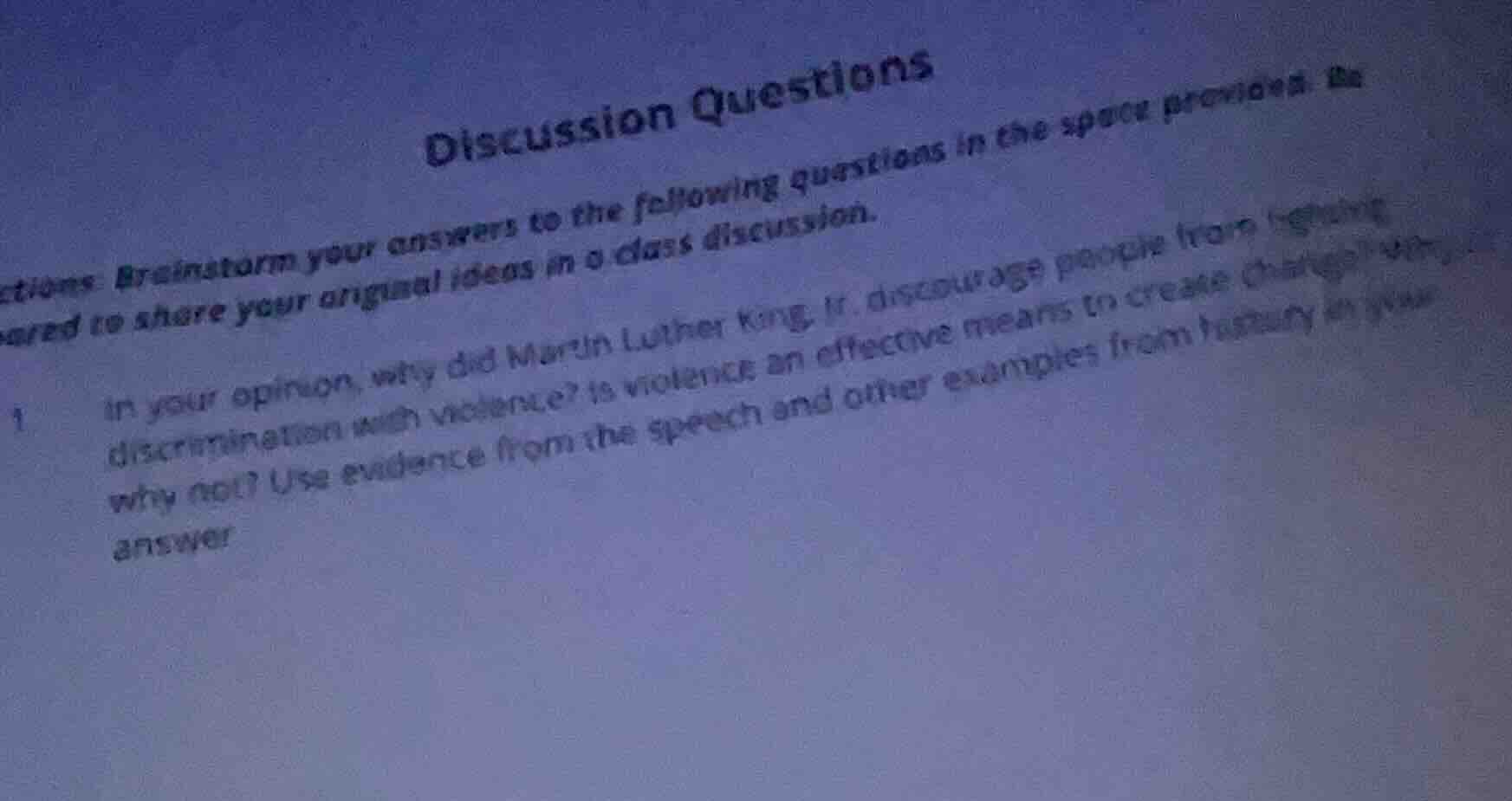
etions: brainstorm your answers to the following questions in the space provided. be\bared to share your original ideas in a class discussion.
1 in your opinion, why did martin luther king, jr. discourage people from fighting
discrimination with violence? is violence an effective means to create change? why
why not? use evidence from the speech and other examples from history in your
answer
- Why MLK Jr. discouraged violent resistance: Martin Luther King Jr. rejected violence because he believed it undermined the moral high ground of the civil rights movement, as outlined in his speeches (e.g., "I Have a Dream" and "Letter from Birmingham Jail"). He argued violence would alienate moderate allies, trigger harsh repression from authorities, and fail to create lasting, just change rooted in mutual respect.
- Is violence an effective change tool?: Violence is rarely an effective or sustainable means of creating positive change. While some historical movements used violence (e.g., certain anti-colonial uprisings), it often leads to cycles of retaliation, innocent harm, and can result in authoritarian or oppressive outcomes. Non-violent movements like MLK's, India's independence led by Gandhi, and the 2011 Arab Spring's initial non-violent protests (before escalation) achieved broader, more inclusive and lasting gains by uniting diverse groups and appealing to shared human values.

Snap & solve any problem in the app
Get step-by-step solutions on Sovi AI
Photo-based solutions with guided steps
Explore more problems and detailed explanations
Martin Luther King, Jr. discouraged violent resistance to discrimination because he believed it sacrificed the movement's moral legitimacy, alienated potential allies, and would trigger harsh state repression that derailed progress rather than fostering just, lasting change, as he emphasized in works like Letter from Birmingham Jail.
Violence is not an effective means to create positive, sustainable change. While some historical movements have used violence, it typically spawns cycles of retaliation, harms innocent people, and often leads to oppressive or authoritarian outcomes rather than equitable, inclusive progress. Non-violent movements (such as Gandhi's Indian independence campaign or MLK's civil rights work) have a stronger track record of uniting diverse groups, winning public support, and establishing enduring, just systems.