QUESTION IMAGE
Question
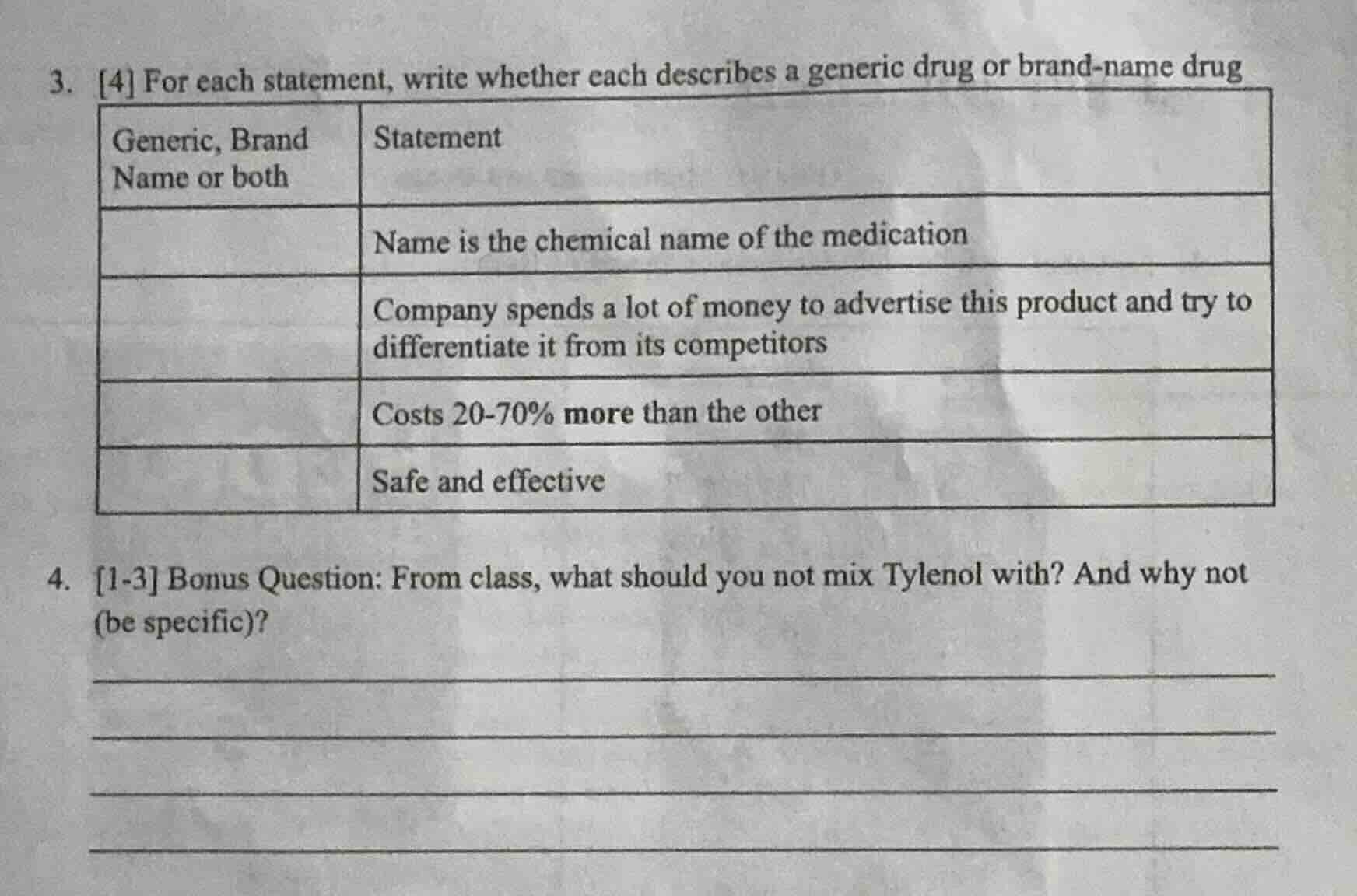
- 4 for each statement, write whether each describes a generic drug or brand-name drug
generic, brand
name or both\tstatement
\tname is the chemical name of the medication
\tcompany spends a lot of money to advertise this product and try to differentiate it from its competitors
\tcosts 20-70% more than the other
\tsafe and effective
- 1-3 bonus question: from class, what should you not mix tylenol with? and why not (be specific)?
For Question 3:
- Generic drugs use the chemical name of the active ingredient, while brand-name drugs use a proprietary brand name.
- Brand-name drug manufacturers invest heavily in advertising to establish their product's unique identity against competitors.
- Brand-name drugs have higher costs due to research, development, and advertising expenses, making them 20-70% more expensive than generics.
- Both generic and brand-name drugs must meet regulatory standards for safety and effectiveness before being approved for market.
For Question 4:
Tylenol (acetaminophen) should not be mixed with alcohol. Combining the two causes excessive strain on the liver; acetaminophen is metabolized by the liver, and alcohol impairs this process, leading to the buildup of a toxic byproduct that can cause acute liver failure or permanent liver damage.

Snap & solve any problem in the app
Get step-by-step solutions on Sovi AI
Photo-based solutions with guided steps
Explore more problems and detailed explanations
Question 3:
- Generic
- Brand-name
- Brand-name
- Both
Question 4:
You should not mix Tylenol with alcohol. Alcohol inhibits the liver's ability to metabolize acetaminophen, leading to the accumulation of a toxic metabolite (N-acetyl-p-benzoquinone imine) that can cause severe, potentially fatal liver damage or failure.