QUESTION IMAGE
Question
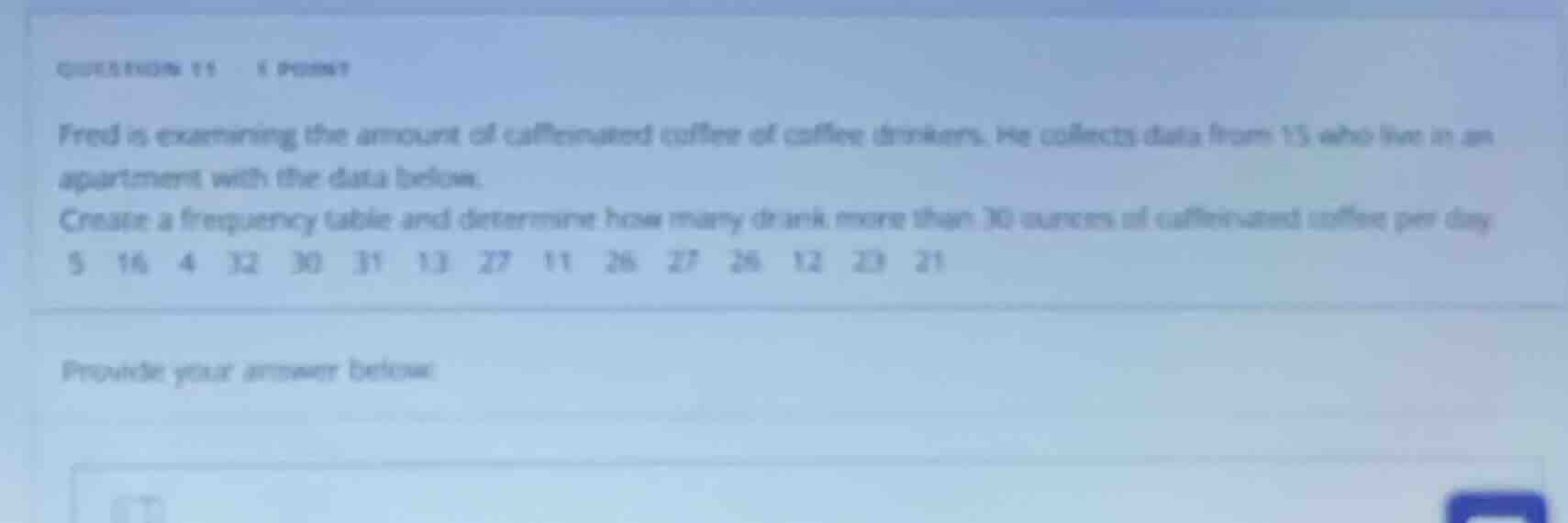
fred is examining the amount of caffeinated coffee of coffee drinkers. he collects data from 15 who live in an apartment with the data below. create a frequency table and determine how many drank more than 30 ounces of caffeinated coffee per day. 5 16 4 32 30 31 13 27 11 26 27 26 12 23 21 provide your answer below:
Step1: Organize data into intervals
First, we can create intervals for the data. Let's use intervals like 0 - 10, 11 - 20, 21 - 30, 31 - 40.
- 0 - 10: 5, 4 (frequency = 2)
- 11 - 20: 16, 12, 13, 11, 12 (frequency = 5)
- 21 - 30: 27, 26, 27, 26, 23, 21, 30 (frequency = 7)
- 31 - 40: 31 (frequency = 1)
Step2: Count values >30
We look at the data: 5, 16, 4, 12, 30, 31, 13, 27, 11, 26, 27, 26, 12, 23, 21. The values more than 30 (i.e., greater than 30) is only 31. Wait, wait, 30 is not more than 30, it's equal. So we check each number:
- 5: no
- 16: no
- 4: no
- 12: no
- 30: no (since we need more than 30)
- 31: yes
- 13: no
- 27: no
- 11: no
- 26: no
- 27: no
- 26: no
- 12: no
- 23: no
- 21: no
Wait, but in the interval 21 - 30, we have 30 which is not more than 30. Wait, maybe I made a mistake in intervals. Wait the problem says "more than 30". So we need to find numbers >30. Let's list the data again: 5, 16, 4, 12, 30, 31, 13, 27, 11, 26, 27, 26, 12, 23, 21. Now check each:
5: <30 → no
16: <30 → no
4: <30 → no
12: <30 → no
30: =30 → no
31: >30 → yes
13: <30 → no
27: <30 → no
11: <30 → no
26: <30 → no
27: <30 → no
26: <30 → no
12: <30 → no
23: <30 → no
21: <30 → no
Wait, that's only 31? But wait, maybe I misread the data. Wait the data is: 5, 16, 4, 12, 30, 31, 13, 27, 11, 26, 27, 26, 12, 23, 21. Wait, is that 15 numbers? Let's count: 5 (1), 16 (2), 4 (3), 12 (4), 30 (5), 31 (6), 13 (7), 27 (8), 11 (9), 26 (10), 27 (11), 26 (12), 12 (13), 23 (14), 21 (15). Yes, 15 numbers. So the numbers more than 30: only 31. Wait, but that seems wrong. Wait maybe the interval was misdefined. Wait maybe the problem is "more than or equal to 30"? No, the problem says "more than 30". Wait let's check again. Wait 30 is not more than 30, it's equal. So only 31 is more than 30. But that seems odd. Wait maybe I made a mistake in the data. Wait the data is: 5, 16, 4, 12, 30, 31, 13, 27, 11, 26, 27, 26, 12, 23, 21. So 31 is the only one greater than 30. Wait but let's check the frequency table again. Wait in the 21 - 30 interval, we have 30, 27, 26, 27, 26, 23, 21. So 30 is included there, but 30 is not more than 30. Then 31 is in 31 - 40, frequency 1. So the number of people who drank more than 30 ounces is 1? Wait that can't be. Wait maybe the problem is "more than or equal to 30"? Let's check the original problem: "how many drank more than 30 ounces". So "more than" means >30. So 31 is >30, 30 is not. So only 1? Wait but let's check the data again. Wait the data is: 5, 16, 4, 12, 30, 31, 13, 27, 11, 26, 27, 26, 12, 23, 21. So 31 is the only one greater than 30. So the answer is 1? Wait maybe I made a mistake. Wait let's list all numbers and check:
- 5: <30 → no
- 16: <30 → no
- 4: <30 → no
- 12: <30 → no
- 30: =30 → no
- 31: >30 → yes
- 13: <30 → no
- 27: <30 → no
- 11: <30 → no
- 26: <30 → no
- 27: <30 → no
- 26: <30 → no
- 12: <30 → no
- 23: <30 → no
- 21: <30 → no
So only 1 number (31) is more than 30. So the answer is 1? Wait but that seems too low. Wait maybe the problem was "more than or equal to 30"? Let's check: 30 and 31. Then 30 and 31: 2 numbers. But the problem says "more than 30", so 30 is not included. So 31 is the only one. So the answer is 1.

Snap & solve any problem in the app
Get step-by-step solutions on Sovi AI
Photo-based solutions with guided steps
Explore more problems and detailed explanations
1