QUESTION IMAGE
Question
hints
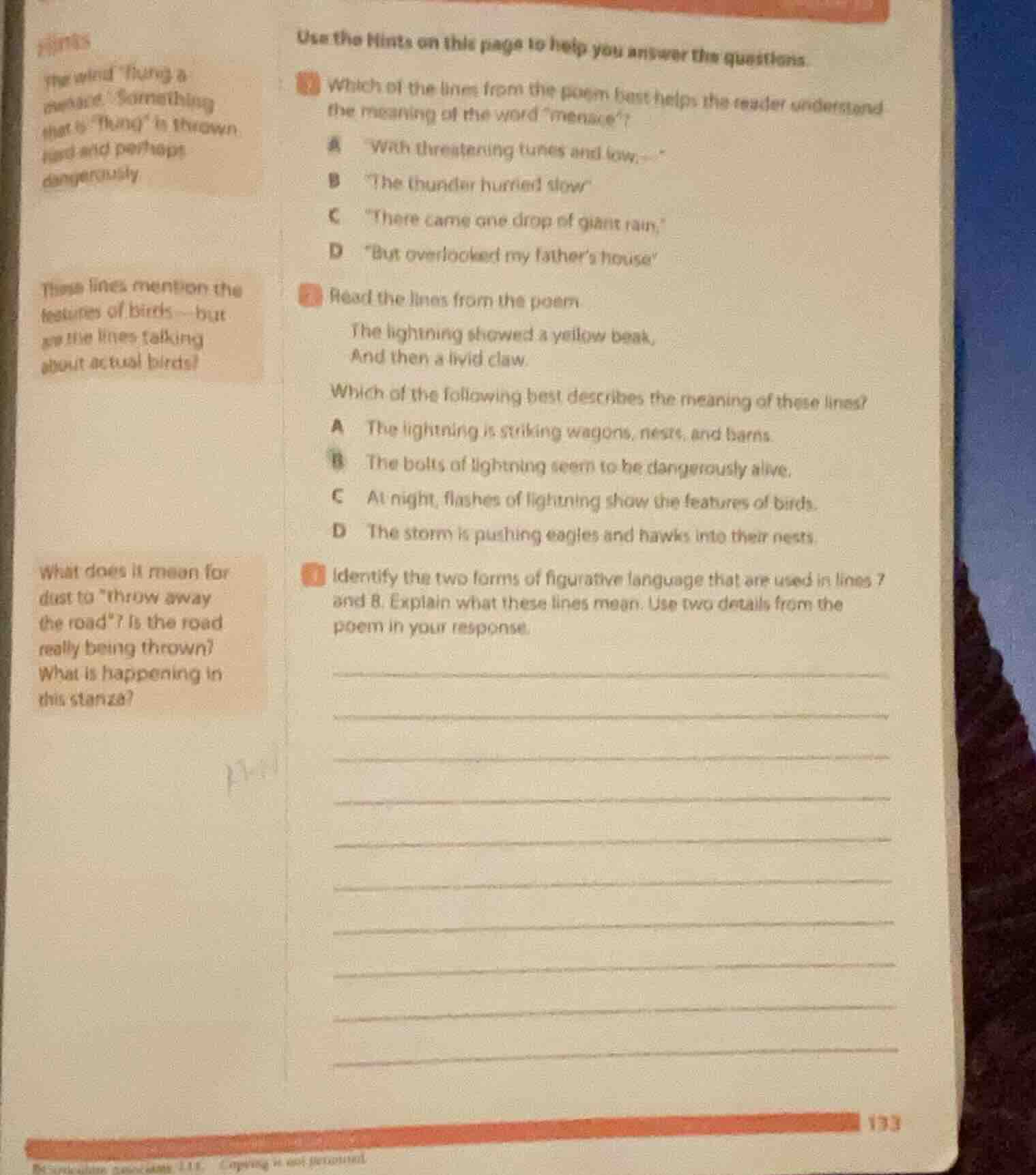
the word “flung a menace”: something that is “flung” is thrown hard and perhaps dangerously
these lines mention the features of birds—but are the lines talking about actual birds?
what does it mean for dust to “throw away the road”? is the road really being thrown? what is happening in this stanza?
use the hints on this page to help you answer the questions.
1 which of the lines from the poem best helps the reader understand the meaning of the word “menace”?
a “with threatening tunes and low,—”
b “the thunder hurried slow”
c “there came one drop of giant rain,”
d “but overlooked my father’s house”
2 read the lines from the poem
the lightning showed a yellow beak,
and then a livid claw.
which of the following best describes the meaning of these lines?
a the lightning is striking wagons, nests, and barns.
b the bolts of lightning seem to be dangerously alive.
c at night, flashes of lightning show the features of birds.
d the storm is pushing eagles and hawks into their nests.
3 identify the two forms of figurative language that are used in lines 7 and 8. explain what these lines mean. use two details from the poem in your response.
_________________________________________
_________________________________________
_________________________________________
_________________________________________
_________________________________________
_________________________________________
_________________________________________
_________________________________________
_________________________________________
- For the first question: "Menace" means a threat. The hint notes the wind "flung" something dangerously, and the line "With threatening tunes and low,—" directly links to the threatening nature of a menace.
- For the second question: The lines use figurative language to compare lightning to bird features (beak, claw), framing the lightning as a dangerous, living creature rather than actual birds or literal strikes.
- For the third question: Assuming lines 7 and 8 are the lightning lines provided, personification (giving lightning bird-like body parts: beak, claw) and metaphor (comparing lightning to a predatory bird) are used. The lines mean the storm's lightning appears as a fierce, alive threat; details include the "yellow beak" and "livid claw" that frame lightning as a dangerous, bird-like entity during the storm.

Snap & solve any problem in the app
Get step-by-step solutions on Sovi AI
Photo-based solutions with guided steps
Explore more problems and detailed explanations
- A. "With threatening tunes and low,—"
- B. The bolts of lightning seem to be dangerously alive.
- The two forms of figurative language are personification and metaphor. These lines use bird features (a yellow beak, a livid claw) to frame lightning as a fierce, living, dangerous part of the storm, making the storm feel like an active, menacing creature rather than just weather.