QUESTION IMAGE
Question
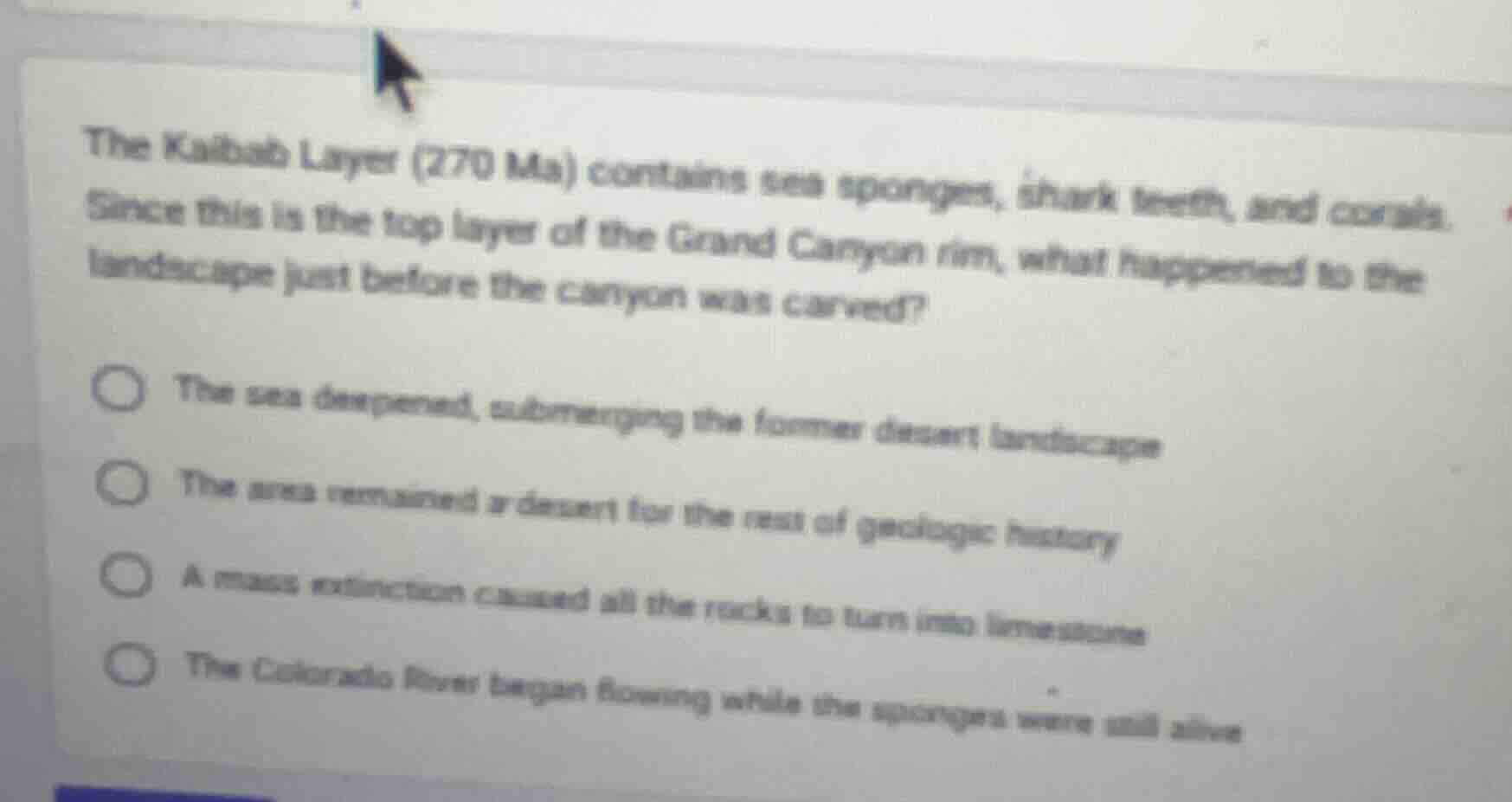
the kaibab layer (270 ma) contains sea sponges, shark teeth, and corals. since this is the top layer of the grand canyon rim, what happened to the landscape just before the canyon was carved? the sea deepened, submerging the former desert landscape the area remained a desert for the rest of geologic history a mass extinction caused all the rocks to turn into limestone the colorado river began flowing while the sponges were still alive
Brief Explanations
To solve this, we analyze each option:
- Option 1: The Kaibab Layer has marine fossils (sea sponges, shark teeth, corals), so a sea - level rise (sea deepening) submerging a former desert makes sense as marine organisms need a marine environment.
- Option 2: The presence of marine fossils shows the area was not a desert at that time, so this is incorrect.
- Option 3: Mass extinction doesn't directly cause rocks to turn into limestone, and limestone formation related to marine organisms is more about deposition, not extinction - driven rock transformation.
- Option 4: The Kaibab Layer is a sedimentary layer formed before the canyon was carved, and the Colorado River carving the canyon happened later, so the river flowing while sponges were alive is not relevant to the formation of the Kaibab Layer.

Snap & solve any problem in the app
Get step-by-step solutions on Sovi AI
Photo-based solutions with guided steps
Explore more problems and detailed explanations
A. The sea deepened, submerging the former desert landscape