QUESTION IMAGE
Question
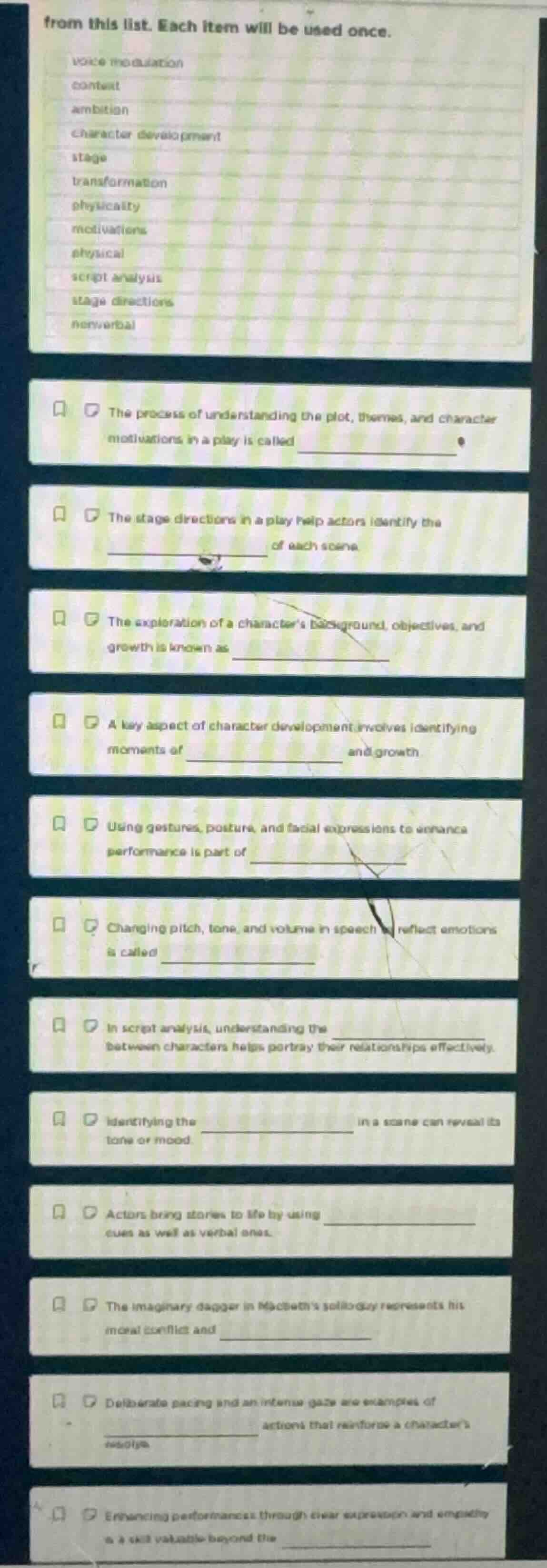
from this list. each item will be used once.
voice modulation
context
ambition
character development
stage
transformation
physicality
motivations
physical
script analysis
stage directions
nonverbal
the process of understanding the plot, themes, and character motivations in a play is called
the stage directions in a play help actors identify the
of each scene.
the exploration of a character’s background, objectives, and growth is known as
a key aspect of character development involves identifying moments of
and growth.
using gestures, posture, and facial expressions to enhance performance is part of
changing pitch, tone, and volume in speech to reflect emotions is called
in script analysis, understanding the
between characters helps portray their relationships effectively.
identifying the
in a scene can reveal its tone or mood.
actors bring stories to life by using
cues as well as verbal ones.
the imaginary dagger in macbeth’s soliloquy represents his moral conflict and
deliberate pacing and an intense gaze are examples of
actions that reinforce a character’s resolve.
enhancing performances through eye expression and empathy is a skill valuable beyond the
Each term is matched to the blank based on its definition and the context of theater/performance studies, with each term used exactly once as instructed.
- The process of analyzing a play's plot, themes, and character drives is script analysis.
- Stage directions define the physical setting of a scene, which is the stage.
- Exploring a character's background and growth is character development.
- Character growth involves moments of transformation.
- Gestures, posture, and facial expressions fall under physicality.
- Varying speech pitch, tone, volume is voice modulation.
- Understanding character relationships relies on context between them.
- Stage directions set a scene's tone/mood.
- Gestures/posture are nonverbal cues paired with verbal ones.
- Macbeth's dagger reflects his ambition and moral conflict.
- Pacing and gaze are physical actions showing motives.
- Performance skills apply beyond the stage.

Snap & solve any problem in the app
Get step-by-step solutions on Sovi AI
Photo-based solutions with guided steps
Explore more problems and detailed explanations
- script analysis
- stage
- character development
- transformation
- physicality
- voice modulation
- context
- stage directions
- nonverbal
- ambition
- physical
- stage