QUESTION IMAGE
Question
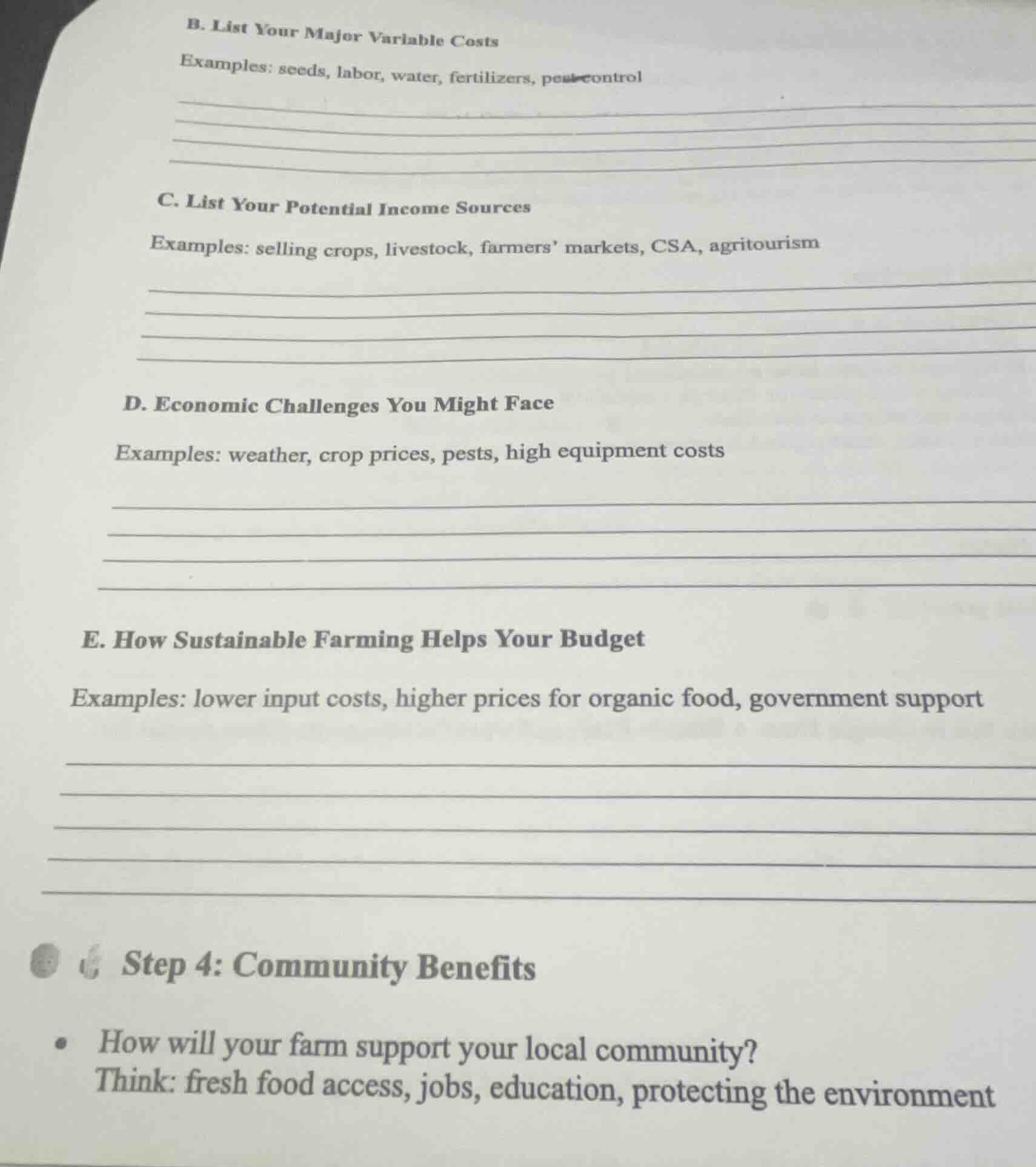
b. list your major variable costs
examples: seeds, labor, water, fertilizers, pest control
c. list your potential income sources
examples: selling crops, livestock, farmers markets, csa, agritourism
d. economic challenges you might face
examples: weather, crop prices, pests, high equipment costs
e. how sustainable farming helps your budget
examples: lower input costs, higher prices for organic food, government support
step 4: community benefits
- how will your farm support your local community?
think: fresh food access, jobs, education, protecting the environment
For each section, relevant, farm-focused responses are provided aligned with the examples and prompts:
- Major Variable Costs: These are costs that change with farm output/activity, tied to day-to-day farm operations.
- Potential Income Sources: These are revenue streams directly linked to farm products, services, and partnerships.
- Economic Challenges: These are external or internal financial risks that threaten farm profitability.
- Sustainable Farming Budget Benefits: These are cost-saving or revenue-boosting outcomes of sustainable agricultural practices.
- Community Farm Support: These are direct, local-focused contributions the farm provides to its surrounding area.

Snap & solve any problem in the app
Get step-by-step solutions on Sovi AI
Photo-based solutions with guided steps
Explore more problems and detailed explanations
B. List Your Major Variable Costs
- Fuel for farm equipment
- Packaging for harvested crops
- Veterinary care for livestock
- Irrigation system maintenance
C. List Your Potential Income Sources
- Selling value-added products (jams, honey)
- On-farm workshops for gardening
- Wholesale produce to local restaurants
- Livestock breeding services
D. Economic Challenges You Might Face
- Rising fuel and energy prices
- Supply chain delays for inputs
- Low local demand for specialty crops
- Competition from large commercial farms
E. How Sustainable Farming Helps Your Budget
- Reduced need for synthetic fertilizers
- Improved soil health cuts replanting costs
- Eligibility for sustainable agriculture grants
- Loyal customer base for eco-friendly products
Step 4: Community Benefits
- Offer low-cost produce boxes for low-income local families
- Hire and train local high school students for seasonal farm work
- Host free monthly workshops on sustainable gardening for residents
- Maintain pollinator habitats that support local ecosystem health