QUESTION IMAGE
Question
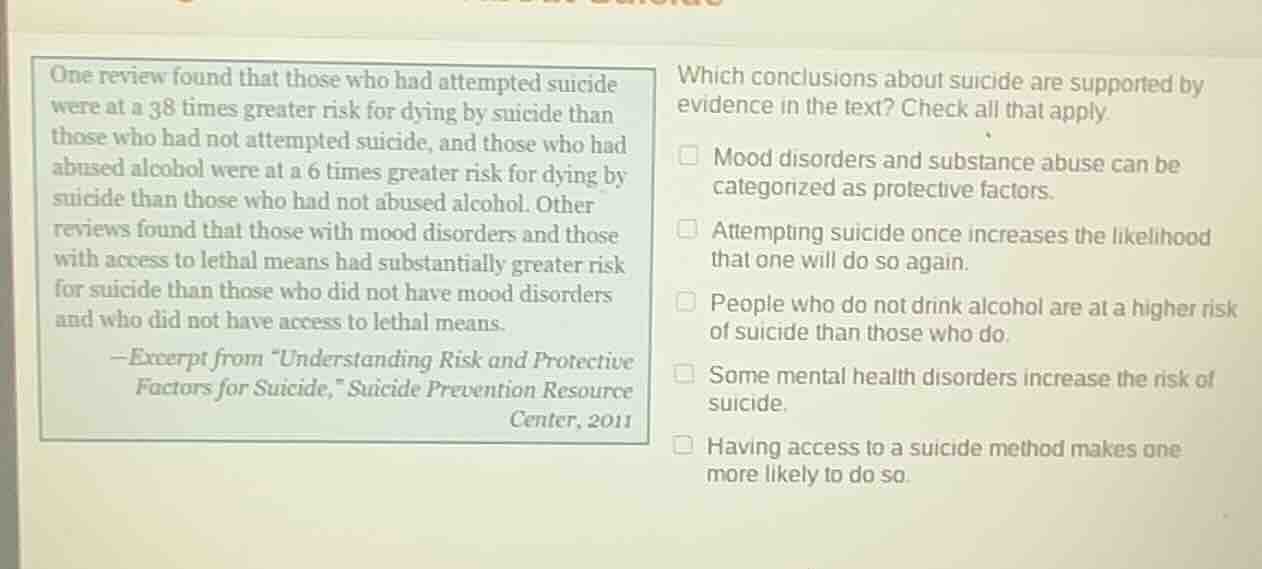
one review found that those who had attempted suicide were at a 38 times greater risk for dying by suicide than those who had not attempted suicide, and those who had abused alcohol were at a 6 times greater risk for dying by suicide than those who had not abused alcohol. other reviews found that those with mood disorders and those with access to lethal means had substantially greater risk for suicide than those who did not have mood disorders and who did not have access to lethal means.
—excerpt from \understanding risk and protective factors for suicide,\ suicide prevention resource center, 2011
which conclusions about suicide are supported by evidence in the text? check all that apply.
☐ mood disorders and substance abuse can be categorized as protective factors.
☐ attempting suicide once increases the likelihood that one will do so again.
☐ people who do not drink alcohol are at a higher risk of suicide than those who do.
☐ some mental health disorders increase the risk of suicide.
☐ having access to a suicide method makes one more likely to do so.
- For "Mood disorders and substance abuse can be categorized as protective factors": The text says mood disorders and alcohol abuse (substance abuse) increase suicide risk, so they are risk factors, not protective. Eliminate this.
- For "Attempting suicide once increases the likelihood that one will do so again": The text states those who attempted suicide were at 38 times greater risk of dying by suicide, so this is supported.
- For "People who do not drink alcohol are at a higher risk of suicide than those who do": The text says those who abused alcohol (drank) had 6 times greater risk, so non - drinkers have lower risk. Eliminate this.
- For "Some mental health disorders increase the risk of suicide": The text mentions those with mood disorders had substantially greater risk, so this is supported.
- For "Having access to a suicide method makes one more likely to do so": The text says those with access to lethal means had substantially greater risk, so this is supported.

Snap & solve any problem in the app
Get step-by-step solutions on Sovi AI
Photo-based solutions with guided steps
Explore more problems and detailed explanations
B. Attempting suicide once increases the likelihood that one will do so again.
D. Some mental health disorders increase the risk of suicide.
E. Having access to a suicide method makes one more likely to do so.