QUESTION IMAGE
Question
1
previous answer
boil before
using
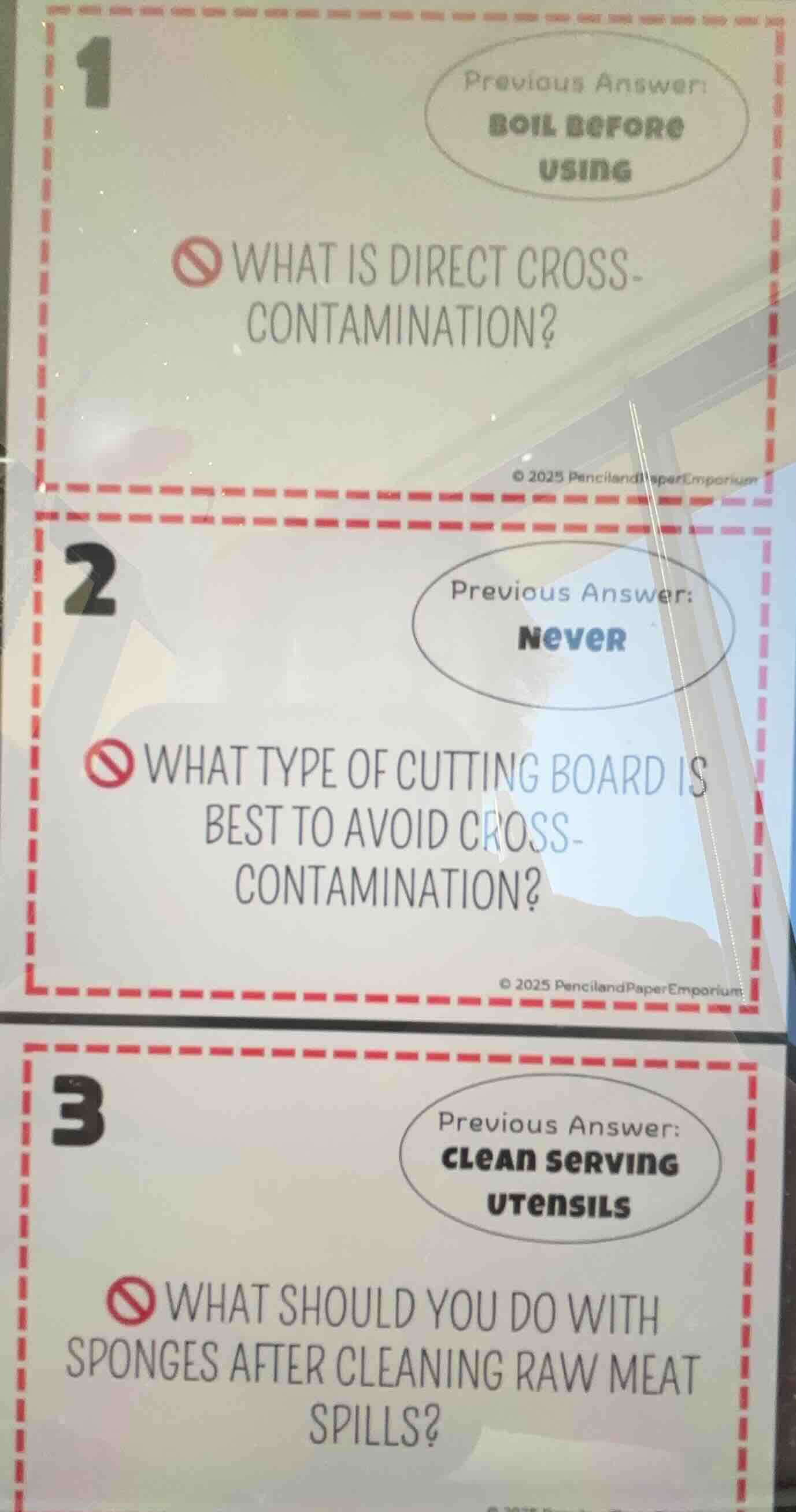
what is direct cross-
contamination?
© 2025 pencilandpaperemporium
2
previous answer:
never
what type of cutting board is
best to avoid cross-
contamination?
© 2025 pencilandpaperemporium
3
previous answer:
clean serving
utensils
what should you do with
sponges after cleaning raw meat
spills?
Brief Explanations
- Direct cross-contamination is the immediate transfer of harmful microorganisms from a contaminated source (like raw meat) to a safe, ready-to-eat food or surface, with no intermediate step.
- Non-porous cutting boards (such as plastic, glass, or bamboo) are best because they do not absorb juices or harbor bacteria as easily as porous wooden boards, making them simpler to clean and sanitize to avoid cross-contamination.
- After cleaning raw meat spills, sponges should be thoroughly sanitized (e.g., microwaved wet for 1-2 minutes, run through a dishwasher on a hot cycle, or soaked in a bleach solution) or discarded if heavily soiled, to kill any harmful bacteria from the raw meat.

Snap & solve any problem in the app
Get step-by-step solutions on Sovi AI
Photo-based solutions with guided steps
Explore more problems and detailed explanations
- Direct cross-contamination is the immediate transfer of harmful pathogens from a contaminated item (such as raw meat) to a safe food, utensil, or surface without an intermediate step.
- A non-porous cutting board (e.g., plastic, glass, or high-density bamboo) is best to avoid cross-contamination.
- You should sanitize the sponge thoroughly (e.g., microwave it wet, use a dishwasher hot cycle, or soak in a bleach solution) or discard it to eliminate bacteria from raw meat.