QUESTION IMAGE
Question
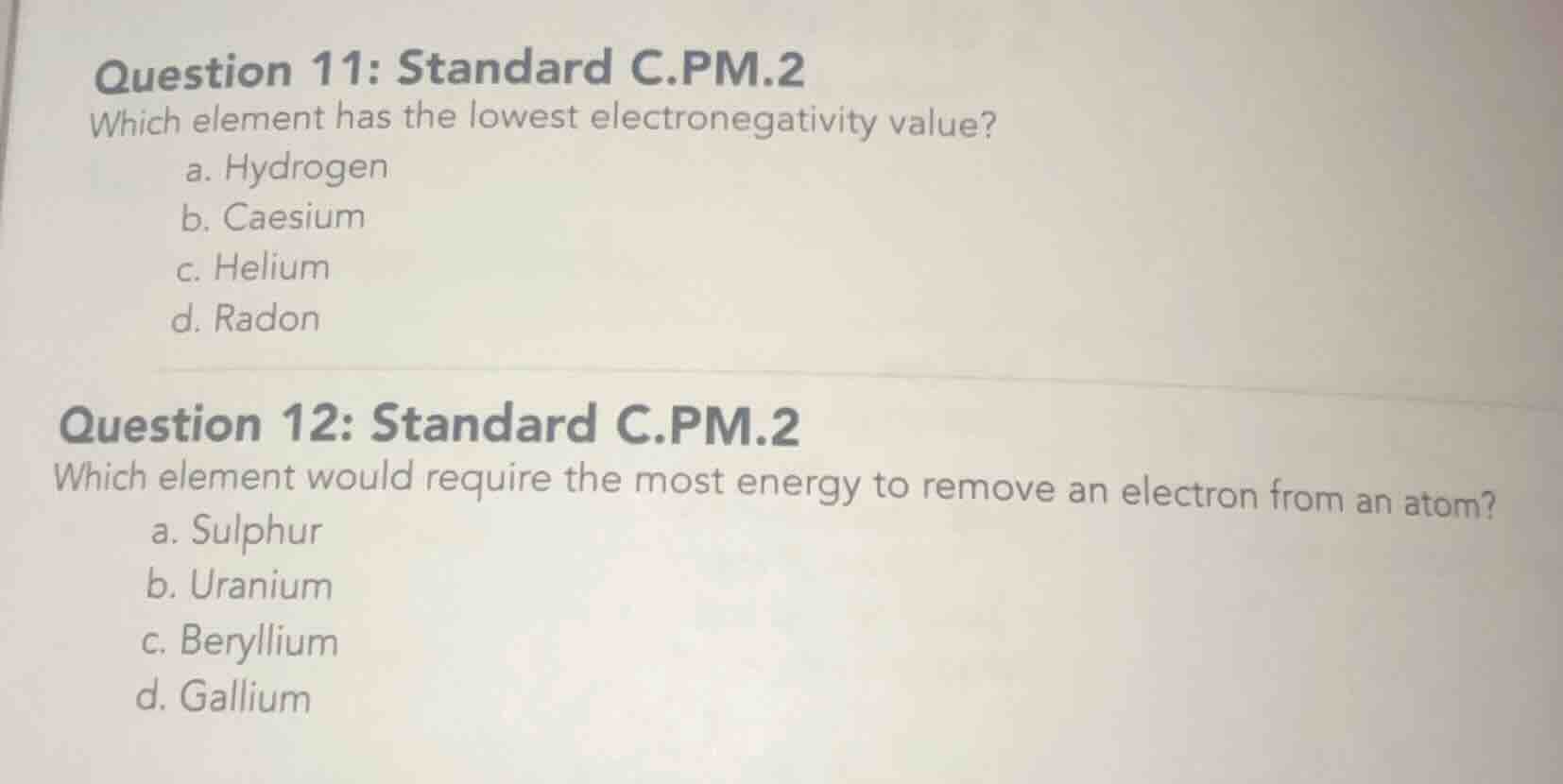
question 11: standard c.pm.2
which element has the lowest electronegativity value?
a. hydrogen
b. caesium
c. helium
d. radon
question 12: standard c.pm.2
which element would require the most energy to remove an electron from an atom?
a. sulphur
b. uranium
c. beryllium
d. gallium
For Question 11: Electronegativity decreases down a group and increases across a period. Caesium is an alkali metal in the lowest period (Period 6) of Group 1, with a very low tendency to attract electrons. Noble gases like Helium and Radon have no defined Pauling electronegativity values as they do not typically form bonds, and Hydrogen has a higher electronegativity than Caesium.
For Question 12: Ionization energy (energy to remove an electron) increases across a period and decreases down a group. Beryllium has a full 2s orbital, making it harder to remove an electron compared to Sulphur, Uranium, and Gallium, which have less stable electron configurations for their valence electrons.

Snap & solve any problem in the app
Get step-by-step solutions on Sovi AI
Photo-based solutions with guided steps
Explore more problems and detailed explanations
Question 11: b. Caesium
Question 12: c. Beryllium