QUESTION IMAGE
Question
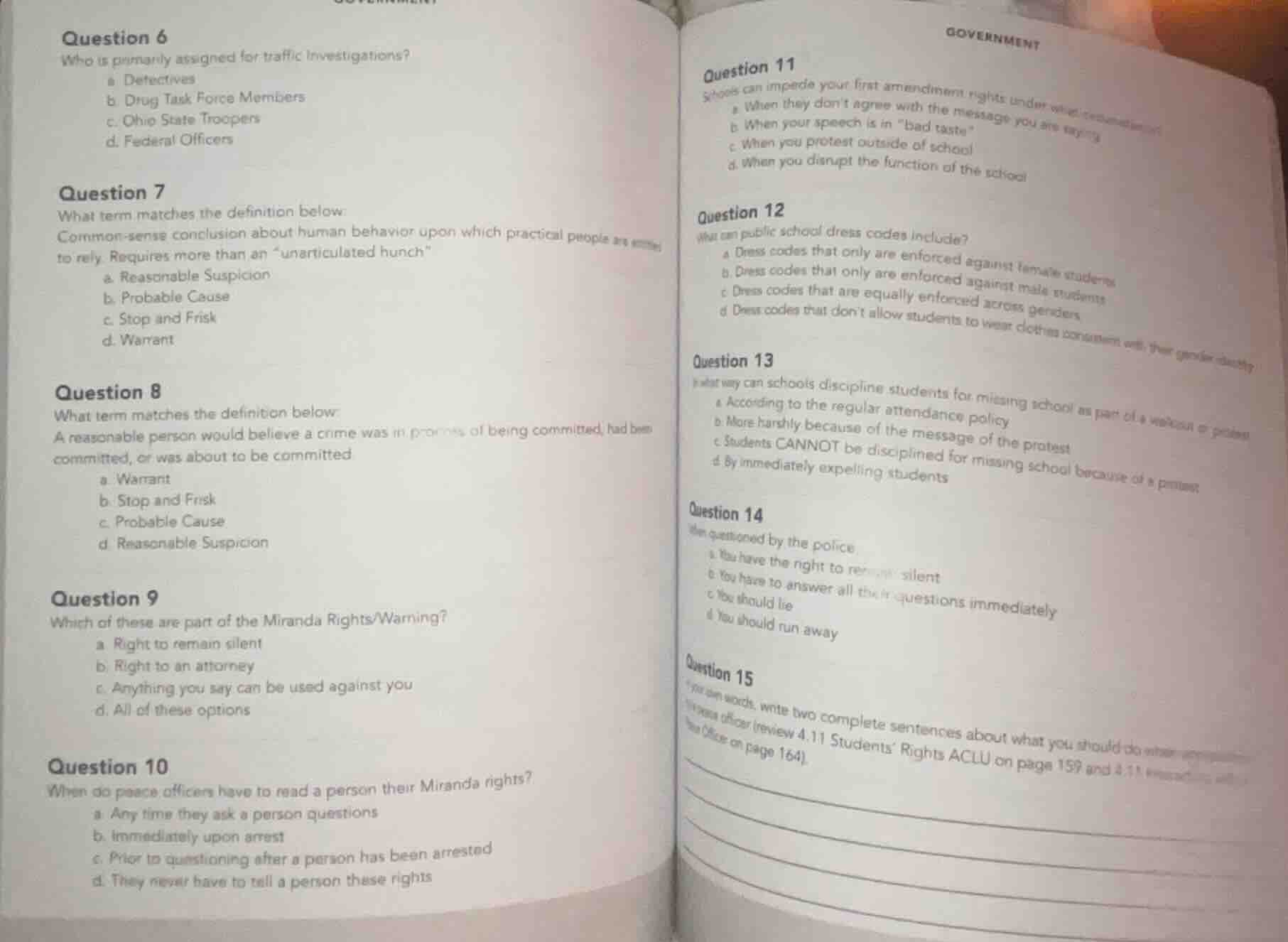
question 6
who is primarily assigned for traffic investigations?
a. detectives
b. drug task force members
c. ohio state troopers
d. federal officers
question 7
what term matches the definition below?
common - sense conclusion about human behavior upon which practical people are willing to rely. requires more than an “unarticulated hunch”
a. reasonable suspicion
b. probable cause
c. stop and frisk
d. warrant
question 8
what term matches the definition below?
a reasonable person would believe a crime was in process of being committed, had been committed, or was about to be committed
a. warrant
b. stop and frisk
c. probable cause
d. reasonable suspicion
question 9
which of these are part of the miranda rights/warning?
a. right to remain silent
b. right to an attorney
c. anything you say can be used against you
d. all of these options
question 10
when do peace officers have to read a person their miranda rights?
a. any time they ask a person questions
b. immediately upon arrest
c. prior to questioning after a person has been arrested
d. they never have to tell a person these rights
question 11
schools can impede your first amendment rights under what circumstances?
a. when they dont agree with the message you are saying
b. when your speech is in “bad taste”
c. when you protest outside of school
d. when you disrupt the function of the school
question 12
what can public school dress codes include?
a. dress codes that only are enforced against female students
b. dress codes that only are enforced against male students
c. dress codes that are equally enforced across genders
d. dress codes that dont allow students to wear clothes consistent with their gender identity
question 13
in what way can schools discipline students for missing school as part of a walkout or protest?
a. according to the regular attendance policy
b. more harshly because of the message of the protest
c. students cannot be disciplined for missing school because of a protest
d. by immediately expelling students
question 14
when questioned by the police
a. you have the right to remain silent
b. you have to answer all their questions immediately
c. you should lie
d. you should run away
question 15
in two complete sentences, write about what you should do when approached by a police officer (review 4.11 students’ rights aclu on page 159 and 4.11 interacting with the police on page 164).
Question 6:
State highway patrol (troopers) handle state-level traffic investigations.
Question 7:
Probable cause is a reasonable, evidence-based conclusion about behavior, not a hunch.
Question 8:
Reasonable suspicion is the belief a crime is/was/will be committed.
Question 9:
Miranda Rights include right to silence, right to attorney, and warning statements can be used against you.
Question 10:
Miranda rights must be read before questioning a detained/arrested person.
Question 11:
Schools can limit speech that disrupts school operations under First Amendment precedent.
Question 12:
Public school dress codes must be gender-equitable to avoid discrimination.
Question 13:
Schools can discipline for missed school per attendance policies, even for protests, but cannot target protestors harsher.
Question 14:
When questioned by police, you have the constitutional right to remain silent.
Question 15:
Based on student rights guidelines: 1. If questioned by school staff about a protest, you should clearly state your right to remain silent and ask to contact a parent or attorney. 2. If facing discipline for a protest-related absence, you should review your school's attendance policy and consult the ACLU or a legal advocate to ensure your First Amendment rights are protected.

Snap & solve any problem in the app
Get step-by-step solutions on Sovi AI
Photo-based solutions with guided steps
Explore more problems and detailed explanations
Question 6: c. Ohio State Troopers
Question 7: b. Probable Cause
Question 8: d. Reasonable Suspicion
Question 9: d. All of these options
Question 10: c. Prior to questioning after a person has been arrested
Question 11: d. When you disrupt the function of the school
Question 12: c. Dress codes that are equally enforced across genders
Question 13: a. According to the regular attendance policy
Question 14: a. You have the right to remain silent
Question 15: 1. If questioned by school staff about a protest, you should clearly state your right to remain silent and ask to contact a parent or attorney.
- If facing discipline for a protest-related absence, you should review your school's attendance policy and consult the ACLU or a legal advocate to ensure your First Amendment rights are protected.