QUESTION IMAGE
Question
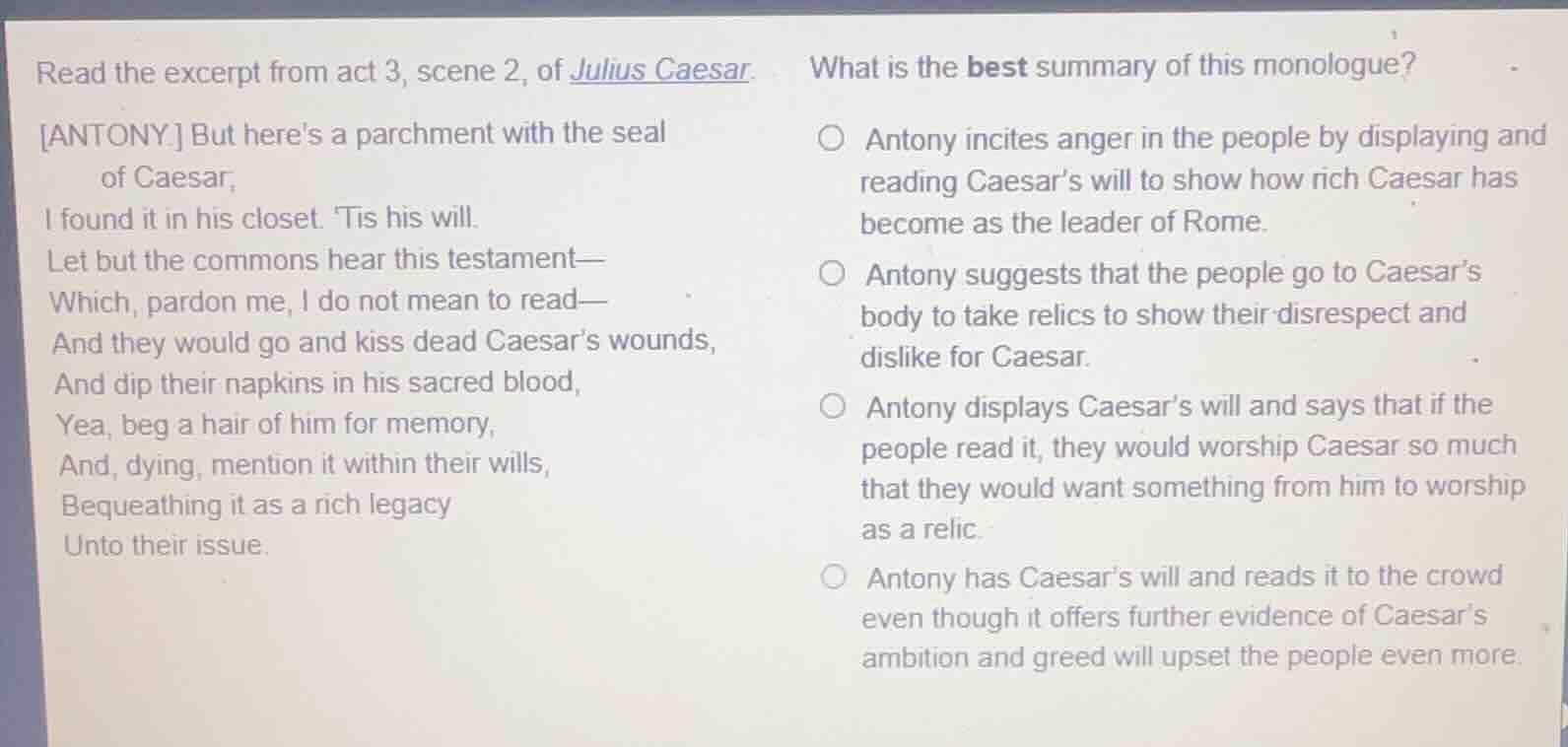
read the excerpt from act 3, scene 2, of julius caesar. antony but heres a parchment with the seal of caesar, i found it in his closet. tis his will. let but the commons hear this testament— which, pardon me, i do not mean to read— and they would go and kiss dead caesar’s wounds, and dip their napkins in his sacred blood, yea, beg a hair of him for memory, and, dying, mention it within their wills, bequeathing it as a rich legacy unto their issue. what is the best summary of this monologue? antony incites anger in the people by displaying and reading caesar’s will to show how rich caesar has become as the leader of rome. antony suggests that the people go to caesar’s body to take relics to show their disrespect and dislike for caesar. antony displays caesar’s will and says that if the people read it, they would worship caesar so much that they would want something from him to worship as a relic. antony has caesar’s will and reads it to the crowd even though it offers further evidence of caesar’s ambition and greed will upset the people even more.
Antony mentions he has Caesar's will but says he won't read it, then describes how the people would react if they heard it—they would revere Caesar, take physical mementos (wounds' blood, hair) as relics to pass down. Let's evaluate each option:
- The first option is wrong because Antony does not read the will here, nor does he focus on Caesar's wealth.
- The second option is incorrect; Antony says the people would show reverence, not disrespect, for Caesar.
- The fourth option is wrong because Antony does not read the will, and the will is framed as something that would make people admire Caesar, not show his ambition.
- The third option matches: Antony references the will and states that if the people knew its contents, they would worship Caesar and take relics from him.

Snap & solve any problem in the app
Get step-by-step solutions on Sovi AI
Photo-based solutions with guided steps
Explore more problems and detailed explanations
Antony displays Caesar's will and says that if the people read it, they would worship Caesar so much that they would want something from him to worship as a relic.