QUESTION IMAGE
Question
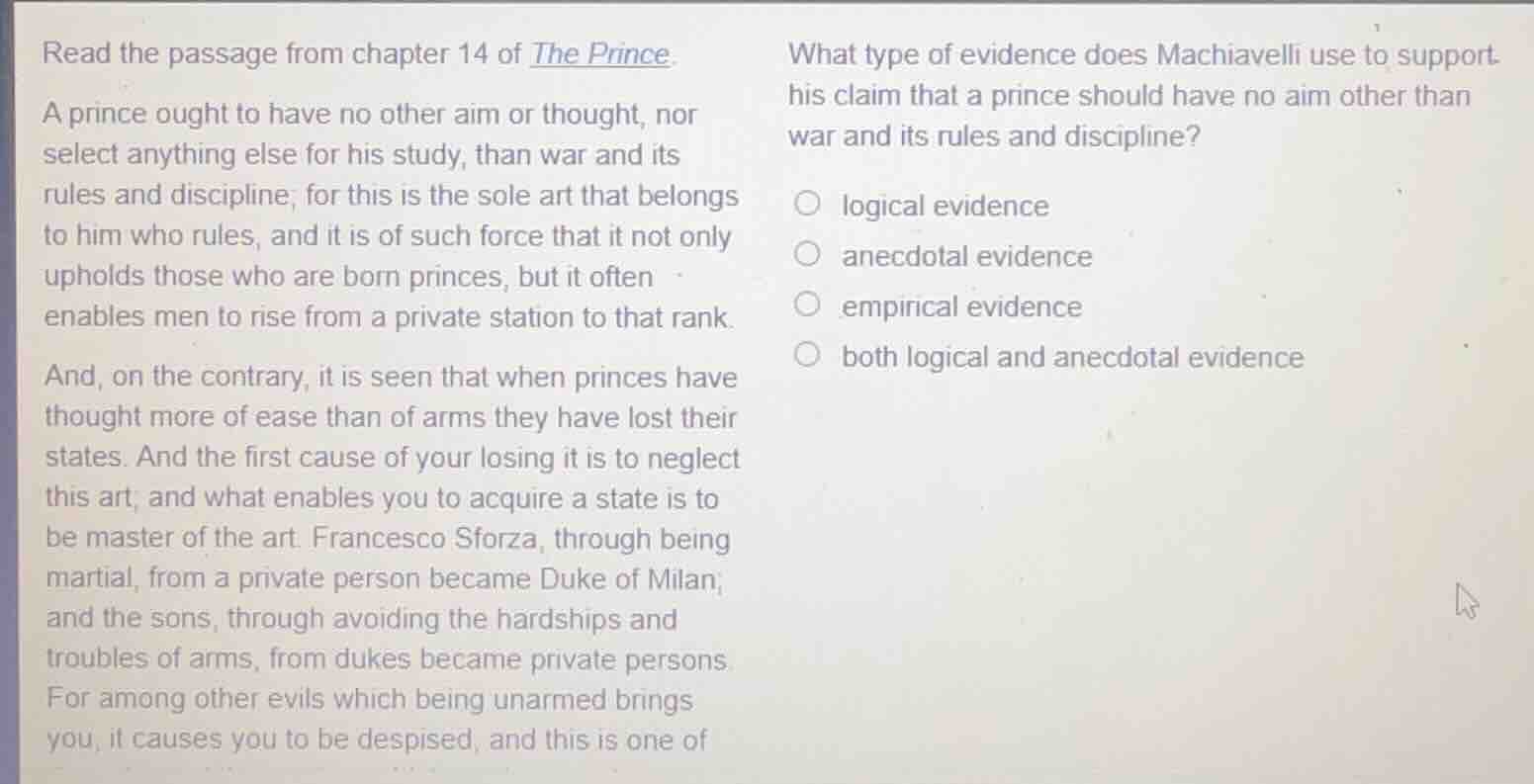
read the passage from chapter 14 of the prince. a prince ought to have no other aim or thought, nor select anything else for his study, than war and its rules and discipline; for this is the sole art that belongs to him who rules, and it is of such force that it not only upholds those who are born princes, but it often enables men to rise from a private station to that rank. and, on the contrary, it is seen that when princes have thought more of ease than of arms they have lost their states. and the first cause of your losing it is to neglect this art, and what enables you to acquire a state is to be master of the art. francesco sforza, through being martial, from a private person became duke of milan; and the sons, through avoiding the hardships and troubles of arms, from dukes became private persons. for among other evils which being unarmed brings you, it causes you to be despised, and this is one of what type of evidence does machiavelli use to support his claim that a prince should have no aim other than war and its rules and discipline? ○ logical evidence ○ anecdotal evidence ○ empirical evidence ○ both logical and anecdotal evidence
Machiavelli uses logical reasoning by stating the direct causal link between mastering war art and holding/ gaining power, and the loss of power when neglecting it. He also provides anecdotal evidence with the specific example of Francesco Sforza (rising to duke through martial skill) and his sons (losing power by avoiding arms).

Snap & solve any problem in the app
Get step-by-step solutions on Sovi AI
Photo-based solutions with guided steps
Explore more problems and detailed explanations
both logical and anecdotal evidence