QUESTION IMAGE
Question
study guide – multiple choice
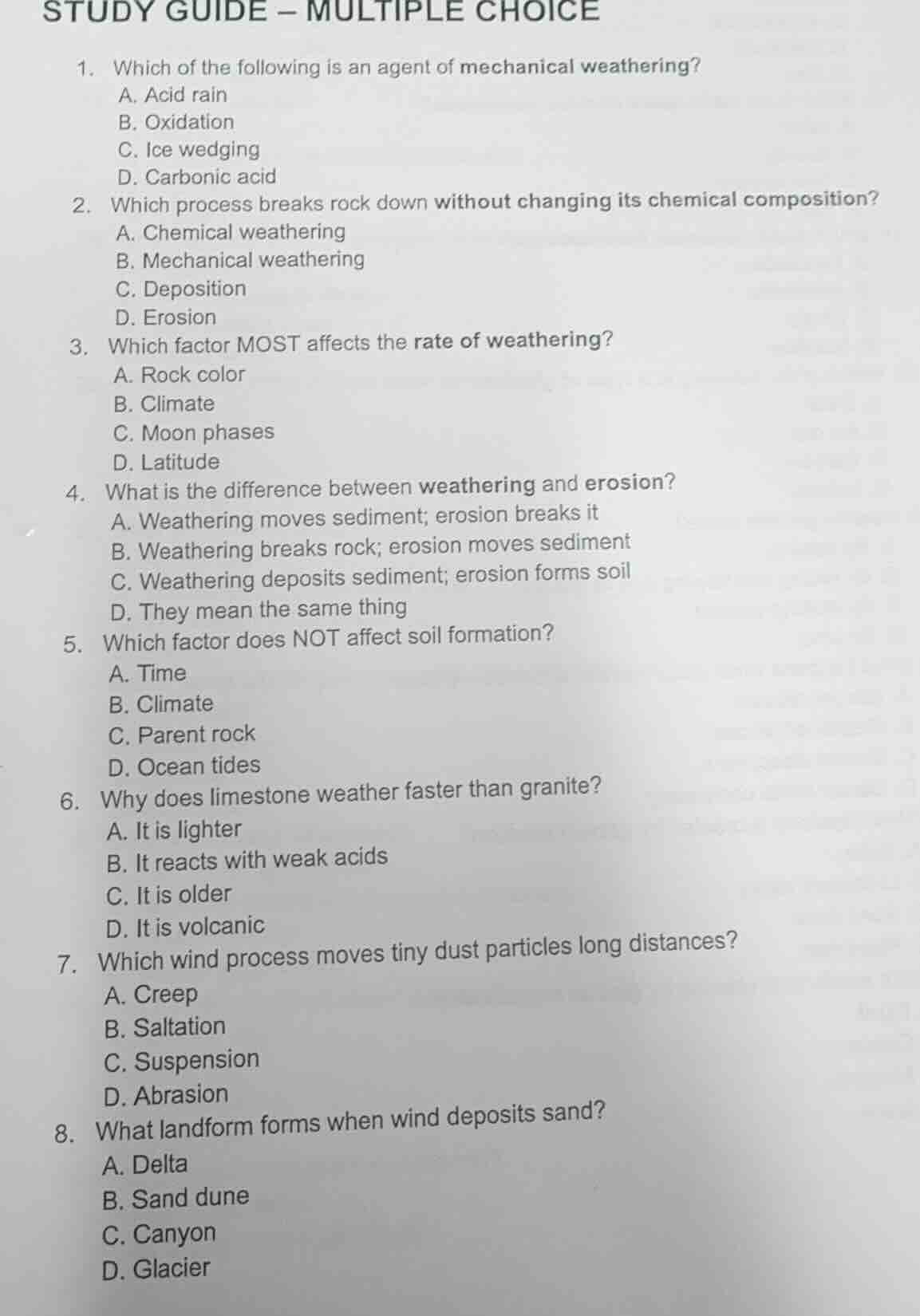
- which of the following is an agent of mechanical weathering?
a. acid rain
b. oxidation
c. ice wedging
d. carbonic acid
- which process breaks rock down without changing its chemical composition?
a. chemical weathering
b. mechanical weathering
c. deposition
d. erosion
- which factor most affects the rate of weathering?
a. rock color
b. climate
c. moon phases
d. latitude
- what is the difference between weathering and erosion?
a. weathering moves sediment; erosion breaks it
b. weathering breaks rock; erosion moves sediment
c. weathering deposits sediment; erosion forms soil
d. they mean the same thing
- which factor does not affect soil formation?
a. time
b. climate
c. parent rock
d. ocean tides
- why does limestone weather faster than granite?
a. it is lighter
b. it reacts with weak acids
c. it is older
d. it is volcanic
- which wind process moves tiny dust particles long distances?
a. creep
b. saltation
c. suspension
d. abrasion
- what landform forms when wind deposits sand?
a. delta
b. sand dune
c. canyon
d. glacier
Question 1
Acid rain (A), oxidation (B), and carbonic acid (D) are chemical weathering agents. Ice wedging (C) is mechanical, as it breaks rock via freezing - thawing without chemical change.
Chemical weathering (A) changes rock’s chemical makeup. Deposition (C) is sediment accumulation, erosion (D) is sediment movement. Mechanical weathering (B) breaks rock without altering its chemistry.
Rock color (A) and moon phases (C) don’t affect weathering rate. Latitude (D) has indirect effects, but climate (B) (temperature, precipitation) is the main factor for weathering rate.

Snap & solve any problem in the app
Get step-by-step solutions on Sovi AI
Photo-based solutions with guided steps
Explore more problems and detailed explanations
C. Ice wedging