QUESTION IMAGE
Question
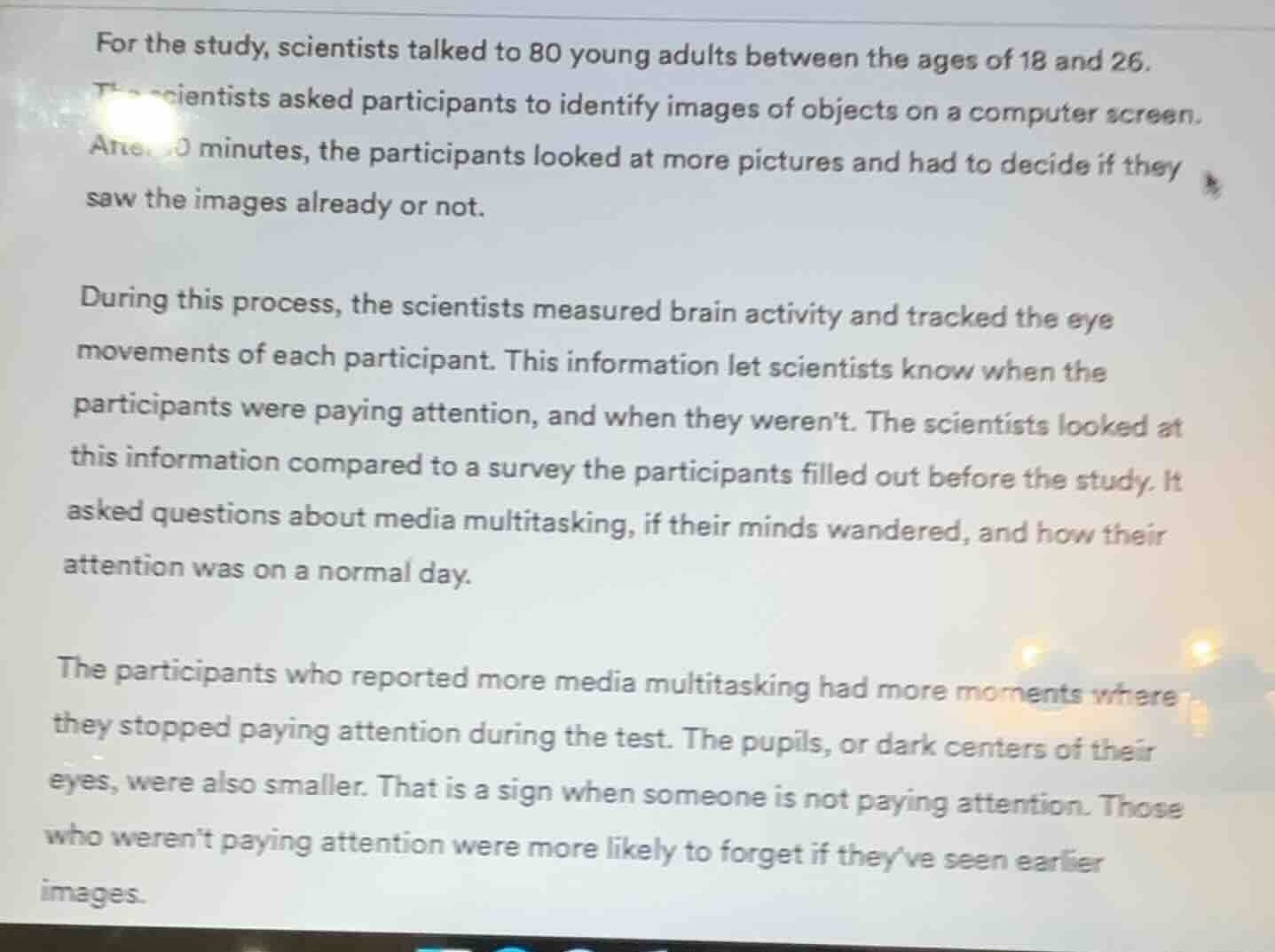
for the study, scientists talked to 80 young adults between the ages of 18 and 26. the scientists asked participants to identify images of objects on a computer screen. after 30 minutes, the participants looked at more pictures and had to decide if they saw the images already or not. during this process, the scientists measured brain activity and tracked the eye movements of each participant. this information let scientists know when the participants were paying attention, and when they werent. the scientists looked at this information compared to a survey the participants filled out before the study. it asked questions about media multitasking, if their minds wandered, and how their attention was on a normal day. the participants who reported more media multitasking had more moments where they stopped paying attention during the test. the pupils, or dark centers of their eyes, were also smaller. that is a sign when someone is not paying attention. those who werent paying attention were more likely to forget if theyve seen earlier images.
Since no specific question is provided about this text, it's hard to give a targeted answer. If you want to know about the discipline/subfield this study belongs to (e.g., is it Psychology? The study involves measuring attention, brain activity, and eye movements related to media multitasking, so Psychology (a subfield of Social Science) is relevant), or have questions about the content (like summarizing, analyzing findings), please clarify your question.

Snap & solve any problem in the app
Get step-by-step solutions on Sovi AI
Photo-based solutions with guided steps
Explore more problems and detailed explanations
Since no specific question is provided about this text, it's hard to give a targeted answer. If you want to know about the discipline/subfield this study belongs to (e.g., is it Psychology? The study involves measuring attention, brain activity, and eye movements related to media multitasking, so Psychology (a subfield of Social Science) is relevant), or have questions about the content (like summarizing, analyzing findings), please clarify your question.