QUESTION IMAGE
Question
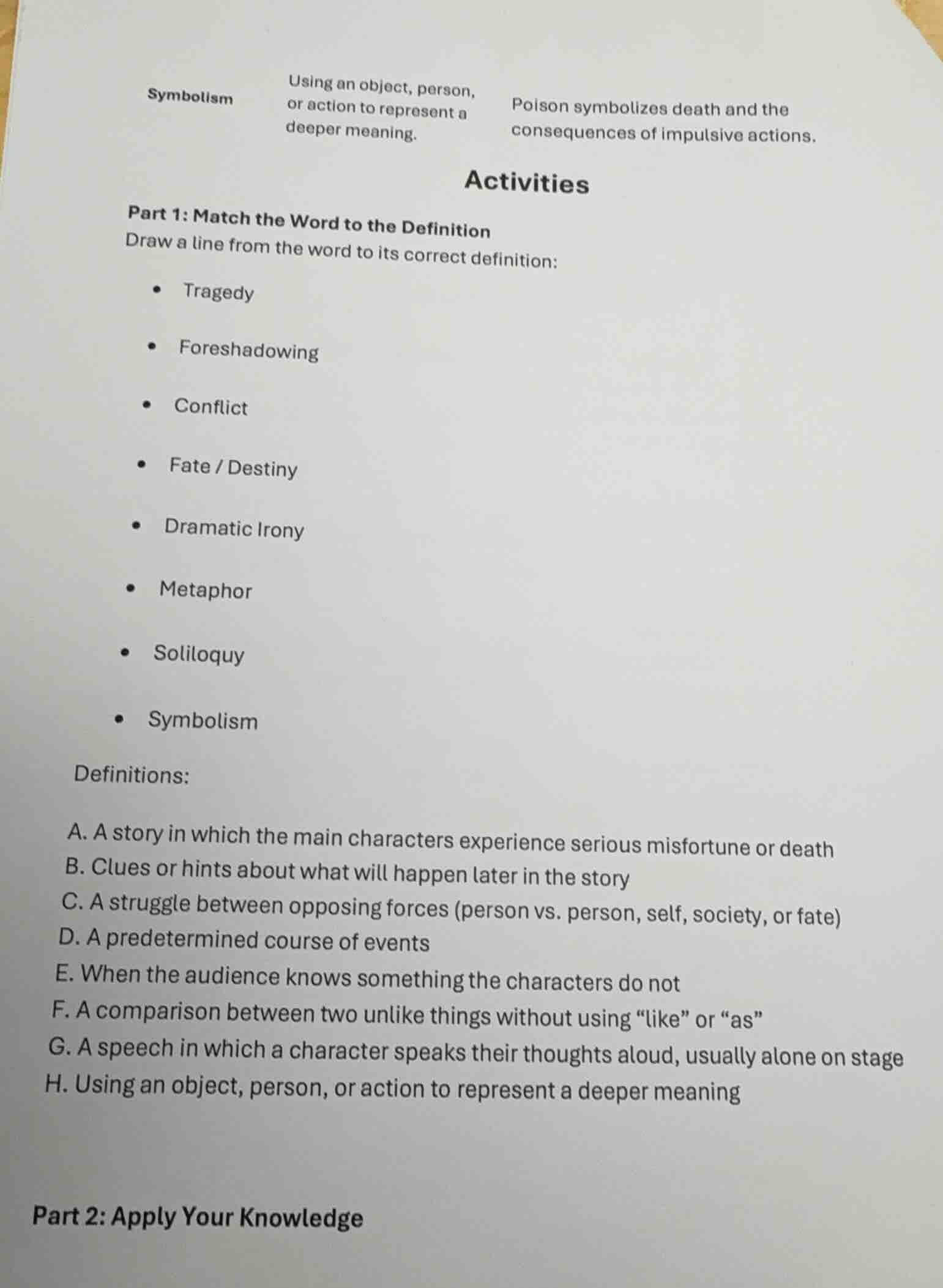
symbolism using an object, person, or action to represent a deeper meaning. poison symbolizes death and the consequences of impulsive actions. activities part 1: match the word to the definition draw a line from the word to its correct definition: - tragedy - foreshadowing - conflict - fate / destiny - dramatic irony - metaphor - soliloquy - symbolism definitions: a. a story in which the main characters experience serious misfortune or death b. clues or hints about what will happen later in the story c. a struggle between opposing forces (person vs. person, self, society, or fate) d. a predetermined course of events e. when the audience knows something the characters do not f. a comparison between two unlike things without using \like\ or \as\ g. a speech in which a character speaks their thoughts aloud, usually alone on stage h. using an object, person, or action to represent a deeper meaning part 2: apply your knowledge
Each literary term is matched to its standard definition based on literary studies conventions:
- Tragedy refers to stories with devastating outcomes for main characters.
- Foreshadowing uses subtle hints for future plot events.
- Conflict describes the core struggle between opposing forces.
- Fate/Destiny is a pre-set sequence of events.
- Dramatic Irony is when the audience has more knowledge than characters.
- Metaphor is a direct comparison without "like" or "as".
- Soliloquy is a character's solo spoken inner thought.
- Symbolism uses elements to represent deeper meanings.

Snap & solve any problem in the app
Get step-by-step solutions on Sovi AI
Photo-based solutions with guided steps
Explore more problems and detailed explanations
- Tragedy: A. A story in which the main characters experience serious misfortune or death
- Foreshadowing: B. Clues or hints about what will happen later in the story
- Conflict: C. A struggle between opposing forces (person vs. person, self, society, or fate)
- Fate / Destiny: D. A predetermined course of events
- Dramatic Irony: E. When the audience knows something the characters do not
- Metaphor: F. A comparison between two unlike things without using "like" or "as"
- Soliloquy: G. A speech in which a character speaks their thoughts aloud, usually alone on stage
- Symbolism: H. Using an object, person, or action to represent a deeper meaning