QUESTION IMAGE
Question
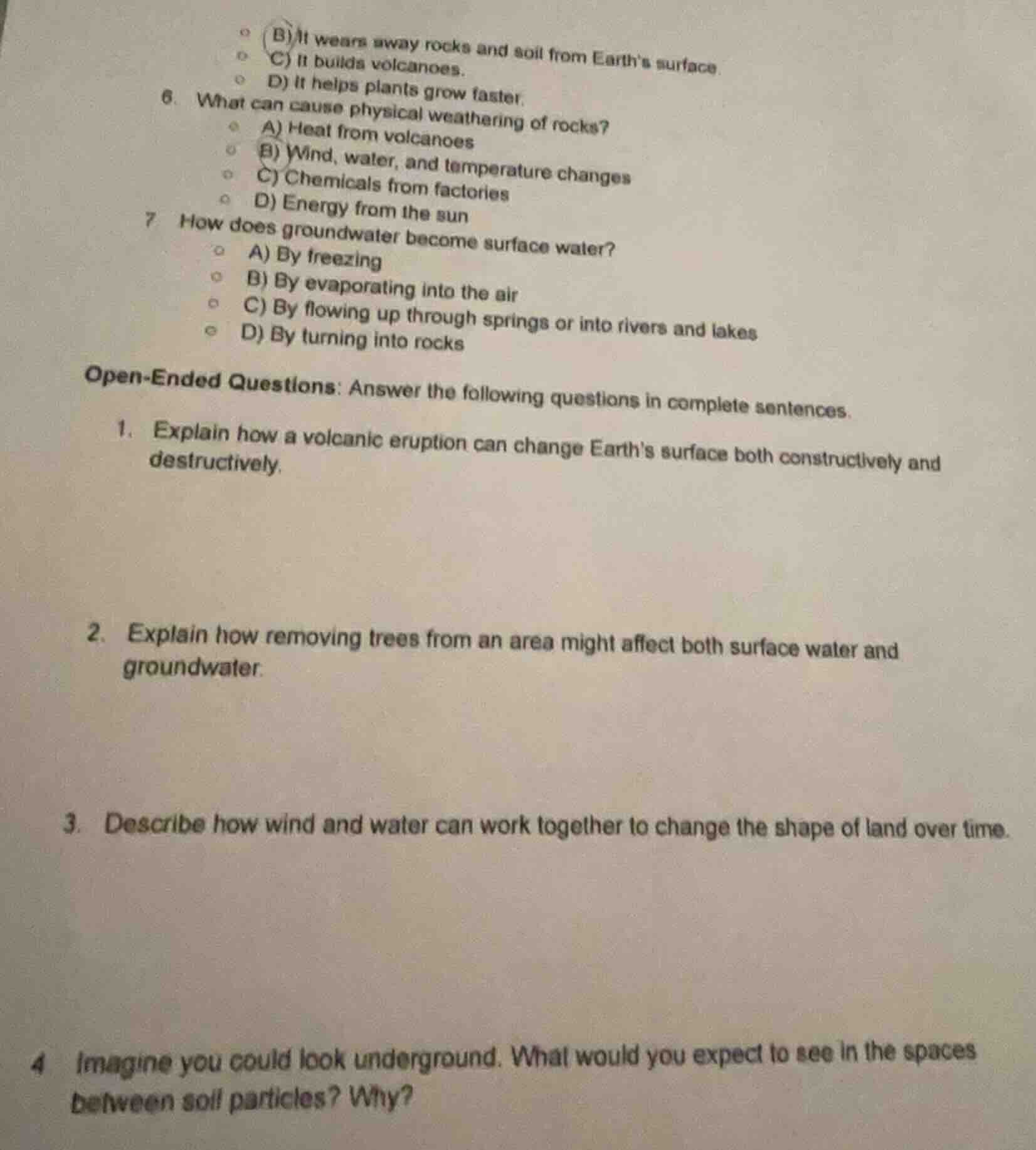
b) it wears away rocks and soil from earths surface. c) it builds volcanoes. d) it helps plants grow faster. 6. what can cause physical weathering of rocks? a) heat from volcanoes b) wind, water, and temperature changes c) chemicals from factories d) energy from the sun 7 how does groundwater become surface water? a) by freezing b) by evaporating into the air c) by flowing up through springs or into rivers and lakes d) by turning into rocks open - ended questions: answer the following questions in complete sentences. 1. explain how a volcanic eruption can change earths surface both constructively and destructively. 2. explain how removing trees from an area might affect both surface water and groundwater. 3. describe how wind and water can work together to change the shape of land over time. 4 imagine you could look underground. what would you expect to see in the spaces between soil particles? why?
Question 6
Physical weathering is the breakdown of rocks without chemical change. Wind, water (like rain, rivers), and temperature changes (freezing - thawing, heating - cooling) cause physical forces on rocks. Heat from volcanoes is more for igneous processes, chemicals from factories cause chemical weathering, and sun energy isn't a direct physical weathering agent for rocks. So option B is correct.
Groundwater is water stored underground. It becomes surface water when it flows out through springs or into rivers/lakes. Freezing doesn't turn it to surface water, evaporation is for surface water to air, and groundwater doesn't turn into rocks. So option C is correct.
- Constructive change: Volcanic eruptions release lava, ash, and other materials. Lava cools and solidifies to form new landforms like volcanic mountains (e.g., Mauna Loa). Ash can deposit and over time, with sedimentation, form new soil or layers of land.
- Destructive change: The force of the eruption can blow apart existing rock formations, destroy landscapes, and the lava flow can bury or burn existing vegetation and structures on the Earth's surface. Also, volcanic debris can cause landslides and damage to the surrounding area.

Snap & solve any problem in the app
Get step-by-step solutions on Sovi AI
Photo-based solutions with guided steps
Explore more problems and detailed explanations
B. Wind, water, and temperature changes