QUESTION IMAGE
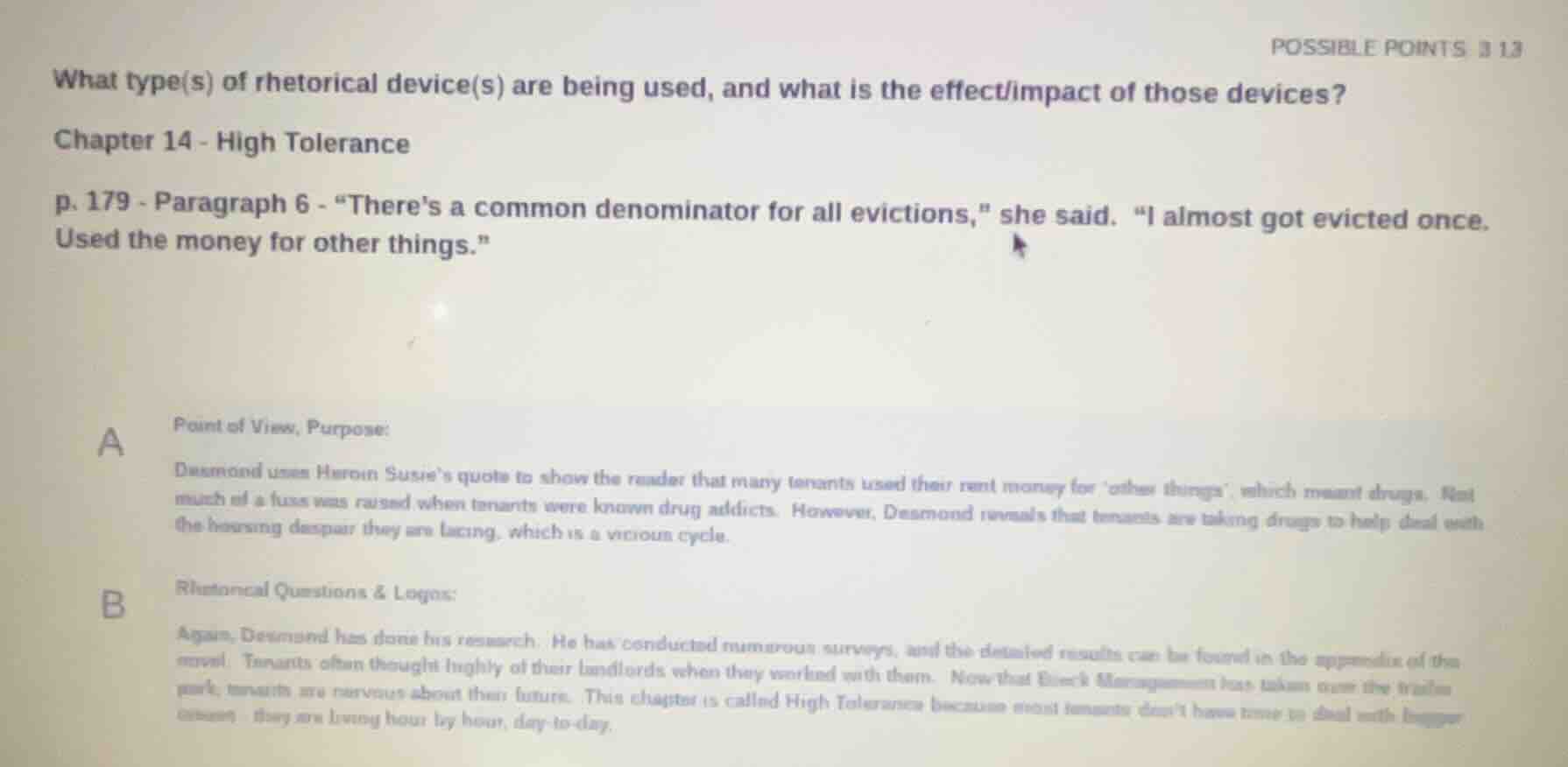
Question
what type(s) of rhetorical device(s) are being used, and what is the effect/impact of those devices?
chapter 14 - high tolerance
p. 179 - paragraph 6 - \theres a common denominator for all evictions,\ she said. \i almost got evicted once. used the money for other things.\
a
point of view, purpose:
desmond uses heroin susies quote to show the reader that many tenants used their rent money for other things which meant drugs. not much of a fuss was raised when tenants were known drug addicts. however, desmond reveals that tenants are taking drugs to help deal with the housing despair they are facing, which is a vicious cycle.
b
rhetorical questions & logos:
again, desmond has done his research. he has conducted numerous surveys, and the detailed results can be found in the appendix of the novel. tenants often thought highly of their landlords when they worked with them. now that rivers management has taken over the trailer park, tenants are nervous about their future. this chapter is called high tolerance because most tenants dont have time to deal with happier issues - they are living hour by hour, day - to - day.
The quote uses personal anecdote (a rhetorical device where a personal story is shared). The speaker shares her own near - eviction experience to connect with the idea of a “common denominator” in evictions. This makes the argument more relatable and credible, as it’s based on a personal, real - life example. It helps the audience (readers) empathize and better understand the struggles tenants face, especially regarding misusing rent money and the threat of eviction.

Snap & solve any problem in the app
Get step-by-step solutions on Sovi AI
Photo-based solutions with guided steps
Explore more problems and detailed explanations
The rhetorical device used is a personal anecdote (the speaker shares her own near - eviction experience: “I almost got evicted once. Used the money for other things.”). The impact is that it makes the discussion of evictions more relatable and credible, helping the audience empathize with tenants’ struggles (like misusing rent money and facing eviction) and better understand the “common denominator” of evictions by grounding it in a real - life, personal example.